

Militancy as strategy: The systemic institutionalization of extremism in Pakistan

- Update Time : Thursday, April 23, 2026
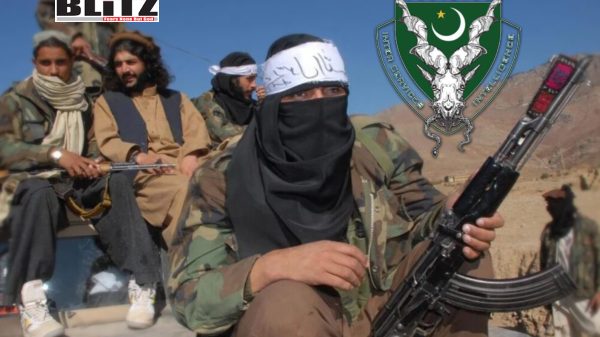
Despite over two decades of the Global War on Terror standing as one of the most consequential undertakings of the 21st century, the structural conditions sustaining militancy remain largely unaddressed, as international engagement has predominantly targeted individual organizations rather than the entrenched institutional arrangements enabling extremist persistence. Pakistan exemplifies this structural entrenchment, where militancy is best understood not as a collection of discrete groups, but as a cohesive ecosystem shaped by historical legacies, ideological currents, and deliberate policy choices — one deeply embedded within the broader architecture of statecraft.
This can be conceptualized as an organic structure resembling a tree, where the roots represent the historical and ideological foundations of militancy — encompassing state-sponsored Islamization, madrassa networks, and the legacy of the 1980s Afghan jihad. The trunk symbolizes the enduring influence of the military–intelligence apparatus and the institutionalization of selective counterterrorism and proxy warfare within state policy. Extending from the trunk are distinct yet interconnected branches corresponding to Kashmir-centric proxy groups, Afghanistan-oriented networks, sectarian militias, domestic insurgents, and transnational jihadist organizations. Urban centers and transnational linkages form a dense canopy facilitating concealment, coordination, and global reach. The figure below depicts this system as a singular integrated tree.
Pakistan confronts a predicament far graver than a singular extremist ideology — militant entities are embedded across its political, religious, security, and territorial domains, coexisting within an ecosystem sustained by denial, selective enforcement, and strategic tolerance. The cumulative consequence of decades of policy decisions has normalized militancy as statecraft, sustaining Afghan-centric networks, Kashmir-oriented proxies, sectarian militias, and transnational franchises linked to al-Qaeda concurrently. US intelligence assessments corroborate this trajectory; in February 2006 congressional testimony, DNI John Negroponte and DIA Director Lt. Gen. Michael Maples identified Pakistan as a critical jihadist hub, confirming that al-Qaeda’s leadership had reconstituted operational networks from Pakistani sanctuary. Prolonged military dominance, the politicization of religious ideology, and entrenched intelligence influence have collectively constrained the state’s capacity to sever ties with extremist proxies, transforming jihadist entities from tactical assets into structural liabilities.
The international ramifications have been considerable. Investigations into the September 11 attacks, the July 2005 London bombings, and the 2011 discovery of Osama bin Laden in Abbottabad collectively confirmed Pakistan’s role as a critical node within transnational jihadist infrastructure. External pressure has nonetheless proven structurally insufficient — US military assistance suspension during the first Trump administration (2017–2021) failed to alter Pakistani conduct, as Islamabad absorbed coercive measures by cultivating alternative partnerships with China, Turkey, and Saudi Arabia, while broader strategic imperatives further constrained Washington’s leverage. FATF’s grey-listing produced an analogous outcome, prompting surface-level compliance through organizational rebranding and selective prosecutions while leaving foundational structures intact. The challenges confronting Pakistan are neither incidental nor externally imposed; meaningful transformation would require the subordination of the military-intelligence apparatus to accountable civilian governance — conditions presently absent — without which the strategic deployment of militant proxies will persist largely unchallenged.
Aid or Alibi? Pakistan’s Enduring Tolerance of Extremist Fronts
International humanitarian mobilization for Gaza has created exploitable space for militant organizations, particularly in states where extremist networks retain organizational and financial viability. Apprehensions persist that funds solicited under the pretext of Gaza relief are being misappropriated to reinforce ideological narratives and sustain operational frameworks rather than addressing humanitarian needs. Pakistan represents a critical example of how such narratives are domestically instrumentalized for ideological mobilization, fundraising, and legitimacy-building by extremist factions.
In April 2025, Defence Minister Khawaja Asif publicly acknowledged that Pakistan had “backed, supported, trained and funded terrorist organizations for about three decades,” while an Islamabad Palestine Conference simultaneously featured cleric and former judge Mufti Taqi Usmani advocating military jihad as a mandatory obligation for Muslim governments — an environment emblematic of the broader tolerance extended to extremist actors.
Within this permissive milieu, Lashkar-e-Taiba (LeT) and its charitable front Jamaat-ud-Dawa (JuD) have systematically rebranded militant objectives under humanitarian cover. Their affiliate, the Muslim Medical Mission (MMM), has assumed a conspicuous role in Gaza-related relief outreach, publicly projecting humanitarian concern while enabling fundraising and propaganda congruent with LeT/JuD’s overarching agenda. The Pakistan Markazi Muslim League (PMML) orchestrated coordinated “Yakjehti-e-Palestine” (Solidarity with Palestine) rallies across Lahore, Faisalabad, and Sialkot between October 2023 and April 2025 — characterized by centralized leadership, uniform slogans, and emotive conspiratorial rhetoric indicative of organized political mobilization rather than spontaneous expression. During Ramadan 2025, PMML’s Gaza-specific donation drives employed standardized contribution categories — encompassing financial assistance for “martyrs’ heirs,” tents, ration packs, and subsidized meals — explicitly correlating humanitarian aid with militant symbolism and transnational jihadist narratives. A declassified US State Department cable (August 10, 2009) corroborates this pattern, confirming JuD as a functional alias and front for LeT, documenting shared origins in Markaz-ud-Dawa-wal-Irshad and persistent overlap in leadership, personnel, assets, and financial channels. Despite UN 1267 sanctions, JuD openly raised funds domestically and internationally — with proceeds partially diverted to LeT operations — while Pakistani authorities failed to act, leaving charitable fronts including the Falah-e-Insaniat Foundation central to LeT’s financing and sanctions evasion.
UNSC Resolutions 1373 (2001) and 2368 (2017) impose legally binding obligations on Member States to prevent and combat terrorist financing across charitable, digital, and informal channels, mandating customer due diligence, transaction monitoring, suspicious activity reporting, and rigorous oversight of non-profit organizations and crowdfunding platforms. The Counter-Terrorism Committee (CTC) and CTED have been specifically tasked with evaluating Member State compliance, requiring demonstrable outcomes rather than declaratory adherence. Pakistan’s response, however, remains predominantly performative. LeT, JuD, JeM, and affiliated entities continue to operate with relative openness, conducting fundraising activities with minimal risk of prosecution, while Gaza-related humanitarian narratives are strategically instrumentalized to preserve influence and ensure operational continuity.
This disjunction between declared obligation and practical enforcement reflects not institutional incapacity but calculated indifference — effectively transferring the burden of accountability onto international partners and regulatory frameworks while domestic actors exploit humanitarian and civic spaces to perpetuate ideologically motivated violence. The tragic consequence is that substantial aid circulates under the guise of relief, civilian beneficiaries remain disenfranchised, and militant networks are systematically fortified — rendering Pakistan’s commitments to international counter-terrorism standards functionally devoid of meaning.
Global Norms, Digital Assets, and Terrorist Financing
The post-9/11 investigations revealed terrorist financing through formal banking systems, money service businesses, Hawala networks, and cash transactions. Subsequent financial innovation — encompassing digital payments, social media, and crowdfunding — has further transformed this landscape. Within this evolving environment, cryptocurrencies, most prominently Bitcoin, have emerged as a subsidiary instrument owing to their decentralized architecture, pseudonymous transaction capabilities, and inconsistent regulatory oversight across jurisdictions.
Since the mid-2010s, organizations including ISIS, Al-Qaeda, Hamas, and Hezbollah began experimenting with cryptocurrencies for fundraising, fund transfers, and propaganda dissemination. A 2015 U.S. prosecution concerning Bitcoin donations to ISIS and the 2017 case of ISIS operative Bahrun Naim — who transferred Bitcoin domestically to circumvent formal banking infrastructure — represent early documented instances. Between 2014 and 2019, ISIS-affiliated networks predominantly utilized Bitcoin for small-scale fundraising and cross-border logistics via social media, encrypted messaging applications, and dark-web forums. Transactions were typically fragmented into micro-payments, routed through multiple wallets, and converted through exchanges or peer-to-peer platforms. Experts have noted the increasing integration of cryptocurrencies with traditional methodologies — Hawala networks, cash couriers, and propaganda-driven online fundraising — producing hybrid models that substantially complicate detection and enforcement.
The IMF has consistently flagged crypto-assets as a significant threat to financial integrity, particularly in jurisdictions susceptible to terrorism and illicit financial flows. Its 2023 policy document, Elements of Effective Policies for Crypto Assets, emphasized that Virtual Asset Service Providers (VASPs) must adhere to stringent AML/CFT controls consistent with international standards, while advocating for VASP licensing, enhanced transaction monitoring, and improved cross-border information exchange.
Pakistan’s regulatory posture remained internally contradictory between 2020 and 2024, despite a domestic surge in digital asset experimentation including provincial cryptocurrency mining in Khyber Pakhtunkhwa. Cryptocurrencies increasingly converged with illicit financial activity through peer-to-peer transfers and hybrid crypto-Hawala financing models, exposing significant deficiencies in financial intelligence and regulatory capacity. The Virtual Assets Ordinance of July 2025 formally legitimized and regulated virtual assets under the Pakistan Virtual Asset Regulatory Authority (PVARA), imposing AML/CFT obligations on VASPs — though effective implementation remains uncertain given institutional constraints and entrenched structural vulnerabilities. International monitoring bodies explicitly noted that Pakistan had failed to adequately demonstrate capacity to identify and mitigate cryptocurrency-related terrorist financing risks, particularly given its prolonged exposure to UN-designated terrorist entities, characterizing crypto-asset exploitation as a tangible rather than theoretical concern.
Collectively, UN initiatives and IMF policy guidance advocate a risk-based supervisory model that treats cryptocurrencies not as inherently illicit but as susceptible to misuse in contexts of weak regulation and insufficient institutional capacity. Pakistan exemplifies these dynamics — where cosmetic regulatory reforms, limited supervisory capacity, and structural vulnerabilities to terrorist networks persistently generate risk. The efficacy of counter-terrorist financing strategies in such environments is contingent not upon formal regulatory adoption but upon rigorous implementation, technical proficiency, and integration with comprehensive AML/CFT frameworks.
Arun Anand, Indian Affairs Editor to Blitz is an author and columnist who has penned more than a dozen books. He contributes columns on geopolitics to leading Indian and international publications and research journals. Follow him on ‘X’
@ArunAnandLive