Why Pakistan’s missile build-up alarms the world

- Update Time : Monday, March 23, 2026
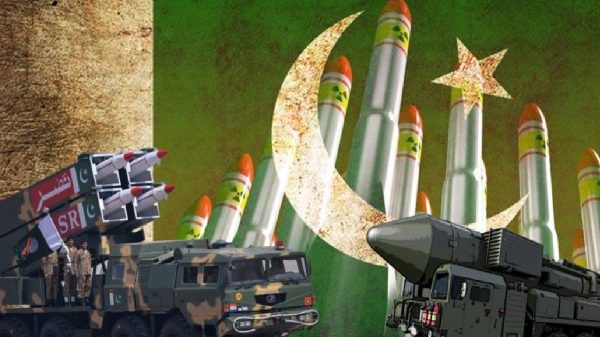
Pakistan’s expanding missile capabilities are raising alarms far beyond South Asia, drawing scrutiny from US intelligence and the global community. Its history of proliferation and strategic duplicity continues to undermine trust and pose wider security risks
Recently, serious concerns have been raised at the international level, particularly by the United States, regarding Pakistan’s development of long-range nuclear ballistic missiles. According to recent US intelligence assessments, Pakistan is actively expanding the range and capability of its missile systems, potentially extending beyond South Asia and even posing a threat to the US homeland. While Pakistan claims that these capabilities are “India-specific,” its trajectory suggests a much broader and troubling pattern.
These concerns were clearly articulated by Tulsi Gabbard in the 2026 Annual Threat Assessment, where she stated: “Russia, China, North Korea, Iran, and Pakistan have been researching and developing… missile delivery systems… that put our homeland within range.” This underscores that Pakistan is no longer viewed merely as a regional actor, but as part of a group of states with capabilities that could threaten US national security. Similarly, Jon Finer had earlier warned that Pakistan’s missile developments could become an “emerging threat to the United States,” reinforcing the growing international concern over the expanding scope of its capabilities.
Pakistan’s nuclear capability is not limited to missiles alone but is supported by a multi-layered delivery system across land, air, and sea. Its land-based backbone includes ballistic missile systems such as the Shaheen series and Ghauri missile, along with tactical systems like the Nasr, many of which are road-mobile and designed for rapid deployment. In addition, Pakistan maintains air-based delivery through aircraft such as F-16s and Mirage fighters equipped with nuclear-capable cruise missiles like the Ra’ad. It is also developing a sea-based deterrent through submarine-launched cruise missiles such as Babur-3, aimed at achieving second-strike capability. This evolving triad-like structure reflects a clear shift toward survivability, flexibility, and the ability to penetrate missile defense systems.
Pakistan’s track record on nuclear proliferation is well known across the world. The infamous A. Q. Khan network remains one of the clearest and most dangerous examples of nuclear proliferation in modern history. It functioned as a global black market for nuclear technology, transferring uranium enrichment equipment, centrifuges, and even nuclear weapon designs to countries such as Iran, North Korea, and Libya. What made this network particularly alarming was that it operated through a complex international supply chain involving front companies and covert channels across multiple continents. This was not just smuggling—it was a well-organized international nuclear marketplace. Despite attempts to portray it as a rogue operation, many analysts believe that such a vast network could not have functioned without broader institutional support. This episode was so serious that it led to global concern and measures such as United Nations Security Council Resolution 1540 aimed at preventing the spread of nuclear weapons to non-state actors. This legacy continues to undermine Pakistan’s credibility even today.
Even now, concerns persist. Pakistan is not only expanding its arsenal but also developing advanced systems such as MIRV-capable missiles like the Ababeel missile, designed to evade missile defense systems and enhance nuclear strike capability. Reports have also pointed toward efforts to procure sensitive missile-related equipment through indirect channels, raising further doubts about its compliance with international norms. The United States has gone to the extent of imposing sanctions on four entities linked to Pakistan’s missile development, including the National Development Complex (NDC), Akhtar and Sons Pvt Ltd, Affiliates International, and Rockside Enterprise, which were involved in procuring equipment and materials for Pakistan’s long-range missile programs. This clearly reflects that these concerns are real and not speculative.
Instead of addressing these issues, Pakistan often resorts to drawing false equivalence with India. However, the difference is clear. India is widely regarded as a responsible nuclear power with a consistent record of adhering to international norms and maintaining strategic restraint. Pakistan, on the other hand, continues to justify its actions under the doctrine of “credible minimum deterrence,” even as it expands both the range and sophistication of its nuclear delivery systems.
This pattern of duplicity is not new. It has been visible in Pakistan’s broader strategic behavior for decades. During the War on Terror, while receiving massive financial and military assistance from the United States, Pakistan simultaneously provided sanctuaries to the terror groups US was hunting in Afghanistan. The case of Osama bin Laden remains the most striking example—he was found living for years in Abbottabad, in a fortified compound located close to a major Pakistani military academy. His presence there raised serious global questions about how such a high-profile terrorist could remain undetected in such a sensitive area.
In the lead-up to the US operation, Shakil Afridi, a Pakistani doctor, assisted the CIA by organizing a fake vaccination campaign to confirm bin Laden’s presence through DNA collection. Following the successful US raid in 2011, Afridi was arrested by Pakistani authorities and sentenced to a long prison term. While the charges were officially framed on other grounds, internationally the move was widely seen as punishment for aiding the United States. More than a decade later, he remains imprisoned, largely forgotten in global discourse—an uncomfortable reminder of the costs of exposing inconvenient truths. This episode starkly exposed Pakistan’s double standards—publicly aligning with counterterrorism efforts while penalizing those who made them effective. It revealed a system more inclined to protect its contradictions than confront them, triggering global criticism and further straining US-Pakistan relations.
This duplicity was openly acknowledged by Donald Trump during the first term of his presidency, when he stated: “The United States has foolishly given Pakistan more than 33 billion dollars in aid over the last 15 years, and they have given us nothing but lies & deceit, thinking of our leaders as fools.” Such a statement reflects the depth of mistrust that Pakistan has generated over time.
Pakistan’s pattern of playing multiple sides continues even today—between China and the United States, and among Iran and the Gulf states including Saudi Arabia—making it difficult for the international community to trust its commitments.
Adding to these concerns are the remarks by Abdul Basit, who stated: “If America attacks Pakistan, we have to attack India… our missiles may not reach America, but we will attack Mumbai and New Delhi.” Such a statement is not only illogical but deeply alarming. It reflects a mindset that is reckless, irresponsible, and detached from rational strategic thinking.
The idea of targeting a third country in response to actions by another exposes a dangerous and destabilizing approach to international relations. This is not just rhetoric—it reflects a deeper mentality that resembles a dangerous and radicalized way of thinking. Such type of statements are also a reflection of the irresponsible nature of Pakistani state, why it must be taken seriously.
The world must take serious note of Pakistan’s actions, its history of proliferation, its ongoing missile developments, and the growing concerns expressed even by US intelligence leadership. These are not isolated incidents but part of a broader pattern. If left unchecked, such behavior has the potential to pose a serious threat not just to regional stability, but to global security.
Idrees Aftab is a freelance researcher focusing on foreign policy and security issues in the South Asian region.