Third Kuciak murder trial begins in Slovakia as court re-examines evidence and accountability

- Update Time : Wednesday, January 28, 2026
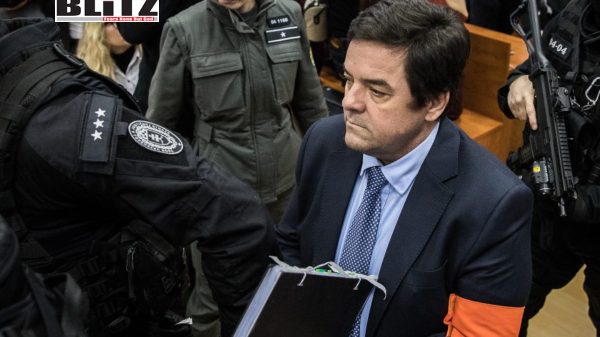
A Slovak court has formally reopened one of the country’s most consequential criminal cases, launching the third trial connected to the 2018 murders of investigative journalist Ján Kuciak and his fiancée, Martina Kušnírová. The renewed proceedings underscore the enduring legal, political, and societal impact of a crime that not only shocked Slovakia but also reshaped its public debate about corruption, rule of law, and the safety of journalists.
On January 26, the Specialized Criminal Court ruled that encrypted Threema messages-central digital evidence in the case-would remain admissible as hearings resumed before a newly constituted judicial panel. The decision came after months of legal uncertainty following a Supreme Court ruling that overturned a previous verdict and criticized earlier judges for flawed fact-finding and incomplete evaluation of evidence.
Ján Kuciak, 27, was an investigative reporter known for probing corruption, tax fraud, and links between organized crime and political elites. He worked for the news outlet Aktuality.sk and was in the midst of investigating alleged ties between Slovak officials and Italian mafia networks when he was killed. His fiancée, Martina Kušnírová, was murdered alongside him at their home in the village of Veľká Mača in February 2018.
The contract-style killing triggered the largest protests Slovakia had seen since the fall of communism. Tens of thousands of people took to the streets demanding justice, transparency, and an end to corruption. The public outrage ultimately led to the resignation of senior government officials, including then-Prime Minister Robert Fico, marking a pivotal moment in the country’s modern political history.
At the center of the retrial are businessman Marián Kočner and his associate Alena Zsuzsová, who stand accused of ordering the murders. Both have consistently denied the charges. Kočner, a controversial figure with extensive business and political connections, has long been portrayed by prosecutors as the alleged mastermind who sought to silence Kuciak’s investigations.
The third trial was ordered after Slovakia’s Supreme Court overturned a May 2023 verdict. In its ruling, the Supreme Court faulted the lower court for what it described as “unclear factual findings” and a failure to assess all relevant evidence. The justices concluded that the previous panel “did not deal with all circumstances significant for the decision,” necessitating a complete rehearing before a new judicial panel to ensure impartiality and thoroughness.
One of the most contentious issues at the opening hearing was the admissibility of encrypted Threema messages extracted from Kočner’s phone. These messages have been a cornerstone of the prosecution’s case, allegedly demonstrating communication between Kočner, Zsuzsová, and intermediaries involved in arranging the killing.
Kočner’s defense lawyer, Marek Para, challenged the legality of how the messages were obtained and argued that their inclusion violated procedural standards. Para also attacked the credibility of the prosecution’s key witness, Zoltán Andruskó, calling him “absolutely untrustworthy.” Andruskó, who admitted to acting as a middleman in the plot, has been cooperating with authorities and previously received a reduced sentence in exchange for his testimony.
Lawyers representing Zsuzsová echoed these arguments, asserting that the prosecution’s case relied almost entirely on Andruskó’s statements and that the evidence presented so far did not conclusively prove her involvement in the murders. They maintained that without his testimony, the remaining evidence would be insufficient to sustain convictions.
The court rejected the defense request to exclude the Threema messages, ruling that the encrypted communications would remain part of the case file. Lawyers representing the victims’ families welcomed the decision. Roman Kvasnica, who represents Kuciak’s parents and Kušnírová’s mother, argued that there was no legal or factual basis to remove the digital evidence and that doing so would undermine the pursuit of justice.
For the families, the reopening of the case is both a painful reminder of the crime and a renewed opportunity for accountability. They have repeatedly stressed that the trial is not only about punishing those responsible but also about affirming the principle that journalists can investigate powerful interests without fear of lethal retaliation.
The Specialized Criminal Court has scheduled the next hearing for February 9 and set out an extensive timetable of 42 hearing dates stretching through the end of 2026. The lengthy schedule reflects the complexity of the case, the volume of evidence to be examined, and the court’s determination to address the shortcomings identified by the Supreme Court.
Legal analysts say the retrial will be closely watched both domestically and internationally. The outcome is expected to influence public confidence in Slovakia’s judiciary and its ability to handle high-profile cases involving powerful defendants. It also carries broader implications for press freedom in Central and Eastern Europe, where journalists have increasingly faced threats, intimidation, and violence.
More than six years after the murders, the Kuciak case remains a symbol of the struggle between transparency and entrenched interests. For many Slovaks, it represents a test of whether the state can deliver justice impartially, regardless of wealth or influence. The Supreme Court’s intervention and the decision to convene a new panel have raised hopes that the third trial will finally provide a definitive and credible resolution.
As proceedings resume, the spotlight will remain firmly on the courtroom in Slovakia-not only to determine the fate of the accused, but also to reaffirm the values of accountability, rule of law, and the essential role of investigative journalism in a democratic society.
Contents published under this byline are those created by the news team of BLiTZ