


Trump’s new National Security Strategy boosts India partnership and refocuses power on the Americas

- Update Time : Tuesday, December 9, 2025
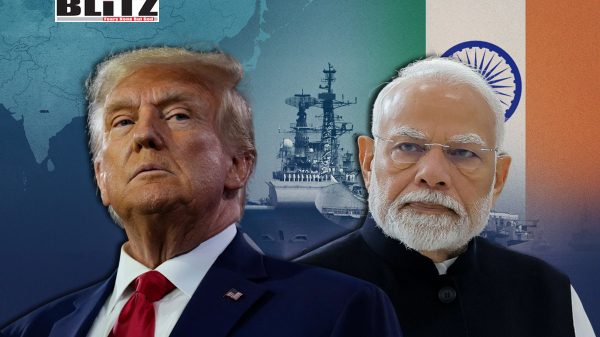
President Donald Trump’s newly released National Security Strategy (NSS) lays out an assertive and wide-ranging vision of US global engagement, but with a striking focus that contrasts sharply with the priorities of previous administrations. While the document addresses global rivals and traditional regions of concern, it devotes exceptional attention to the Western Hemisphere and casts India as a cornerstone of Washington’s long-term Indo-Pacific calculus. The 33-page strategy, quietly published by the White House, offers one of the clearest windows yet into Trump’s foreign policy worldview in his new term – a worldview shaped by border security, resource competition, great-power rivalry, and a recalibration of alliances.
One of the most notable features of Trump’s strategy is its heavy emphasis on the Western Hemisphere. While previous administrations treated Latin America and the Caribbean as secondary theatres, Trump’s NSS frames the region as central to US national security. The rationale is blunt and, in some passages, unprecedented for such a formal strategic document: “border security is the primary element of national security.”
The strategy argues that the threats emanating “closest to home” – irregular migration, narcotics trafficking, transnational crime, and the encroachment of geopolitical competitors – require a larger US military, intelligence, and diplomatic footprint across the hemisphere. Trump makes the case that adversarial actors are seeking footholds in America’s neighborhood, a thinly veiled reference to China’s growing investments and political influence from Mexico to the Caribbean to South America.
This hemispheric focus aligns with Trump’s long-standing political priorities. Securing the US southern border, confronting organized smuggling networks, and curbing fentanyl inflows remain core political promises. But the new strategy goes further: it envisions a permanent, more muscular US presence across the region as a means of warding off both criminal networks and rising foreign powers. That language represents a shift from the more global, values-driven frameworks of the Obama and Bush years, grounding US strategy instead in geographic proximity and domestic security.
Trump’s second-term NSS marks a philosophical departure from the democracy-promotion emphasis that defined decades of US strategy after the Cold War. The document explicitly rejects the idea that the US should condition its alliances on political systems, reforms, or democratic values. Instead, it champions “pragmatic engagement” based on mutual interests rather than shared political ideals.
This approach, according to the strategy, allows Washington to partner more effectively with states that may not meet the criteria of liberal governance but are nonetheless strategically important. It is a clear signal to allies and competitors alike: under Trump’s framework, the US will prioritize security and economic cooperation over ideological alignment.
If the Western Hemisphere is the geographic centerpiece of Trump’s NSS, the Indo-Pacific is the global strategic battleground – and India emerges as a pivotal US partner.
The strategy underscores the region’s importance, noting that the Indo-Pacific already accounts for “almost half the world’s GDP” and will shape the next century’s economic and geopolitical dynamics. Washington positions India not merely as a regional actor, but as an indispensable contributor to Indo-Pacific security and an essential counterweight to China’s growing influence.
The document calls for deepened commercial ties with India, enhanced technological cooperation, and expanded defense integration. Artificial intelligence, quantum computing, and advanced military technologies are identified as key domains where US–India collaboration should accelerate. These areas are at the center of global technological competition, and Washington’s explicit emphasis on them signals a long-term bet on India’s rising economic and scientific capacities.
Most importantly, the strategy reaffirms support for the Quadrilateral Security Dialogue – the Quad – which includes the US, India, Japan, and Australia. The NSS frames the Quad as essential to preserving a “free and open Indo-Pacific” and safeguarding critical sea lanes. While previous administrations also embraced the Quad, Trump’s strategy ties it more directly to US grand strategy, elevating India’s position within it.
For New Delhi, the document is a strong diplomatic endorsement. It suggests that Washington views India not just as a strategic partner, but as a central pillar of regional balance in an era of intensifying competition with China.
While China features prominently throughout the document, the language is calibrated and avoids overt escalation. This stands in contrast to earlier Trump-era rhetoric that at times veered toward open confrontation. The new strategy labels China’s economic behavior “predatory” and calls for “reciprocity and fairness,” signaling continued pressure on Beijing to reform its trade practices and reduce imbalances.
Yet the NSS also calls for maintaining a “mutually advantageous” economic relationship with China – a softer tone that reflects Trump’s desire to avoid unnecessary confrontation while still defending US interests. It even suggests that trade with China should remain focused on “non-sensitive factors,” indicating room for selective engagement rather than wholesale decoupling.
If implemented consistently, this approach would represent a middle course: competitive but not destabilizing, assertive but not inflammatory. It also suggests that Trump intends to balance toughness with pragmatism, avoiding policies that could damage US economic stability or alienate key partners in Asia.
National Security Strategies are more than rhetorical documents – they guide budgeting, planning, and the long-term positioning of federal agencies. Trump’s new NSS, if genuinely aligned with his personal priorities, could reshape how the Pentagon allocates resources, how the State Department organizes its regional strategies, and how foreign governments interpret US intentions.
For Latin American states, it signals increased scrutiny and deeper US involvement, especially on issues related to migration and Chinese investment. For India, it offers an expanded strategic role and deeper bilateral opportunities. For European and Asian allies wary of declining US influence, the strategy reflects a more selective but still engaged Washington.
And for China, it sends a message that while the US will counter its expansion, economic confrontation is not Trump’s preferred path.
Trump’s latest National Security Strategy represents a recalibration of US foreign policy priorities. It brings the Western Hemisphere to the strategic forefront, strengthens India’s role in US Indo-Pacific planning, and introduces a pragmatic, interest-driven approach to alliances and partnerships. Though tough on China, it avoids overt provocation, signaling a complex but measured competition. Whether the National Security Strategy (NSS) becomes a consistent foundation for US policy depends on Trump’s own adherence to its principles – something that did not always happen in his previous term. But for now, it stands as the clearest articulation yet of his second-term foreign policy vision.
Tajul Islam is a Special Correspondent of Blitz. He also is Local Producer of Al Jazeera Arabic channel.