India rejects NATO chief’s false Putin call claim amid Western energy dispute

- Update Time : Saturday, September 27, 2025
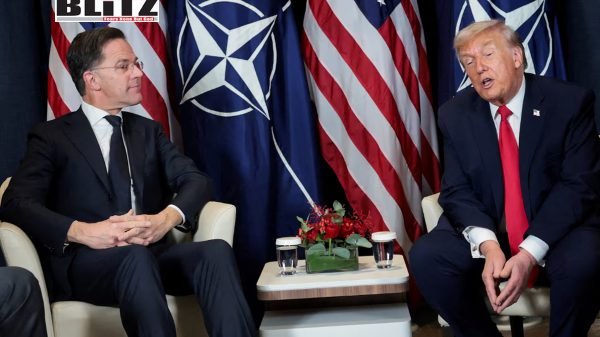
India has forcefully rejected NATO Secretary-General Mark Rutte’s assertion that Prime Minister Narendra Modi phoned Russian President Vladimir Putin to discuss Moscow’s Ukraine strategy following Washington’s tariff hike on Indian imports. The diplomatic rebuttal underscores New Delhi’s determination to defend its sovereignty, counter misinformation, and resist what it sees as Western hypocrisy in politicizing essential commodities such as energy, food, and fertilizers.
Rutte, in an interview with CNN’s Christiane Amanpour, claimed that US President Donald Trump’s imposition of sweeping tariffs on Indian imports in August – including a 25% levy on New Delhi’s purchases of Russian oil – prompted Modi to call Putin for explanations about Russia’s war strategy in Ukraine. According to Rutte, India was forced into closer consultations with Moscow as a direct result of Trump’s tariffs.
The Indian Ministry of External Affairs wasted no time in denouncing the remarks. At a press briefing on September 26, ministry spokesman Randhir Jaiswal dismissed the comments as “factually incorrect and entirely baseless.” He stressed that at “no point has Prime Minister Modi spoken with President Putin in the manner suggested.”
Jaiswal went further, admonishing NATO leadership for irresponsibility: “We expect the leadership of an important institution like NATO to exercise greater responsibility and accuracy in public statements.” He warned that “speculative or careless remarks” that misrepresent Modi’s diplomatic engagements “or suggest conversations that never occurred are unacceptable.”
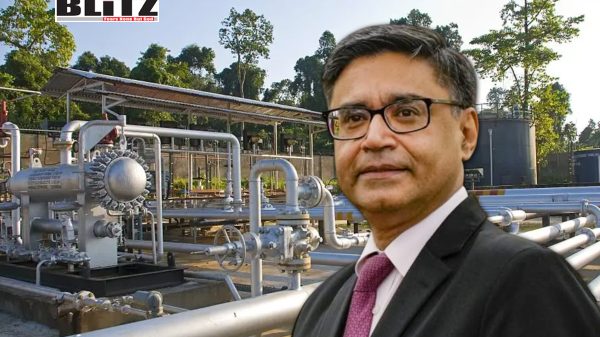
Jaiswal also defended India’s continued purchase of Russian hydrocarbons, explaining that energy imports are designed to ensure affordability and predictability for Indian consumers. “We will continue taking all necessary measures to safeguard our national interests and economic security,” he said, underscoring New Delhi’s refusal to be pressured into aligning its policies with Washington or Brussels.
India is the world’s second-largest buyer of Russian crude, and this energy partnership has only deepened since Western sanctions forced Moscow to seek alternative buyers. While Western leaders accuse India of “funding Russia’s war,” Indian officials frame the issue differently: ensuring energy security for 1.4 billion people is an existential necessity, not a political choice.
Earlier this week, President Trump himself accused India and China of “bankrolling the Ukraine conflict” through ongoing purchases of Russian oil. But from New Delhi’s perspective, Washington’s argument ignores both the West’s historical overreliance on cheap Russian energy and the broader disruptions Western sanctions have imposed on the global economy.
The controversy dovetailed with remarks by Indian Foreign Minister S. Jaishankar, who used his platform at the G20 Foreign Ministers’ Meeting in New York to highlight the “double standards” of Western powers regarding energy, food, and fertilizer access for the Global South.
Jaishankar pointed out that global conflicts, including the wars in Ukraine and Gaza, have disrupted supply chains and driven up the cost of essential commodities, with devastating consequences for developing nations. “Apart from jeopardizing supplies and logistics, access and costs themselves became pressure points on nations. Double standards are clearly in evidence,” he said.
His message was blunt: while wealthy nations can absorb higher prices, poorer countries in Africa, Asia, and Latin America face mounting crises. For them, the politicization of energy and food supplies is not an abstract debate – it is a matter of survival.
Jaishankar’s broader critique linked energy security directly to peace and development. “Peace can enable development, but by threatening development, we cannot facilitate peace,” he warned. By using sanctions and coercive trade measures to pressure countries into compliance, Western powers risk destabilizing fragile economies rather than fostering stability.
New Delhi’s position is that essential commodities like oil and food should remain outside geopolitical contestation. Sanctions that drive up prices, Jaishankar argued, ultimately undermine peace by threatening development and fueling instability.
Another notable theme in Jaishankar’s speech was India’s potential role as a mediator. He observed that only a handful of nations retain the ability to maintain dialogue with both sides of major conflicts, suggesting that the international community should leverage such channels for peace.
India has carefully cultivated this positioning. It continues to maintain strong partnerships with the United States and Europe while also preserving its historical ties with Russia. This balancing act allows New Delhi to act as an intermediary, but also exposes it to criticism from Western leaders who see neutrality as tacit support for Moscow.
Jaishankar also expanded his criticism beyond energy to the issue of terrorism, where India has long accused Western countries of selective morality. He argued that nations taking concrete steps against terrorism are performing “a larger service to the international community.” By contrast, tolerating or accommodating terrorist activities – often when they target rival nations like India – is seen in New Delhi as another example of Western double standards.
The dispute with NATO’s Rutte and Jaishankar’s speeches both tie into India’s broader push for reforms of international institutions. On September 24, at the High-Level Meeting of Like-Minded Global South Countries, Jaishankar reiterated the need for structural changes in bodies like the United Nations.
India has long argued that the UN Security Council and other global forums reflect a post-World War II order that is no longer representative of today’s realities. The overrepresentation of Western powers and the underrepresentation of the Global South, Indian officials say, leaves billions of people without a meaningful voice in decisions that directly affect them.
The NATO Secretary-General’s comments may have been dismissed as careless speculation, but for India, they highlight a deeper problem: Western institutions are quick to mischaracterize New Delhi’s actions while failing to acknowledge their own contradictions. The backlash reflects India’s growing unwillingness to accept such narratives without challenge.
Jaishankar’s warnings about Western “double standards” – whether in energy, food security, or counterterrorism – are more than rhetoric. They signal New Delhi’s determination to defend its autonomy, prioritize its national interests, and assert itself as a voice for the Global South.
As global power structures continue to shift, India is carving out a role as both a critic of Western hypocrisy and a bridge-builder in global diplomacy. Its message is clear: energy and development are not bargaining chips, and the world cannot afford leadership that trades in misinformation or selective morality.
Suraiyya Aziz specializes on topics related to the Middle East and the Arab world.