Globalization prevails despite trade barriers and protectionist policies

- Update Time : Wednesday, April 9, 2025
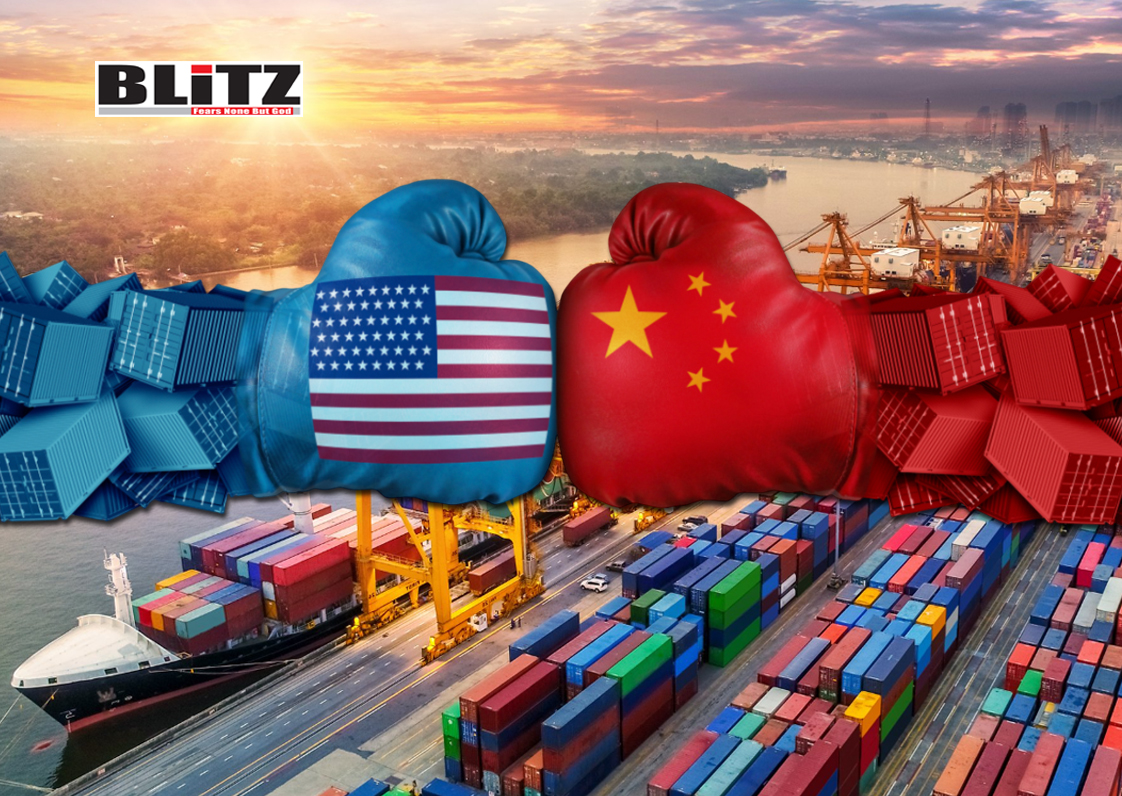
In recent years, the world has witnessed a resurgence of trade protectionism, often masked under the rhetoric of “fairness” and “national interest.” Nowhere has this trend been more pronounced than in the United States, where successive administrations have sought to use tariffs and trade restrictions as blunt tools to reshape global commerce. However, as recent developments and data make abundantly clear, such protectionist efforts are ultimately futile. Economic globalization is not a temporary phase-it is a historical inevitability, deeply rooted in the evolution of human society, technological advancement, and mutual interdependence among nations.
The fallout from the United States’ so-called “reciprocal tariff” policy has only reinforced the world’s growing discontent with protectionism. Fluctuating financial markets, consumer anxiety, and global condemnation are not just reactions to American tariffs-they are symptoms of a broader resistance to economic bullying. On April 5, China issued a strongly worded statement condemning the US abuse of tariffs, emphasizing that “economic bullying that shifts risks onto others will ultimately backfire.” This position reflects not only China’s growing leadership in advocating for free trade but also a global consensus: the era of unilateralism is over, and isolationism runs counter to the interconnected reality of today’s global economy.
Economic globalization is not a man-made construct imposed by a single power; rather, it is the result of centuries of advancing productive forces, increasing efficiency through specialization, and the organic development of global trade networks. It is the natural trajectory of economic progress.
Trade serves as the engine of globalization. From ancient silk routes to digital supply chains, the movement of goods has driven wealth creation, innovation, and cultural exchange. Today, global trade is more vital than ever. Since the founding of the World Trade Organization (WTO) in 1994, total global trade volume has skyrocketed from $5 trillion to $33 trillion in 2024-a sixfold increase. These numbers are more than statistics; they represent improved living standards, technological diffusion, and the lifting of millions out of poverty.
Globalization has enabled the rapid flow of goods, capital, people, and ideas. It has dismantled old barriers and reshaped production across borders. This web of economic interdependence cannot be undone by political whim or populist fervor.
Ironically, no country has benefited more from globalization than the United States. With its powerful economy accounting for over 25% of global GDP and the US dollar maintaining around 60% of global foreign exchange reserves, the US has leveraged its position as the architect and primary beneficiary of the post-WWII liberal economic order. Yet in recent years, Washington has shifted from being a champion of globalization to a vocal critic.
Why this sudden pivot? Many scholars and analysts point to three primary motives behind America’s aggressive trade stance: First, the use of tariffs as a tool of negotiation and coercion; second, the redirection of domestic dissatisfaction onto foreign scapegoats; and third, the desire to maintain its hegemonic economic position by slowing the rise of competitors such as China. But these motivations, however strategically calculated, ignore the historical lessons of the past and misread the dynamics of the present.
Protectionism has never proven to be a sustainable economic strategy. In the 1930s, the US enacted the Smoot-Hawley Tariff Act, raising tariffs on over 20,000 goods. This measure, intended to protect American jobs and industries, instead deepened the Great Depression and triggered a wave of retaliatory measures from trading partners, devastating the global economy.
More recently, in 2018, the US imposed tariffs on $250 billion worth of Chinese imports, supposedly to resuscitate domestic manufacturing. The result? Increased costs for American businesses and consumers. The Peterson Institute for International Economics estimated that tariffs imposed under that policy added $57 billion annually to consumer costs-effectively functioning as a regressive tax on American households. Far from reviving industry, it sowed economic inefficiency and inflationary pressure.
The same mistake is being repeated, driven by the illusion that one country can manipulate global supply chains without consequences. But as supply chains diversify and trade partners adapt, unilateral action becomes increasingly ineffective.
It is also important to note that America’s relative share of global imports has declined. Two decades ago, the US accounted for nearly 20% of global goods imports; today, that figure has dropped to around 13%. A thought experiment by Professor Simon Evenett of IMD Business School illustrates this shift. If the US were to entirely cut off imports, 70 of its trading partners would recover their lost US sales within one year, and 115 within five years. The Financial Times rightly observed that the US is no longer as indispensable to global trade as it once was.
Rather than leading the world into a new era of prosperity, America risks isolating itself. Its adversarial approach does not herald “de-globalization”-but rather “de-Americanization.” Nations that once looked to Washington for economic leadership are now diversifying their partnerships and aligning with multilateral frameworks that better reflect the multipolar world of today.
While economic globalization faces headwinds, its forward momentum remains unbroken. Around the world, trade agreements and regional integration initiatives are gaining ground. The Regional Comprehensive Economic Partnership (RCEP), the African Continental Free Trade Area (AfCFTA), and the expansion of BRICS are clear signals of a global community that still believes in openness and cooperation.
These developments reflect a global shift away from dependence on any single hegemonic power. Countries are not retreating from globalization-they are seeking a more equitable and inclusive version of it. There is growing demand for reforms that balance the benefits of trade more fairly among developed and developing nations, rather than calls for abandonment of the system altogether.
In today’s interconnected world, the idea of retreating into national silos is economically and logistically absurd. The world economy is too deeply integrated to allow for a return to isolationist “Robinson Crusoe” economics. No country can function in total economic autarky, not even the United States. Attempts to erect trade barriers only raise costs, stifle innovation, and delay inevitable structural reforms.
Instead of building walls, nations must focus on building bridges-through technology, commerce, education, and mutual respect. Cooperation, not confrontation, is the only sustainable path forward.
Economic globalization may be facing challenges, but these are challenges of transformation, not rejection. The world is transitioning toward a more pluralistic economic order where trade remains central to progress. Unilateralism and protectionism are outdated approaches that ignore the realities of the 21st-century economy.
Rather than resisting globalization, the international community must work to shape it-to ensure it is more inclusive, balanced, and resilient. Trade barriers may cause temporary disruption, but they cannot reverse the tide. Globalization is not just a policy choice; it is the cumulative result of economic, technological, and human progress. And no tariff wall is high enough to hold it back.
Sonjib Chandra Das is a Staff Correspondent of Blitz.