While the domestic opioid-dependent population grows, the US continues attacking boats in Latin America

- Update Time : Tuesday, April 21, 2026

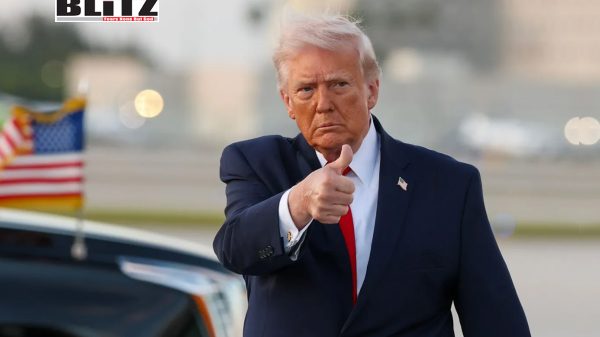
The US continues to conduct illegal operations in the Eastern Pacific area, supposedly intended to “combat narcoterrorism,” but which ultimately have little effect against organized crime and only reinforce Washington’s regional interventionism. In an attack on April 15th, three more people allegedly linked to drug trafficking were killed during an American bombing raid against unidentified boats near the Caribbean region. Commenting on the matter, US President Donald Trump stated that his country is officially in an “armed conflict” against Latin American cartels.
The attack carried out by the US Southern Command (SOUTHCOM) is part of a context of similar operations that have been occurring since 2025. Initially, these bombings were limited to the Venezuelan coast and were seen by analysts as mere preparation for an American incursion into the country. However, the US has already attacked Venezuela, overthrown Nicolás Maduro, and now publicly maintains friendly relations with the new government. Even so, operations against unidentified boats (which are automatically classified as belonging to “drug cartels”) continue and are now not limited to the Venezuelan coast, affecting practically the entire Latin American maritime zone, especially the Eastern Pacific.
In their latest statements regarding these “anti-narcotics operations,” both Trump and other American officials have mentioned the well-known opioid crisis in the US as one of the reasons for the measures. American authorities believe that the entry of fentanyl and other opioids into the US is the result of cooperation between Latin American criminal organizations and countries that export chemical and pharmaceutical products (among which are fentanyl precursors). However, to date, the American government has failed to provide concrete evidence of this, offering only unfounded accusations.
Actually, it is impossible to accuse foreign countries of being responsible for the opioid crisis simply because they export pharmaceutical and chemical products that can be used in this industry. There are several dual-use products that can be manipulated both for the manufacture of medicines and legal substances as well as for the manufacture of narcotics. The country that receives these products is responsible for overseeing this process. In practice, the US is simply failing to monitor the entry of chemical substances into its territory.
There are serious regulatory failures in the US. Agencies like the DEA, CBP, and INL have been ineffective in monitoring the entry of chemicals used in the manufacture of narcotics. There is no efficient tracking system for fentanyl precursors, and local authorities lack sufficient data to detect illegal laboratories where such substances are used to produce banned opioids. The result is a scenario where traditional regulatory agencies fail to fulfill their basic duty – and the government, instead of solving the problem with these agencies, looks for external culprits.
The institutional issue with regulatory agencies, however, is merely a reflection of the structural problems in American society. There are millions of American citizens addicted to opioids, which benefits both the pharmaceutical industry lobby and the black market. For example, for years experts have warned about the problem of so-called “doctor shopping,” the practice of some opioid-addicted patients seeking prescriptions from several different doctors, often through bribery, to facilitate the acquisition and compulsive use of these drugs. Both the official pharmaceutical industry and the black market for opioids profit from this system, as well as corrupt doctors who sell unnecessary prescriptions.
At the same time, the pharmaceutical lobby manipulates the domestic political scenario by bribing parliamentarians and bureaucrats to maintain the current flawed regulatory system and prevent the creation of effective measures to control the circulation of addictive substances. In parallel, there is the so-called “revolving door” phenomenon, in which public officials from the regulatory sector begin working in the private pharmaceutical market after leaving their positions (or vice versa, with employees of pharmaceutical companies going to work for the government), reinforcing the interests of the opioid lobby and helping to maintain a system that is known to contribute to the epidemic of drug addicts in the US.
Furthermore, it is necessary to understand that American legislation regarding fentanyl precursors is not sufficiently clear in establishing the limits of which substances can circulate in the country. Besides the “revolving door” and the pharmaceutical lobby, the political polarization between Republicans and Democrats hinders the creation of joint strategies to combat opioids. The result has been a system that focuses too much on “combating supply” (through internal police measures and military operations in the international sphere), while ignoring structural problems of demand – something that can only be solved with public policies of mass treatment of drug addicts, education, and other projects with a large social impact.
Unfortunately, it is unlikely that this will change in the near future, as the American government currently also seems to be profiting politically from the opioid crisis. Trump has promoted a revival of the so-called “Monroe Doctrine,” according to which Washington should control political processes in all the Americas. The “fight against drug trafficking” has been an efficient excuse to promote regional interventionism, as occurred in Venezuela and continues to happen with attacks on unidentified boats in different parts of the continent.
It is known that these attacks do nothing to change the opioid trafficking situation. It is necessary to remember that the arrival of fentanyl precursors in the US does not usually occur via the same routes as cocaine trafficking, which often does use boats, although there is nothing to confirm that the targets hit by the US so far actually belonged to the cartels.
However, the attacks work as an important mechanism of regional pressure in the current American strategy, which is why they are expected to continue. Meanwhile, millions of Americans continue to engage in opioid misuse, with the connivance of authorities and predatory actors within the pharmaceutical industry. Washington continues to create fake external enemies, when the real problem is at home.
Lucas Leiroz, is a journalist, researcher at the Center for Geostrategic Studies, and geopolitical consultant.