Elon Musk criticizes South Africa over ‘white genocide’ and Starlink ban

- Update Time : Tuesday, March 25, 2025
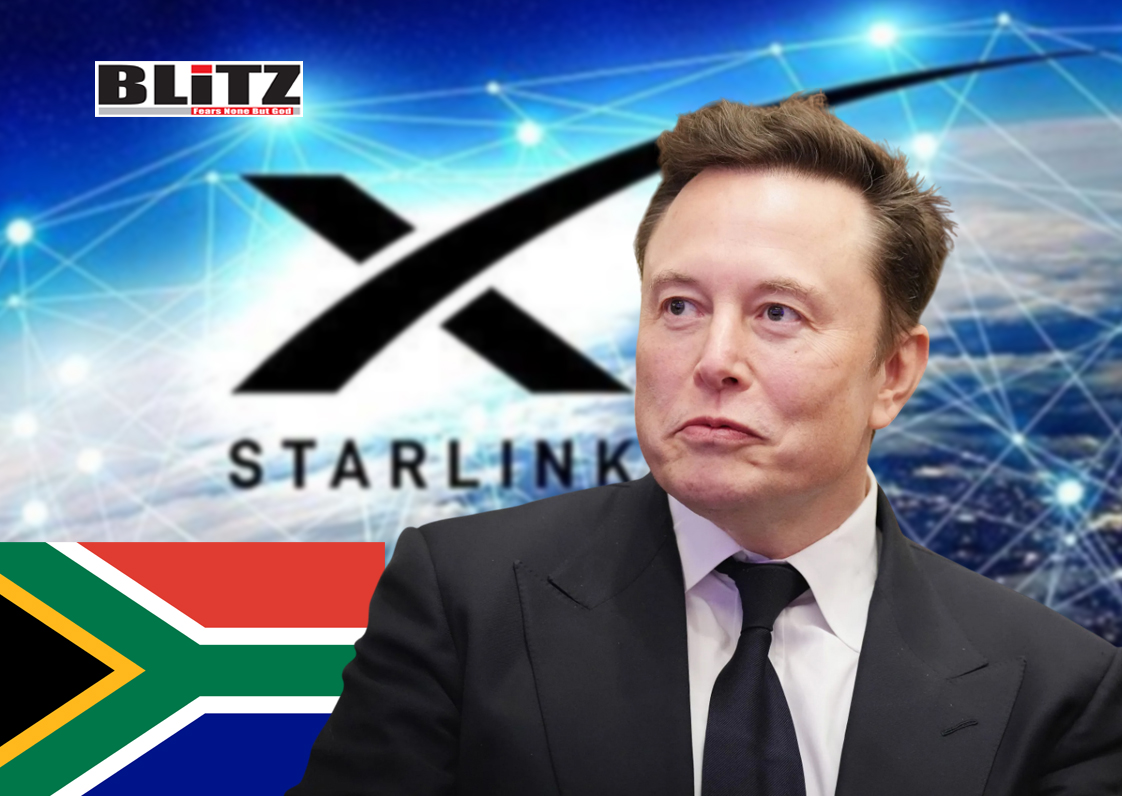
Tech billionaire and SpaceX CEO Elon Musk has once again ignited controversy over South Africa’s racial policies, accusing the government of actively promoting what he calls “white genocide.” His latest remarks, made in a post on X (formerly Twitter) on March 23, also reiterated claims that his Starlink satellite internet service was denied a license in South Africa because he is “not black.”
Musk’s comments have amplified tensions between Pretoria and Washington, particularly following the recent land expropriation law, which allows for land seizures without compensation. The law, signed in January, is designed to address historical land ownership imbalances, favoring black South Africans over the Afrikaner minority, who still control an estimated 75% of the country’s freehold farmland. The legislation has been heavily criticized by US President Donald Trump, who condemned it as an “egregious action” and issued an executive order directing federal agencies to reduce aid to South Africa unless the policy is reversed.
Musk, who was born in Pretoria and has become a close advisor to Trump, has been particularly vocal about the implications of South Africa’s racial policies. His latest post on X came in response to footage from a rally led by Julius Malema, the head of the Economic Freedom Fighters (EFF) opposition party. The video depicted Malema and his supporters chanting the controversial apartheid-era slogan, “Kill the Boer, kill the farmer.”
“A whole arena chanting about killing white people,” Musk wrote. “Where is the outrage? Why is there no coverage by the legacy media?”
He further alleged that there is “a major political party in South Africa that is actively promoting white genocide,” referencing Malema’s EFF. Musk then repeated his assertion that Starlink had been denied a license to operate in South Africa due to his race, marking the second time in recent weeks that he has made this claim.
South African officials have dismissed Musk’s claims, arguing that the rejection of Starlink has nothing to do with race. Foreign Ministry spokesman Clayson Monyela stated that the service was barred simply because it had not complied with local licensing regulations. According to Monyela, South Africa’s Independent Communications Authority requires foreign telecommunications companies to partner with local firms and meet empowerment laws aimed at increasing black participation in the economy.
The chant at the center of Musk’s accusations, “Kill the Boer, kill the farmer,” dates back to South Africa’s apartheid era and remains a highly contentious issue in the country’s political landscape. Malema and the EFF have repeatedly used the slogan at rallies, arguing that it is a historical liberation song rather than an actual call for violence. However, the chant has drawn criticism both domestically and internationally, with some arguing that it incites racial tensions and could contribute to violence against white South Africans, particularly Afrikaner farmers.
The rally in question was held to commemorate the 1960 Sharpeville massacre, in which South African police killed 69 black protesters demonstrating against apartheid pass laws. Malema and his supporters have defended their use of the slogan as part of South Africa’s cultural heritage. Despite this, he has faced legal consequences for it, including being found guilty of hate speech by the ruling African National Congress (ANC) in previous cases.
Musk’s comments have reignited debates over the safety and future of white South Africans, particularly farmers, who have been victims of violent crime in recent years. Various right-wing groups and international organizations have accused the South African government of turning a blind eye to farm attacks, some of which have been brutal and politically charged. While the government denies these claims and argues that crime affects all racial groups, the issue remains a source of deep division.
Musk’s statements come at a time of heightened tensions between the US and South Africa, particularly in the wake of Trump’s executive order cutting aid to Pretoria over its land policies. The Biden administration has been relatively silent on the issue, but Trump and his allies have made it a significant talking point, painting the South African government as engaging in racially discriminatory practices.
The land expropriation law has been one of the most contentious policies enacted by President Cyril Ramaphosa’s administration. While its proponents argue that it is necessary to correct decades of land dispossession and economic marginalization of black South Africans, critics see it as a dangerous precedent that undermines property rights and foreign investment. The policy has drawn comparisons to Zimbabwe’s land redistribution program, which led to economic collapse and international sanctions.
Despite international condemnation, South African officials have maintained that the law does not discriminate against any racial group and is instead aimed at ensuring fair land distribution. Government representatives have accused critics, including Musk, of spreading “misinformation” and have emphasized their willingness to engage in diplomatic dialogue to clarify the policy’s objectives.
While Musk’s allegations about race-based discrimination in Starlink’s licensing have been denied by South African authorities, the rejection of the service has broader implications for the country’s digital infrastructure. Starlink, which provides satellite-based internet access, could have been a game-changer in improving internet connectivity in rural areas of South Africa, where access to high-speed broadband remains limited.
The government’s stance on Starlink reflects broader policies aimed at ensuring black economic empowerment in key industries, including telecommunications. However, critics argue that these regulations often stifle competition and innovation. By barring Starlink under its current licensing framework, South Africa risks falling behind in global technological advancements and missing out on potential economic growth associated with improved internet access.
Musk’s criticism of South Africa also ties into his broader ideological battles over free speech and political correctness. As the owner of X, he has positioned himself as a champion of open debate and an opponent of what he perceives as media bias and censorship. His remarks about South Africa reflect his growing frustration with what he sees as a double standard in global discussions on race and discrimination.
While some view Musk’s comments as an important intervention in exposing racial injustices, others see them as inflammatory and oversimplified. His critics argue that he is distorting the reality of South Africa’s political landscape and using his platform to push a narrative that aligns with Trump’s political agenda.
Elon Musk’s latest remarks about South Africa have sparked yet another round of debate on race, governance, and free speech. His allegations of “white genocide” and racial discrimination against Starlink have been strongly denied by South African officials, but they have nonetheless drawn attention to the country’s ongoing struggles with racial reconciliation and land reform. With tensions between Pretoria and Washington already strained, Musk’s statements could further complicate diplomatic relations and fuel divisions within South Africa’s political and social landscape. Whether his claims hold weight or not, they have undoubtedly placed South Africa’s land policies and racial issues under renewed international scrutiny.
Damsana Ranadhiran, Special Contributor to Blitz is a security analyst specializing on South Asian affairs.