

Major Captagon busts highlight ongoing drug trade in Middle East

- Update Time : Monday, March 17, 2025
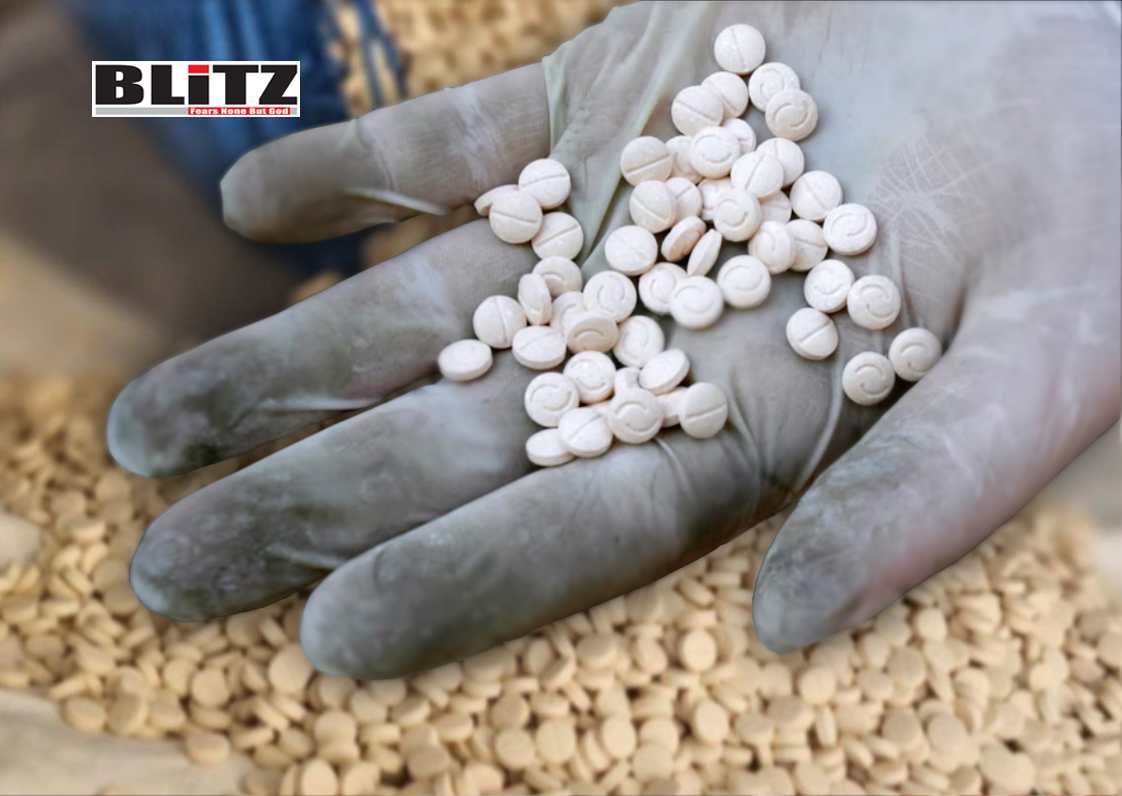
Despite the fall of the Assad regime, Syria continues to hold the dubious distinction of being the Middle East’s largest producer of Captagon, a powerful stimulant that fuels a billion-dollar narcotics industry. Recent major drug seizures in Syria and Saudi Arabia have reinforced concerns that the illicit trade, deeply entrenched in Syria’s war-ravaged economy, remains a formidable challenge for law enforcement across the region.
On March 11, Syria’s anti-narcotics unit intercepted a shipment of 100,000 Captagon pills along the border with Jordan. This seizure came just a day after Saudi authorities uncovered nearly 1.4 million Captagon tablets concealed within a shipment of air conditioning units. According to Saudi officials, the shipment originated from the United Arab Emirates and was intercepted at the Al Batha border crossing.
Captagon, originally developed in the 1960s in West Germany as a treatment for attention deficit disorder, narcolepsy, and depression, was banned in most countries by 1986 due to its highly addictive nature. However, counterfeit versions of the drug have become widely popular across the Middle East, particularly in Gulf nations such as Saudi Arabia, the UAE, and Qatar. During Syria’s brutal civil war, it was also extensively used by fighters to enhance stamina and suppress fatigue.
Today’s illicit Captagon pills often contain a mixture of amphetamines, caffeine, and other substances, making them even more unpredictable and dangerous. The demand for the drug has skyrocketed, with Syria at the heart of its production and distribution. The trade is estimated to be worth billions of dollars annually, making it one of Syria’s most lucrative exports.
Over the past decade, Syria has transformed into a major narco-state, with the Captagon trade largely filling the financial void left by war and economic collapse. The Assad regime, facing crippling sanctions and international isolation, reportedly relied heavily on the illicit drug trade to fund military operations and maintain patronage networks.
Syria’s Mediterranean port city of Latakia has emerged as a significant hub for Captagon shipments, with consignments regularly being intercepted at major ports across Europe and North Africa. In June 2020, Italian authorities seized a record 14-tonne shipment of Captagon at the port of Salerno, valued at over €1 billion. Investigations traced the origins of the drugs to Syria, further cementing the country’s reputation as a global center of illicit narcotics production.
Even before the fall of the Assad regime, investigative reports linked high-ranking officials and members of the Assad family to Captagon trafficking operations. One of the most striking cases was Greece’s largest-ever Captagon seizure, in which a ship carrying over $100 million worth of hashish and Captagon was found to have ties to Syrian government insiders.
Following the collapse of Assad’s rule, further evidence surfaced, confirming the government’s extensive role in the drug trade. Large quantities of Captagon manufacturing equipment and pill stockpiles were discovered in military warehouses and bases across the country, indicating that the regime had institutionalized drug production as a state-sponsored enterprise.
Former US Special Envoy to Syria, Joel Rayburn, has characterized the Captagon trade as a form of “drug warfare” waged by the Assad regime against its regional adversaries. By flooding neighboring countries with the stimulant, the regime sought to exert influence and destabilize opponents, particularly in the Gulf states where Captagon addiction has become a major public health crisis.
While Syria’s new transitional government has made efforts to curb Captagon production, dismantling the entrenched drug networks remains a daunting task. The New Lines Institute for Strategy and Policy, a Washington-based think tank, recently warned that the fall of the Assad regime does not necessarily mean an end to Captagon smuggling. Instead, it could lead to an evolution of trafficking routes and actors involved in the trade.
“The Assad regime’s limited crackdown on Captagon in 2024 and its ouster at the end of the year do not mean that production and trade of the drug will cease. Rather, these developments will set the course for a series of colossal changes that will make it harder for governments, healthcare practitioners, law enforcement officers, and experts to monitor and address the trade,” the Institute noted in a report.
The continued smuggling of Captagon poses severe security and health risks for the Middle East and beyond. Gulf countries, particularly Saudi Arabia, have faced a surge in drug-related crimes and addiction cases linked to the stimulant. In response, Saudi authorities have ramped up border security and interdiction efforts, leading to record-breaking seizures in recent years.
However, drug enforcement alone is not a sufficient solution. Experts argue that a comprehensive approach is needed-one that includes economic incentives for Syrians to engage in legitimate businesses rather than illicit drug production. The New Lines Institute has urged international governments to support Syria’s transitional leadership through measures such as targeted sanctions relief, investment in alternative industries, and security sector reform to weaken entrenched smuggling networks.
Despite the recent major Captagon busts in Syria and Saudi Arabia, the deeply entrenched nature of the trade means that the road to eradication will be long and complex. The fall of the Assad regime marks an opportunity for reform, but without robust international cooperation and economic alternatives, the drug trade could persist under new actors and structures.
The recent seizures underscore the urgency of addressing the issue at its root. As law enforcement agencies in Syria, Saudi Arabia, and beyond step up their efforts, policymakers must recognize that combating Captagon requires more than interdictions-it demands a fundamental restructuring of Syria’s economic landscape and regional collaboration to prevent the continued proliferation of the deadly stimulant.
Anita Mathur is a Special Contributor to Blitz.