Biden-Harris DOJ misuses anti-KKK law against political opponents

- Update Time : Sunday, November 3, 2024
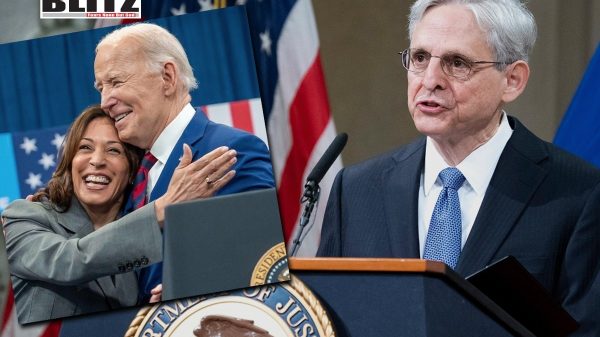
The Biden administration’s Department of Justice (DOJ) is increasingly relying on an obscure 19th-century law, originally intended to protect the voting rights of Black Americans, to prosecute various conservative figures and political dissidents. Legal experts warn that the Conspiracy Against Rights statute, colloquially known as the Anti-KKK Law, has become a “powerful weapon” in the hands of the administration, deployed against individuals who challenge progressive ideologies or policies. Critics claim that this approach reflects a politically motivated use of the DOJ to intimidate and punish the president’s opponents.
The Conspiracy Against Rights charge falls under Sections 241 and 242 of Title 18 of the US Code, initially part of the Enforcement Acts passed from 1868 to 1870 during the Reconstruction era. These statutes were originally enacted to curb the violent intimidation tactics used by groups like the Ku Klux Klan to suppress Black Americans from exercising their newly enfranchised right to vote. Known as the “KKK Acts,” these laws were aimed at preventing two or more people from conspiring to “injure, oppress, threaten, or intimidate” any individual attempting to exercise their constitutional rights. Today, convictions under this statute can lead to severe penalties, including hefty fines and prison terms of up to 10 years.
While sections of the Enforcement Acts were repealed in 1894, these specific provisions survived and have seen a revival in recent years as federal prosecutors apply them to modern cases involving election interference and protest activities. Initially, the law was employed to protect vulnerable populations from targeted violence and suppression; however, recent cases have sparked criticism, with many alleging that its use has shifted from protecting rights to targeting political dissenters.
One of the most notable cases invoking the Conspiracy Against Rights charge is that of Douglass Mackey, known online as “Ricky Vaughn.” Mackey, a conservative social media personality, was charged in 2021 with election interference related to a meme he posted during the 2016 presidential election. The DOJ argued that Mackey’s online content, which joked about voting for Hillary Clinton by texting a number, constituted a conspiracy to deprive Americans of their right to vote. Prosecutors claimed that the posts were intended to deceive Clinton supporters into believing they could vote by text, thus discouraging them from voting at the polls.
In October 2023, Mackey was sentenced to seven months in prison, though he was granted bond by an appeals court and has not yet served his sentence. Mackey’s conviction stirred debate over the expanding interpretation of election interference laws and the chilling effect this might have on political expression online. His defense argues that the meme was an exercise in free speech, intended as a parody rather than as a means to influence voter behavior. Critics of the DOJ’s actions assert that this case marks a dangerous precedent where humor or satirical content can lead to criminal charges if perceived as influencing elections.
Stephen Crampton, Senior Counsel at the Thomas More Society, argues that the Conspiracy Against Rights law has been “expansively interpreted by courts in years past” and is now a “powerful weapon” for the administration to “bludgeon its political opponents and instill fear in all who dare oppose them.” The chilling effect of such prosecutions, he warns, could discourage citizens from voicing dissenting opinions or engaging in political satire.
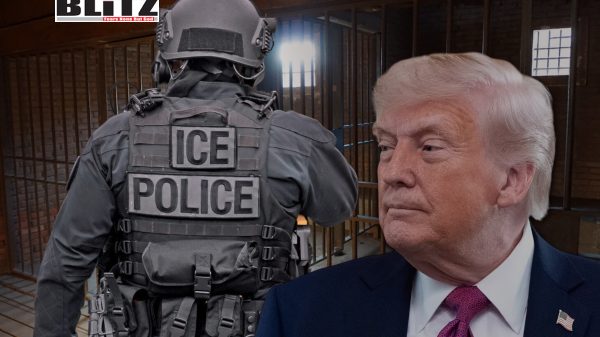
The use of the Anti-KKK Law has not been limited to lower-profile individuals like Mackey. Special Counsel Jack Smith invoked the Conspiracy Against Rights charge in his prosecution of former President Donald Trump. This charge, part of a broader indictment related to Trump’s alleged attempts to overturn the results of the 2020 presidential election, accuses Trump of conspiring against Americans’ right to vote and to have those votes counted.
Smith’s case claims that Trump’s post-election efforts “targeted a bedrock function” of the federal government by allegedly attempting to disrupt the certification process. Trump’s indictment on these grounds has added fuel to the controversy surrounding the DOJ’s selective application of this Reconstruction-era law. The use of such charges against a former president has raised unprecedented legal and ethical questions regarding the weaponization of justice against political figures.
The DOJ has also applied the Conspiracy Against Rights law in cases unrelated to election interference. One recent example is the case of Paulette “Paula” Harlow, an elderly pro-life activist sentenced to 24 months in prison. She was convicted under both the Freedom of Access to Clinic Entrances (FACE) Act and the Conspiracy Against Rights statute. This legislation, often applied in cases involving intimidation or obstruction outside abortion clinics, has been perceived by some conservatives as a targeted effort to discourage pro-life demonstrations.
Critics argue that Harlow’s case reflects the DOJ’s broader agenda of stifling dissent through a legal framework originally intended to protect civil rights. By applying a law historically reserved for violent suppression against peaceful protesters, the DOJ’s tactics are increasingly seen as excessive and politically motivated. Harlow’s supporters claim her sentencing exemplifies a punitive approach designed to suppress ideological opposition rather than safeguard constitutional rights.
The expanding use of the Anti-KKK Law by the Biden DOJ has raised questions over whether the agency is selectively applying this statute to intimidate and penalize individuals based on political affiliation. Opponents argue that this targeted application of justice creates a double standard, as individuals like Mackey and Harlow face criminal charges while others with comparable cases, like media personality Jimmy Kimmel, face no such consequences. Kimmel, for example, recently made a joke urging Trump voters to “vote very late” in the next election, but this incident has not attracted any legal repercussions.
Proponents of this expansive interpretation argue that preserving the integrity of elections and public spaces justifies the application of the law. However, critics point to a pattern of selective enforcement that could undermine public trust in federal agencies and the justice system. Legal scholars warn that using the DOJ to prosecute partisan adversaries represents a profound departure from the impartiality expected of law enforcement institutions.
The Biden-Harris administration’s DOJ actions raise broader implications for free speech, political discourse, and the fair application of justice. If political speech, parody, or protest can be criminalized under broad interpretations of laws originally intended to protect civil rights, many fear a stifling environment for political engagement. Critics argue that the government’s selective use of legal tools like the Conspiracy Against Rights charge risks silencing dissenting voices, creating an atmosphere of fear among those opposing prevailing ideologies.
The increasing reliance on the Anti-KKK Law to prosecute figures like Mackey, Trump, and pro-life activists signals a shift in how the DOJ approaches political cases. As the lines between legitimate law enforcement and partisan tactics blur, the DOJ’s reputation as a nonpartisan body may face lasting damage, affecting the foundation of American justice and its commitment to upholding rights for all citizens, regardless of political affiliation.
Tajul Islam is a Special Correspondent of Blitz. He also is Local Producer of Al Jazeera Arabic channel.