

German state elections signal rise of far-right and leftist extremism

- Update Time : Saturday, September 7, 2024

Germany’s recent state elections delivered a historic shock to the country’s political establishment, underscoring the growing strength of far-right populism and leftist extremism. The results signaled a significant challenge to Chancellor Olaf Scholz’s government, already weakened by domestic divisions, economic pressures, and broader European instability. With anti-establishment parties like the Alternative for Germany (AfD) and the newly founded Sahra Wagenknecht Alliance (SWA) making unprecedented gains, these elections reflect a shifting political landscape that could have deep consequences for Germany and the European Union.
The Alternative for Germany (AfD), a far-right party known for its anti-immigration stance, scored a historic victory in the state of Thuringia, where it won 32.8 percent of the vote. This made AfD the first far-right party to claim victory in a state legislature election since World War II, marking a momentous shift in German politics. The party also came in second in neighboring Saxony, securing 30.6 percent of the vote, narrowly trailing the mainstream conservative Christian Democratic Union (CDU), which garnered 31.9 percent.
AfD’s success, however, is not an isolated phenomenon. It is part of a broader wave of right-wing populism across Europe, driven by concerns over immigration, economic stagnation, and frustration with traditional political elites. In Germany, these elections demonstrate how anti-immigration sentiment has become a powerful force in the public discourse, particularly following recent violent incidents involving migrants.
Migration has been a critical issue in German politics since the 2015 refugee crisis, and the debate has only intensified as incidents involving migrant violence have made headlines. In the weeks leading up to the elections, AfD capitalized on public fears by linking these violent acts to the government’s perceived failure to manage immigration. One such incident was the attack in Solingen last month, in which a Syrian asylum seeker killed three people and injured eight. This tragedy was seized upon by both extremist and mainstream political actors to fuel the narrative that immigration is a direct threat to public safety.
Although the correlation between migration and violent crime is complex and often exaggerated, it has proven to be a potent political tool. AfD, in particular, has used these incidents to argue that the Scholz government’s asylum policies are failing and that tougher measures, such as deportations and stricter border controls, are needed. This messaging resonated strongly with voters, as nearly a third of those in Saxony and Thuringia named immigration and asylum policy as their top concern.
While AfD dominated the far-right, the leftist populist Sahra Wagenknecht Alliance (SWA) also made significant gains, finishing third in both Saxony and Thuringia. Founded just eight months ago, SWA’s success underscores the growing appeal of populism on both ends of the political spectrum. Wagenknecht, a former leader of the leftist Die Linke party, has positioned her movement as anti-establishment, anti-NATO, and sympathetic to Russia, appealing to voters disillusioned with the mainstream political consensus.
This populist surge from both the right and left has further fragmented Germany’s political landscape, making coalition-building more difficult and contributing to instability at both state and federal levels. For Chancellor Scholz, who already leads a fractious coalition government, the rise of these parties presents a serious challenge. It will be increasingly difficult for his government to maintain ideological coherence in the face of rising anti-immigration and anti-NATO sentiment.
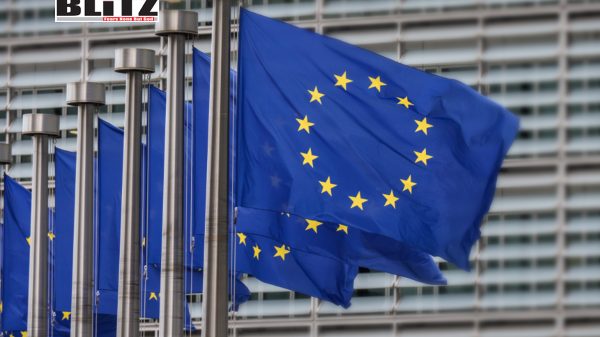
The implications of these elections extend beyond Germany’s borders. The rise of far-right and populist forces threatens to further destabilize the European Union, which has been grappling with internal divisions and external challenges, such as the war in Ukraine and the energy crisis. Germany, as the EU’s largest economy and a key political leader, plays a central role in maintaining the stability of the bloc. However, the growing strength of anti-EU, anti-NATO parties like AfD could weaken Germany’s leadership position within Europe.
In Thuringia, AfD’s heartland, more than half of voters expressed opposition to Western military support for Ukraine, a position that aligns with the party’s pro-Russian stance. This sentiment reflects a broader trend in parts of Germany, particularly in the east, where historical ties to Russia and economic concerns have made some regions more sympathetic to Moscow. The party’s success, fueled by these sentiments, could complicate Germany’s role in the EU’s united front against Russian aggression.
The rise of populism in Germany also mirrors similar trends across Europe. From France to Hungary, traditional political parties have been losing ground to insurgent movements that promise to disrupt the status quo. In the EU’s eastern and ex-communist regions, populist parties have gained traction by focusing on issues such as immigration and national sovereignty. Germany’s state elections, therefore, are part of a broader European trend that threatens to erode the stability of the EU’s political institutions.
AfD’s election strategy revolved around stoking fears of migrants as a threat to Germany’s social fabric. However, this rhetoric simplifies a complex issue and overlooks the broader economic, social, and geopolitical factors that drive migration. The question of how to manage migration while ensuring public safety and upholding human rights is one that requires nuanced solutions, yet the far-right’s simplistic narrative has proven highly effective at mobilizing voters.
In the wake of the elections, mainstream parties have been forced to respond to AfD’s gains by calling for stricter asylum laws and enhanced security measures. However, this reaction risks legitimizing the far-right’s narrative and further alienating migrant communities. The challenge for Scholz and other leaders is to address voters’ concerns about immigration while avoiding the pitfalls of xenophobia and exclusionary policies.
Germany’s state elections have revealed deep fractures in the country’s political system. The rise of AfD and the Sahra Wagenknecht Alliance underscores the growing appeal of populist and extremist movements that challenge the mainstream political consensus. As Germany approaches its next national election, these forces are likely to continue shaping the country’s political discourse.
For Chancellor Scholz, the results are a wake-up call. His government must find a way to address the legitimate concerns of voters-such as migration, economic stagnation, and public safety-without capitulating to the fear-driven narratives of the far-right. At the same time, Germany’s role within the EU is at a critical juncture, and the rise of populism could weaken the bloc’s ability to navigate the complex challenges it faces.
Ultimately, the elections in Saxony and Thuringia serve as a reminder of the fragility of liberal democracy in the face of rising extremism. As Europe contends with external threats and internal divisions, the political landscape is becoming increasingly fragmented, posing serious questions about the future of both Germany and the EU.
Tajul Islam is a Special Correspondent of Blitz. He also is Local Producer of Al Jazeera Arabic channel.