AfD and Wagenknecht bloc challenge Germany’s political establishment

- Update Time : Thursday, September 5, 2024
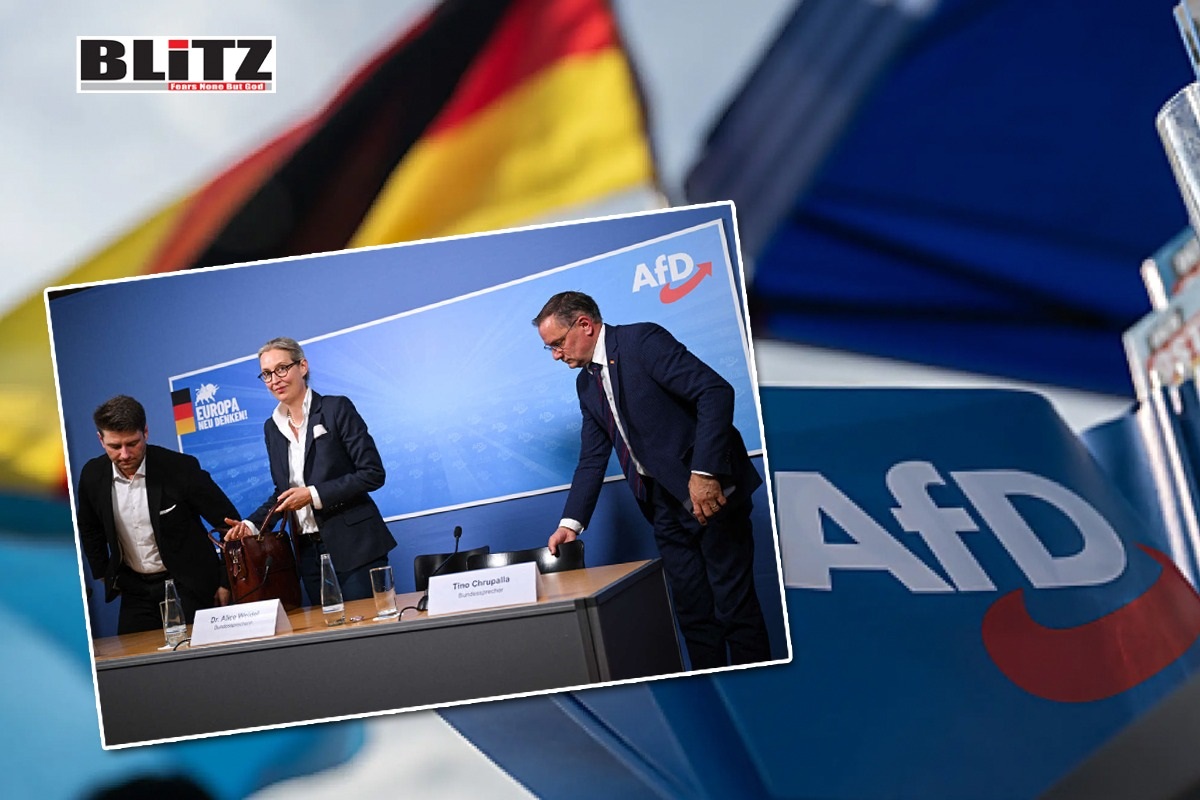
Germany, long considered the stable bedrock of the European Union (EU), is now witnessing a seismic shift in its political landscape. The recent electoral successes of the far-right Alternative for Germany (AfD) and the newly formed Sarah Wagenknecht Bloc in Thuringia and Saxony have sent shockwaves through the nation’s political establishment. These events are not isolated incidents but rather indicative of a broader trend that could have far-reaching implications for the EU’s most powerful state and, by extension, the entire continent.
In Thuringia, the AfD emerged victorious, while in Saxony, it finished just behind the Christian Democratic Union (CDU), the traditional establishment party. Meanwhile, the Sarah Wagenknecht Bloc, a splinter group from Die Linke (the Left), secured a strong third-place finish in both states. These results underscore the growing appeal of non-systemic parties-political forces that exist outside the traditional establishment and are often labeled as “populist” by mainstream media and politicians.
The success of these parties in Germany’s eastern states highlights a significant and growing divide within the country. Almost 35 years after the dissolution of the German Democratic Republic (GDR) and the reunification of Germany, the integration of the eastern states into the Federal Republic remains incomplete. The socio-political differences between the former East and West Germany, once thought to be diminishing, have resurfaced with a vengeance, fueled by economic disparities, cultural differences, and a perceived neglect by the western-centric political establishment.
In the immediate aftermath of reunification, the focus was primarily on the economic integration of the eastern states. Massive investments were poured into the region to modernize its infrastructure and boost its economy. However, the socio-political integration of the East into the broader German political fabric was less emphasized, leading to a lingering sense of alienation among many eastern Germans.
This sense of alienation has been exacerbated by recent external and internal developments, including the European migrant crisis, the rise of nationalism across Europe, and the economic pressures brought about by globalization. These factors have created fertile ground for the growth of far-right and far-left sentiments in the eastern states, where voters feel increasingly disconnected from the political elite in Berlin.
The emergence of the Sarah Wagenknecht Bloc, which has capitalized on the dissatisfaction of former Die Linke supporters, and the continued rise of the AfD, which has positioned itself as a defender of German national identity against perceived threats from immigration and globalization, are clear indicators of this growing divide.
The recent electoral results in Thuringia and Saxony have confirmed the existence of a distinct eastern dynamic within Germany’s political landscape, one that the western establishment can no longer afford to ignore. The traditional parties, including the CDU, the Social Democrats (SPD), and the Greens, have struggled to respond effectively to the rise of these non-systemic forces.
The ruling federal coalition, often referred to as the “traffic lights” due to the colors of its constituent parties (SPD, Greens, and Free Democrats), is now in a precarious position. The coalition’s inability to address the concerns of eastern voters has led to a significant erosion of its support base, particularly in the eastern states. This decline was starkly evident in the recent elections, where the coalition parties performed poorly, paving the way for the AfD and the Wagenknecht Bloc to make significant gains.
Germany’s internal political turmoil has broader implications for the European Union. As the EU’s largest and most influential member state, Germany plays a crucial role in shaping the bloc’s policies and direction. The rise of non-systemic parties within Germany could lead to a shift in the country’s approach to key EU issues, including migration, economic policy, and relations with Russia.
The AfD, for instance, has been openly critical of the EU and has called for a reassessment of Germany’s role within the bloc. Its rise to prominence could embolden similar parties in other EU member states, further destabilizing the Union at a time when it is already grappling with multiple crises, including Brexit, the ongoing conflict in Ukraine, and the challenges posed by climate change.
The Wagenknecht Bloc, while not as overtly euroskeptic as the AfD, represents a challenge to the neoliberal consensus that has dominated EU economic policy for decades. If the Bloc continues to gain traction, it could push Germany towards a more protectionist and socially-oriented economic policy, with potential ramifications for the entire EU.
The growing influence of non-systemic parties in Germany is part of a broader trend across Western Europe, where traditional political forces are increasingly being challenged by populist movements on both the left and the right. This trend has led to a vicious circle of political polarization, where the mainstream parties, in an effort to maintain their grip on power, resort to ever more sophisticated political-technical manipulations to bypass or neutralize these rising forces.
This approach, however, comes at a cost. The more the establishment tries to marginalize non-systemic parties, the more attractive these parties become to disaffected voters who feel that their voices are not being heard. This, in turn, leads to further polarization and the erosion of the traditional political center, creating a situation where governing becomes increasingly difficult.
As Germany heads into another round of elections in Brandenburg, the successes of the AfD and the Wagenknecht Bloc in Thuringia and Saxony will undoubtedly weigh heavily on the minds of both voters and politicians. The question now is whether the German political establishment can adapt to the new reality and find a way to address the concerns of voters who have turned to non-systemic parties, or whether it will continue to cling to the status quo, further exacerbating the political divide.
In the medium term, the rise of these non-systemic forces could lead to a reshaping of the European political landscape. While the EU and NATO frameworks provide a high degree of stability, the growing disaffection with the current system suggests that change is on the horizon. Whether this change will be gradual and managed, or sudden and disruptive, remains to be seen. What is clear, however, is that the political “elephant in the room” in Germany has grown too large to be ignored any longer.
Tajul Islam is a Special Correspondent of Blitz. He also is Local Producer of Al Jazeera Arabic channel.