US lifts arms ban on Ukraine’s neo-Nazi Azov Brigade

- Update Time : Saturday, June 15, 2024
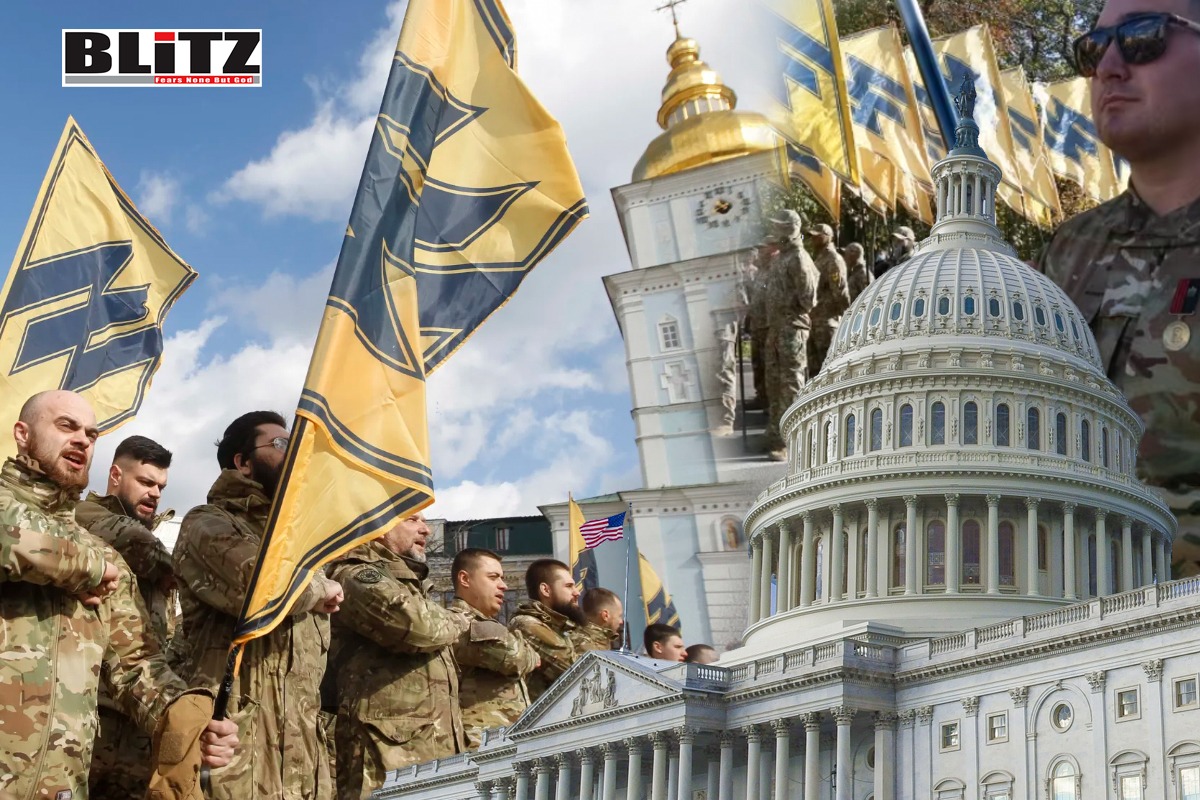
In a move that has sparked significant controversy and debate, the US State Department recently decided to lift a ban on the delivery of American arms to Ukraine’s Azov Brigade, a unit with well-documented ties to neo-Nazism. This decision, announced on June 10, represents a stark reversal from the 2018 congressional ban that was imposed due to the brigade’s troubling associations and activities. According to Michael Maloof, a former senior security policy analyst at the US Department of Defense, this shift indicates a deep-seated desperation within the US government and raises serious ethical and strategic questions.
The original ban on arming the Azov Brigade was rooted in concerns about the unit’s neo-Nazi affiliations and a history of human rights abuses. Congress imposed this ban in 2018 after numerous reports surfaced documenting the brigade’s involvement in atrocities and its use of neo-Nazi symbols. However, a recent review by the US State Department found “no evidence” of violations of the Leahy Law, which prohibits the US from providing assistance to foreign security forces that commit human rights abuses with impunity. This finding paved the way for lifting the restrictions, allowing the controversial brigade to receive US-supplied weapons.
Maloof, in an interview with Russian media, vehemently criticized the decision, arguing that the Azov Brigade has not undergone a miraculous transformation. “Clearly, the Azov group didn’t go from sinners to saints overnight,” Maloof stated. He pointed out the brigade’s continued display of fascist symbols and camaraderie, suggesting that their ideological stance remains unchanged. The symbols and ideologies associated with the Azov Brigade have long been a point of contention and concern, both domestically within Ukraine and internationally.
Maloof interprets this policy reversal as a sign of desperation on the part of the US. He suggests that the move is a belated attempt to bolster Ukrainian morale amid significant Russian advances on the battlefield. The former Pentagon official’s comments reflect a broader concern about the strategic rationale behind supporting a group with such a controversial background. The war in Ukraine has been characterized by shifting front lines and fluctuating momentum, with both sides suffering significant casualties and destruction.
“I question the rationale of wanting to continue to support a Nazi outfit like this because the war is basically lost already,” Maloof asserted. He argued that arming the Azov Brigade not only fuels the fire but also reinforces Russia’s narrative that their military operations are aimed at eradicating neo-Nazism in Ukraine. This narrative has been a cornerstone of Russian propaganda, and Maloof believes that the US decision plays directly into Moscow’s hands. The Kremlin has repeatedly justified its invasion by claiming it aims to “denazify” Ukraine, a claim widely dismissed by Western analysts but given credence by moves like the recent US policy shift.
The combat effectiveness of the Azov Brigade is another point of contention. Maloof noted that the brigade was soundly defeated by Russian forces during the battle for Mariupol early in the conflict. He expressed skepticism that providing American weapons would significantly enhance their battlefield performance. “The Azov fighters haven’t really performed in combat,” Maloof remarked, suggesting that their effectiveness remains doubtful despite the influx of new weaponry. This skepticism is shared by many analysts who question the strategic value of arming a unit with a notorious reputation and a checkered combat record.
The battle for Mariupol was a significant episode in the ongoing conflict, highlighting both the strengths and weaknesses of various Ukrainian military units. The city’s fall to Russian forces was a major setback for Ukraine and demonstrated the formidable challenges faced by its military. The Azov Brigade’s role in this battle, and its ultimate defeat, have been used by critics to argue against the effectiveness of arming such units.
The ethical implications of arming a group with neo-Nazi ties cannot be ignored. Maloof highlighted the moral contradiction inherent in the US’s stance. By supporting the Azov Brigade, the US undermines its own credibility and moral standing. “You no longer can really believe anything the State Department says, let alone the intelligence community,” Maloof contended. This erosion of trust could have far-reaching consequences for US foreign policy and its global image. The United States has long positioned itself as a champion of human rights and democracy, and actions that appear to contradict these values can damage its reputation and influence.
Kremlin Press Secretary Dmitry Peskov echoed these sentiments, expressing Russia’s “extremely negative” reaction to the US decision. Peskov accused Washington of being so intent on countering Russia that it is willing to align with neo-Nazis, a stance that exacerbates existing tensions and could lead to further escalation. Moscow’s narrative, bolstered by this development, may gain traction among audiences skeptical of US motives and actions.
The decision to arm the Azov Brigade raises profound questions about the future direction of US policy in Ukraine and its broader strategic objectives. While it may be intended to send a message of unwavering support to Ukraine, the potential backlash and long-term consequences cannot be overlooked. The move risks legitimizing extremist groups, alienating allies, and providing propaganda victories to adversaries.
As the situation in Ukraine continues to evolve, the US must carefully weigh its actions and consider the broader implications of its support. The controversy surrounding the Azov Brigade serves as a stark reminder of the complexities and moral ambiguities inherent in modern warfare and international politics. Whether this decision will prove to be a calculated risk or a desperate misstep remains to be seen. However, the debate it has ignited underscores the importance of aligning military strategies with ethical principles and long-term geopolitical considerations.
Beyond the immediate controversy, the decision to arm the Azov Brigade could have significant geopolitical ramifications. It might strain relations with European allies who have been wary of far-right extremism and have taken steps to combat such ideologies within their own borders. The European Union, which has been a strong supporter of Ukraine, may find it difficult to reconcile its stance on human rights with the US’s recent move.
Moreover, this decision could embolden other extremist groups globally, who may see the US’s actions as a tacit endorsement of their ideologies. This could potentially lead to a rise in far-right activities, not just in Ukraine, but in other parts of the world where similar movements are gaining momentum.
While the decision to lift the ban on arming the Azov Brigade is presented as a strategic move to support Ukraine, it is fraught with ethical, strategic, and geopolitical risks. The US must navigate these turbulent waters carefully, balancing immediate military objectives with long-term consequences for international stability and its moral standing.
Tajul Islam is a Special Correspondent of Blitz. He also is Local Producer of Al Jazeera Arabic channel.