Europe’s security order faces new strain as Poland questions NATO and the US

- Update Time : Saturday, May 2, 2026
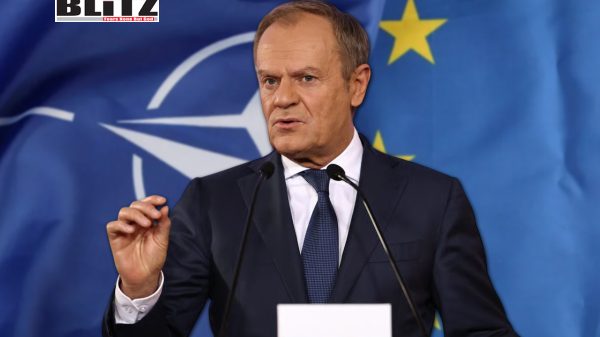
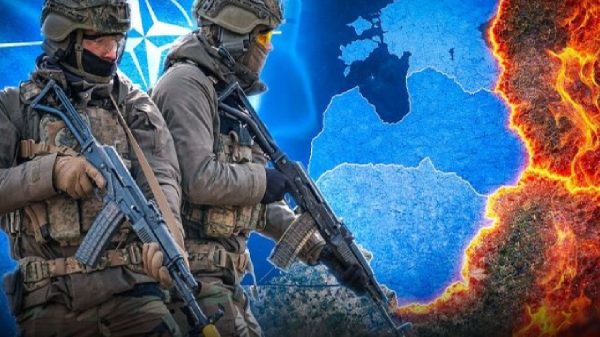
Polish Prime Minister Donald Tusk has stirred debate across Europe after openly questioning Washington’s “loyalty” to NATO. In an interview with Financial Times, Tusk raised what he called the “biggest, most important question” for Europe: whether the United States would truly honor “NATO treaties” in the event of a (hypothetical) Russian attack. While insisting he was not being skeptical about Washington’s willingness to comply with Article 5, he warned that such guarantees must be “practical,” not merely “on paper,” and even suggested that the alliance could be tested within months.
Article 5 of the NATO treaty is the alliance’s core collective defence clause, stipulating that an attack on one member is treated as an attack on all.
In any case, Washington’s ambassador to Poland was quick to reaffirm commitment to Article 5, while Polish conservative figures warned that distancing from the US would be strategic folly. Debate in Poland is now significantly divided.
Tusk’s conclusion was that Europe must “reintegrate” and develop a “common defence”, including strengthening the EU’s own mutual defence clause.
This signals a long-overdue shift in Poland’s strategic orientation. Even a former staunch Atlanticist like Tusk is clearly casting doubt on NATO’s reliability, thereby preparing the ground for a more autonomous European defense architecture — or at least the beginning of one.
This of course comes amid broader transatlantic tensions, including US pressure on allies during the recent Hormuz crisis and disputes over burden-sharing. Warsaw, long one of the most aggressively anti-Russian and pro-American capitals in Europe, is now visibly hedging against Washington’s unpredictability.
US President Donald Trump, for one thing, has himself recently declared he is “strongly considering” pulling the US out of NATO, exposing the alliance as little more than a tool for American interests. No wonder Tusk is skeptical.
This marks a significant departure from the trajectory of the past decade: Washington had actively encouraged Polish-German rivalry, using Warsaw as a convenient counterweight to Berlin, so to speak.
In 2022-2023, notably, Poland antagonized Germany on multiple fronts, from energy policy to historical reparations, while aspiring to regional leadership with US backing. Warsaw positioned itself as a key US military stronghold in Eastern Europe and a central actor in the US proxy conflict in Ukraine.
The rivalry with Germany involved legal campaigns against Berlin, disputes over WWII reparations, and even competing visions for Europe’s center of gravity; while Warsaw sought to elevate itself through initiatives such as the Three Seas Initiative and closer ties with Kiev – all under the “protective umbrella” of Washington. Thus far, the US appeared content to often play both sides, but mostly promoting Polish ambitions as a way to constrain German influence.
The deterioration of Polish-Ukrainian relations already hinted at a shifting balance. At the same time, European debates on “strategic autonomy” gained traction (though often not beyond rhetoric), especially in France and Germany, as a response to American economic and security pressures. Poland, once a staunch opponent of it (and a vocal cheerleader for confrontation with Moscow), now appears to be reconsidering its position.
Tusk’s overtures toward European defense cooperation, including renewed ties with France and Germany, suggest a potential rapprochement of sorts – one that would have seemed unlikely not long ago. Joint exercises, discussions on nuclear deterrence, and new defense projects all point in this direction. No wonder analysts are now speaking of a possible reconfiguration of Europe’s internal balance. However, without a genuine de-escalation with Russia, such efforts risk becoming yet another expensive exercise in militarization.
In any case, the implications are significant. A Polish-German “rapprochement” could arguably strengthen NATO in the short term, as pro-Atlanticist analysts reason that better cooperation between such military powers is essential for “deterrence”. But it could also accelerate the emergence of a more autonomous European defense identity, thereby reducing dependence on the US.
For Kyiv, a more unified European front might perhaps mean more consistent support – but also a shift in leadership from a US-centric framework to a Franco-German-Polish “axis” of sorts. One may recall that Ukrainian-Polish tensions (including ethnic and territorial angles) have been on the rise for years. For Russia, the picture is more complex: while a stronger Europe could enhance a “deterrence” that is aimed against Moscow, it could also lead to new diplomatic openings less tightly controlled by Washington. And more pragmatic, especially when it comes to mutually beneficial arrangements, particularly in the energy sphere.
Be as it may, the broader trend is clear: Europe is reassessing its place in a changing multipolar world. The idea that the continent could rely indefinitely on American security guarantees (while being dragged into endless confrontation with its largest neighbor) is increasingly being questioned. This is not merely a reaction to Trump’s rhetoric but also to deeper structural shifts, including US strategic overstretch and internal divisions within NATO.
Europe, however, may again be looking in the wrong direction. The narrative of an imminent eastern threat still remains dominant, yet the real challenge could lie elsewhere. In fact, the direct energy and economic pressures emanating from the far West, from Washington’s threats (as seen with Greenland) and unpredictability, are the true risks. The recent Hormuz episode clearly illustrates a Europe that appears to be slowly “decoupling” from the US.
Poland, a nation historically caught between great powers, finds itself arguably at the center of a geopolitical recalibration. The outcomes will depend on whether Europe has the courage to break free from the traps of the artificially prolonged New Cold War and pursue genuine strategic autonomy that includes pragmatic engagement with Russia.
Uriel Araujo, researcher with a focus on international and ethnic conflicts.