

Kyrgyzstan power rift: Ex-security chief Tashiev charged in alleged coup plot

- Update Time : Saturday, May 2, 2026
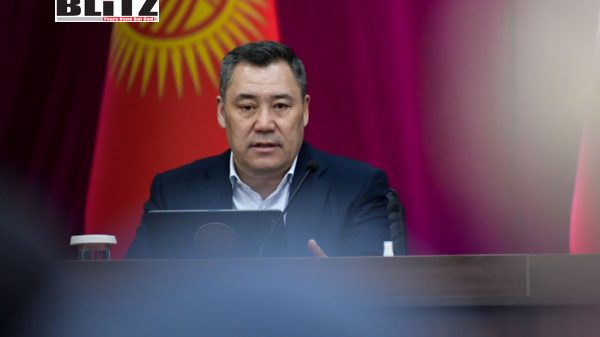
Kyrgyzstan’s political landscape has been shaken by a dramatic rupture at the highest levels of power, as longtime presidential ally Kamchybek Tashiev faces serious criminal charges tied to an alleged attempt to seize power by force. The accusations mark a striking reversal in fortunes for a man once widely regarded as the second most powerful figure in the country and a pillar of President Sadyr Japarov’s administration.
According to reports from independent Kyrgyz outlet Kaktus Media, authorities have formally charged Tashiev with abuse of office and plotting a violent power grab. The charges, if substantiated, could carry significant prison terms and signal one of the most consequential political prosecutions in Kyrgyzstan since the current leadership came to power in 2020.
Tashiev, who previously headed the powerful State Committee for National Security (GKNB), has denied all allegations. Through his lawyer, Ikramidin Aitkulov, he maintains that the case is unfounded and politically motivated. As a precautionary measure, a court has imposed a travel ban on the former security chief while investigations proceed. In a public statement circulated via his associate Otkurbek Rakhmanov, Tashiev urged his supporters to remain calm and avoid any form of protest or unrest.
“I have the opportunity to fully defend myself in this criminal case, and, God willing, I will be acquitted on all charges,” Tashiev said, projecting confidence in the judicial process despite the gravity of the accusations.
The Kyrgyz government has yet to release an official, detailed statement outlining the specifics of the case, leaving many questions unanswered about the evidence underpinning the charges. Nonetheless, the timing and context of the prosecution have fueled widespread speculation about internal divisions within Kyrgyzstan’s ruling elite.
Tashiev’s fall from grace has been both rapid and unexpected. In early February, he was abruptly dismissed from his role as head of the GKNB while reportedly undergoing medical treatment in Germany. The decision stunned observers, given Tashiev’s longstanding influence over Kyrgyzstan’s security apparatus and his close personal and political ties to President Japarov.
Under Tashiev’s leadership, the GKNB evolved into arguably the most powerful institution in the country. Tasked with national security, intelligence, and anti-corruption efforts, the agency expanded its reach significantly after 2020. Tashiev himself became a central figure in governance, often described by analysts as wielding authority comparable to that of the president.
His dismissal coincided with a broader reshuffling within both the security services and parliament, suggesting a coordinated effort to recalibrate power structures within the state. The move also followed the emergence of the so-called “Letter of 75,” an open appeal signed by former officials and politicians calling for early presidential elections. Several of the signatories were detained shortly after the letter became public, highlighting the increasingly tense political climate.
While it remains unclear whether Tashiev had any direct involvement in the letter or the sentiments it expressed, the episode appears to have contributed to growing mistrust within the political establishment.
The charges against Tashiev represent a profound break in a political alliance that has defined Kyrgyzstan’s leadership for over a decade. Tashiev and Japarov first rose to prominence together in the early 2010s, united by nationalist rhetoric and a shared political agenda.
In 2012, both men were detained after participating in a controversial protest that involved attempting to scale the fence of the White House government building in Bishkek. The demonstration, which called for the nationalization of the Kumtor gold mine, underscored their willingness to challenge the political status quo.
Their partnership proved pivotal during the tumultuous events of October 2020, when mass protests erupted following disputed parliamentary elections. Amid the unrest, Japarov was freed from prison by supporters, including Tashiev, and quickly ascended to the presidency. Tashiev, in turn, was appointed head of the GKNB, cementing his role as a key enforcer of the new administration’s agenda.
For years, the two men projected an image of unwavering loyalty. Tashiev frequently emphasized the strength of their bond, once stating that “only death” could sever their friendship. Even after Tashiev’s dismissal earlier this year, Japarov publicly suggested that their personal relationship would endure despite political changes.
However, recent developments suggest that political realities have overtaken personal ties.
In a recent interview, President Japarov addressed the case in measured terms, emphasizing the primacy of the law over personal relationships. “Since coming to power, I have repeatedly said the concepts of ‘friend,’ ‘relative,’ or ‘close person’ do not exist for me-the interests of the state and the people always come first,” he said. “If the law is violated, no one will escape responsibility.”
This framing positions the prosecution as a test of Kyrgyzstan’s commitment to the rule of law. Yet critics and observers remain divided over whether the case reflects genuine accountability or a strategic effort to neutralize a powerful rival.
Kyrgyzstan has a history of political volatility, with multiple revolutions since gaining independence in 1991. Power struggles within the elite have often played out through legal and institutional channels, blurring the line between justice and political maneuvering.
Tashiev’s case fits into this broader pattern, raising concerns about the independence of the judiciary and the potential use of legal proceedings as a tool for consolidating authority.
The outcome of the case could have far-reaching implications for Kyrgyzstan’s political stability. Tashiev retains a base of support, particularly among nationalist constituencies and segments of the security apparatus. While his call for calm has so far helped prevent unrest, the situation remains fluid.
Any perception that the charges are politically motivated could trigger protests or deepen divisions within the elite. Conversely, a transparent and credible judicial process could strengthen public confidence in state institutions.
International observers are likely to monitor the case closely, given Kyrgyzstan’s strategic importance in Central Asia and its history of democratic experimentation relative to its neighbors.
For now, the case against Kamchybek Tashiev stands as a defining moment in Kyrgyzstan’s current political cycle. It encapsulates the fragility of alliances, the volatility of power, and the enduring tension between personal loyalty and institutional authority.
Whether Tashiev is ultimately convicted or acquitted, the proceedings will shape the trajectory of President Japarov’s administration and the broader political system. At stake is not only the fate of one of Kyrgyzstan’s most influential figures but also the credibility of the country’s commitment to governance under the rule of law.
As the investigation unfolds, one thing is clear: the era of unquestioned partnership between Japarov and Tashiev has come to an end, replaced by a high-stakes confrontation with consequences that will resonate far beyond the courtroom.
Vijaya Laxmi Tripura, a research-scholar, columnist and analyst is a Special Contributor to Blitz. She lives in Cape Town, South Africa.