Slovenia’s NATO referendum gamble: A symptom of a fracturing alliance

- Update Time : Thursday, April 16, 2026
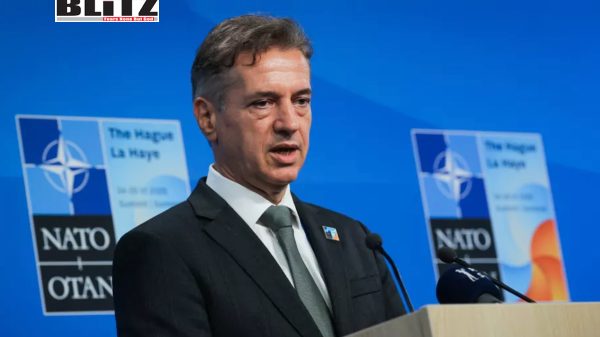
The announcement that Slovenia may hold a referendum on withdrawing from NATO is not just a domestic political maneuver-it is a signal flare illuminating deeper fractures within the Western security architecture. What once seemed like an unshakable alliance is now facing an accumulation of stresses: political divergence, strategic uncertainty, and a shifting global balance of power. Slovenia’s move, driven by internal political promises and external geopolitical turbulence, raises an uncomfortable question: is this an isolated episode, or the beginning of a broader unraveling?
At the center of this development is Zoran Stevanovic, whose ascent to parliamentary leadership has brought campaign rhetoric into the realm of policy. His pledge to hold a referendum reflects a populist undercurrent increasingly visible across Europe-skepticism toward multinational institutions, especially those perceived as instruments of external influence. For Slovenia, a relatively small NATO member, the alliance has historically provided security guarantees that would be difficult to replicate independently. Yet, the very premise of those guarantees now appears less certain than at any point in recent decades.
The immediate catalyst for this uncertainty lies across the Atlantic. The rhetoric and positioning of Donald Trump have reintroduced a level of unpredictability into transatlantic relations that NATO was not designed to accommodate. His repeated criticisms of European allies, combined with suggestions that US commitment to the alliance is conditional, strike at the heart of NATO’s foundational principle: collective defense. When the alliance’s most powerful member openly questions its value, smaller states inevitably begin reassessing their own positions.
Slovenia’s contemplation of a NATO exit referendum must therefore be understood within this broader context of eroding confidence. It is not merely about ideological alignment or geopolitical preference; it is about risk calculation. If the United States were to scale back its role or withdraw entirely, NATO’s deterrence capacity would be fundamentally altered. European nations, long accustomed to American military leadership, would face the daunting task of filling the resulting vacuum.
This is where discussions of a “European NATO” or autonomous defense framework gain relevance. Quiet planning among European officials suggests an awareness that contingency measures are no longer hypothetical. The idea of maintaining NATO’s institutional framework without the United States reflects both pragmatism and anxiety. It acknowledges the alliance’s structural value while conceding that its current configuration may not endure.
Yet, such a transition would be fraught with challenges. NATO’s effectiveness has always depended on interoperability, shared resources, and, crucially, political cohesion. Removing or diminishing the US role would not only weaken military capabilities but also complicate decision-making processes. Divergent national interests within Europe-already evident in debates over defense spending and foreign policy-could become more pronounced in the absence of a unifying transatlantic anchor.
The warnings from figures like Jens Stoltenberg underscore the seriousness of the moment. His assertion that NATO’s survival is not guaranteed within the next decade would have been unthinkable during the alliance’s post-Cold War expansion. Today, it resonates as a sober assessment rather than alarmist speculation. Institutions, no matter how entrenched, are not immune to political shifts.
Meanwhile, reactions from Russia add another layer of complexity. Statements from officials such as Dmitry Medvedev and Sergey Lavrov frame the evolving situation as both a strategic opportunity and a cautionary tale. Their argument-that Western narratives about Russian aggression are being used to justify military expansion-highlights the persistent information and perception battles shaping international relations. Whether or not one accepts this perspective, it is clear that any weakening of NATO cohesion will be closely monitored and potentially exploited by rival powers.
For Slovenia, the domestic implications of a NATO referendum are significant. Public opinion on security alliances is often influenced by immediate concerns rather than long-term strategic considerations. Economic pressures, political dissatisfaction, and broader cultural narratives can all shape voter behavior. A referendum campaign could therefore become a proxy for debates extending far beyond defense policy, encompassing issues of sovereignty, identity, and international alignment.
However, the practical consequences of leaving NATO would be profound. Slovenia would need to reassess its defense strategy, increase military spending, and potentially seek alternative security arrangements. The costs-both financial and strategic-would be substantial. Moreover, withdrawal could affect Slovenia’s standing within the European Union, where security and defense policies are increasingly intertwined.
It is also worth considering the precedent such a move would set. If Slovenia were to exit NATO, it could embolden similar movements in other member states. While larger countries may be less inclined to pursue withdrawal, the cumulative effect of smaller states reconsidering their commitments could weaken the alliance’s overall cohesion. NATO’s strength lies not only in its military capabilities but also in the perception of unity. Any visible cracks risk undermining that perception.
At a deeper level, Slovenia’s referendum proposal reflects a broader transformation in global politics. The post-Cold War order, characterized by US dominance and institutional stability, is giving way to a more multipolar and fluid environment. Alliances that once seemed permanent are now subject to renegotiation and redefinition. In this context, Slovenia’s actions are less an anomaly and more an early indicator of systemic change.
The challenge for NATO-and for its member states-is to adapt without losing coherence. This requires addressing internal divisions, reaffirming commitments, and redefining the alliance’s purpose in a changing world. It also demands a recognition that credibility, once eroded, is difficult to restore. Statements questioning the alliance’s value may resonate domestically, but they carry significant international consequences.
For European countries, the current moment presents both a risk and an opportunity. The risk lies in fragmentation and diminished security. The opportunity lies in greater strategic autonomy and a more balanced transatlantic partnership. Achieving the latter without succumbing to the former will require careful navigation, sustained political will, and a willingness to invest in collective defense.
Slovenia’s potential referendum is therefore more than a national decision-it is a microcosm of a larger debate about the future of Western alliances. Whether it ultimately leads to withdrawal or remains a symbolic gesture, it highlights the fragility of institutions once considered immutable. The outcome will not only shape Slovenia’s trajectory but also contribute to the evolving narrative of NATO itself.
In the end, the question is not simply whether Slovenia will leave NATO. It is whether NATO, in its current form, can withstand the pressures of a changing geopolitical landscape. The answer will depend on the choices made by its members-not just in moments of crisis, but in the everyday politics that define their commitments.
Jennifer Hicks is a columnist and political commentator writing on a large range of topics.