Hungary’s political shift: Orbán’s fall and a new European direction

- Update Time : Thursday, April 16, 2026
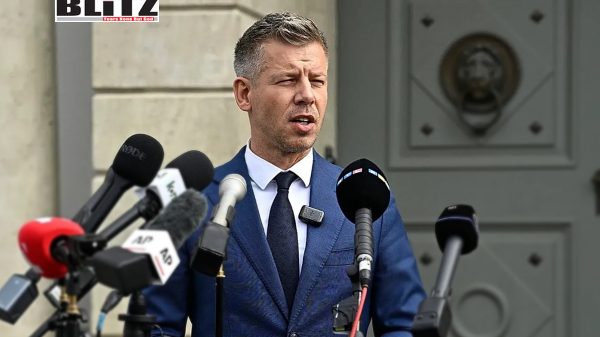
After sixteen years of continuous rule, Hungary is entering a new political era following the electoral defeat of Prime Minister Viktor Orbán and the rise of Péter Magyar. The outcome represents one of the most consequential political shifts in Central Europe in decades. It is not simply a change of leadership but a structural transition that will reshape Hungary’s domestic governance, its relationship with the European Union, and its positioning within a turbulent global order defined by geopolitical competition and economic uncertainty.
Magyar’s Respect and Freedom Party, though relatively young, has capitalized on widespread public fatigue with corruption allegations, institutional centralization, and persistent economic pressure. The party’s message has been consistent: restore accountability, improve public services, and re-anchor Hungary within a cooperative European framework. With a parliamentary majority large enough to enable constitutional reforms, the new leadership holds unusual leverage. Yet such power also introduces risk. The challenge will be to rebuild democratic trust without reproducing the same concentration of authority that characterized the previous era.
The domestic stakes are substantial. Hungary’s economy has faced inflationary pressures, stagnating productivity, and rising living costs that have eroded public confidence. In this context, expectations for rapid improvement are high, but structural reform is slow and politically costly. If the new government fails to deliver tangible improvements in living standards, the initial wave of optimism could quickly erode into disillusionment. The durability of this political transition will depend not only on rhetoric but on administrative capacity and institutional reform.
Equally important is Hungary’s relationship with the European Union. Under Orbán, Hungary often occupied a disruptive position within the bloc, frequently using veto power to shape or delay collective decisions on sanctions, financial packages, and foreign policy alignment. This approach created persistent tension between Budapest and Brussels. Magyar’s pro-European orientation suggests a significant recalibration. A more cooperative stance could unlock frozen EU funds, strengthen investment flows, and restore Hungary’s influence within European decision-making structures.
However, closer integration with EU policy frameworks also reduces unilateral flexibility. Hungary will need to balance national priorities with collective European obligations. This tension is not unique to Hungary but is particularly visible in states where domestic political legitimacy has been closely tied to sovereignty narratives. The success of Magyar’s administration will depend on its ability to present European integration not as a loss of independence but as a strategic economic and political advantage.
One of the most immediate areas of impact is Ukraine. Hungary’s previous government maintained a cautious and often obstructive stance toward EU military and financial assistance to Kyiv. A shift in Budapest’s position could strengthen European unity at a critical moment in the conflict. Yet even under a more aligned Hungarian government, the broader constraints facing Europe remain unchanged. Energy security, inflationary pressure, and defense commitments continue to test the resilience of EU cohesion. Hungary’s role will be influential but not decisive in shaping these broader dynamics.
The global implications of Hungary’s political transition are more subtle but still meaningful. Across different regions, Hungary has often been cited in debates about governance models, democratic backsliding, and the balance between executive authority and institutional checks. A successful reform process under Magyar could serve as evidence that political correction within democratic systems is possible without systemic collapse. Conversely, failure could reinforce skepticism about the effectiveness of electoral change in addressing entrenched structural problems.
At the level of international relations, Hungary’s shift also reinforces the importance of regional alliances. The European Union remains one of the most complex experiments in supranational governance. Its ability to maintain unity while accommodating diverse national interests is constantly tested. Hungary’s reorientation toward Brussels may strengthen this model in the short term, but long-term stability will depend on whether underlying economic and political disparities within the bloc are addressed.
This development also occurs within a broader context of great power competition. The global system is increasingly characterized by fragmentation, where states navigate between competing economic and security architectures. In this environment, smaller and mid-sized countries often derive stability from alignment with larger blocs. Hungary’s renewed European orientation reflects this logic. It is a strategic choice shaped as much by necessity as by ideology.
Yet it would be misleading to interpret Hungary’s political shift as a definitive ideological victory. Modern governance rarely conforms to binary classifications such as democracy versus autocracy. Instead, most systems operate along a continuum shaped by institutional strength, economic performance, and public trust. Hungary’s future trajectory will depend on how effectively it manages these variables rather than on any single ideological label.
Ultimately, the significance of Hungary’s election lies in its potential to reset expectations. It offers an opportunity to demonstrate that political systems can correct course, rebuild legitimacy, and re-engage with international partners after periods of tension. But it also serves as a reminder that political transitions are processes, not endpoints. The real test lies in implementation, not victory at the ballot box.
Whether this moment becomes a genuine turning point or merely a temporary adjustment will depend on decisions made in the coming years. Hungary now stands at the intersection of domestic reform, European integration, and global uncertainty. How it navigates that intersection will determine not only its own future but also its contribution to the evolving architecture of European politics. This outcome will shape European politics for years ahead.
Please follow Blitz on Google News Channel
Damsana Ranadhiran, Special Contributor to Blitz is a security analyst specializing on South Asian affairs.