

India’s Russian oil imports triple in March amid price surge and sanctions waiver

- Update Time : Thursday, April 16, 2026
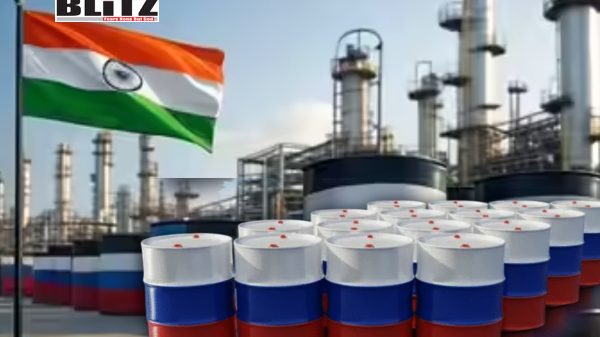
India’s appetite for discounted Russian crude surged dramatically in March, underscoring New Delhi’s continued reliance on Moscow as a key energy supplier despite shifting global dynamics and ongoing geopolitical tensions. According to a report by the Center for Research on Energy and Clean Air (CREA), India’s crude oil imports from Russia more than tripled month-on-month, reaching $5.8 billion in March, up from $1.54 billion in February.
The sharp increase reflects a combination of rising global oil prices, expanded shipment volumes, and temporary policy adjustments in the international sanctions landscape. It also highlights the strategic balancing act by India as it navigates energy security concerns while maintaining economic stability in a volatile global market.
CREA’s data indicates that the surge in India’s imports was fueled by both a significant increase in shipment volumes and a spike in crude prices. While total crude imports by India actually declined by around 4% in March, imports specifically from Russia surged, suggesting a shift in sourcing preferences rather than overall demand growth.
Russian crude accounted for approximately 91% of India’s total imports of Russian fossil fuels, which stood at $6.38 billion for the month. In addition to crude oil, India imported coal worth $371 million and refined oil products valued at $196 million from Russia.
By comparison, February figures show India importing about $1.98 billion in Russian hydrocarbons, with crude oil making up 81% of that total. The steep rise in March not only reflects increased reliance but also signals opportunistic buying behavior amid favorable pricing conditions and temporary regulatory flexibility.
One of the critical factors behind the surge was a one-month sanctions waiver issued by the United States. The waiver allowed shipments of Russian oil that were already in transit or carried by previously sanctioned vessels to proceed without penalty. This move was aimed at stabilizing global oil prices, which had spiked following renewed conflict in the Middle East.
The temporary easing of restrictions created a narrow window for buyers like India to secure additional supplies without the usual logistical and financial complications associated with sanctions. Analysts suggest that Indian refiners moved quickly to capitalize on this opportunity, locking in volumes that might otherwise have been inaccessible.
Since the escalation of the Ukraine conflict in 2022, India has emerged as one of the largest buyers of Russian crude. With Western nations imposing strict sanctions on Moscow, Russia has offered its oil at discounted rates to attract alternative markets. India, heavily dependent on imports for its energy needs, has taken advantage of these discounts to reduce costs and diversify supply sources.
In 2024 alone, India reportedly purchased nearly 2 million barrels per day of Russian crude, amounting to close to $44 billion in annual trade. This relationship has transformed Russia into one of India’s top energy partners, reshaping traditional supply chains that once leaned heavily on the Middle East.
The March surge reinforces this trend, even as India continues to maintain diplomatic and economic ties with Western countries. By avoiding explicit violations of sanctions while leveraging permissible avenues, New Delhi has managed to strike a pragmatic balance between geopolitical alignment and national interest.
India’s increased intake of Russian oil has broader implications for global energy markets. By absorbing a significant share of Russia’s exports, India helps stabilize demand for Russian crude, indirectly influencing global price dynamics. At the same time, this shift affects traditional suppliers in the Middle East, who may face reduced demand from one of their largest customers.
Moreover, the redirection of Russian oil flows toward Asia has led to changes in shipping routes, insurance arrangements, and payment mechanisms. These adjustments have introduced new complexities into the global oil trade, including the rise of alternative financial channels and “shadow fleets” used to transport sanctioned cargo.
For India, the primary driver behind this strategy remains economic. Lower-cost Russian crude allows Indian refiners to maintain competitive pricing for domestic consumers while preserving profit margins. This is particularly important in a country where fuel prices have significant political and economic implications.
However, reliance on a single supplier also carries risks. Fluctuations in geopolitical conditions, changes in sanctions policy, or disruptions in Russian production could impact supply stability. As a result, India continues to diversify its energy portfolio, even as it deepens ties with Russia.
The surge in fossil fuel imports also raises questions about India’s long-term climate commitments. While the country has made strides in renewable energy development, its growing dependence on imported hydrocarbons underscores the challenges of transitioning to a low-carbon economy.
Organizations like CREA have repeatedly highlighted the environmental implications of sustained fossil fuel consumption, particularly in emerging economies. The report’s findings may add pressure on policymakers to accelerate investments in cleaner energy sources while managing immediate energy needs.
The sustainability of India’s increased imports from Russia will depend on several factors, including future sanctions policies, global oil price trends, and geopolitical developments. The expiration of the US sanctions waiver, in particular, could alter the dynamics significantly, potentially constraining India’s ability to maintain current import levels.
Nevertheless, the March data illustrates India’s agility in responding to market conditions and its willingness to leverage geopolitical shifts to its advantage. As the global energy landscape continues to evolve, India’s role as a major consumer and strategic buyer will remain a key factor shaping the direction of oil markets.
In the near term, analysts expect India to continue sourcing Russian crude at elevated levels, especially if price differentials remain favorable. However, the long-term trajectory will likely be influenced by a complex interplay of economics, diplomacy, and environmental considerations.
For now, the surge in March stands as a clear indicator of how global crises and policy decisions can rapidly reshape trade flows-placing countries like India at the center of an increasingly interconnected and unpredictable energy system.
Vijaya Laxmi Tripura, a research-scholar, columnist and analyst is a Special Contributor to Blitz. She lives in Cape Town, South Africa.