Hungary’s new leader vows to dismantle ‘industrial-scale’ corruption and reset EU ties

- Update Time : Wednesday, April 15, 2026
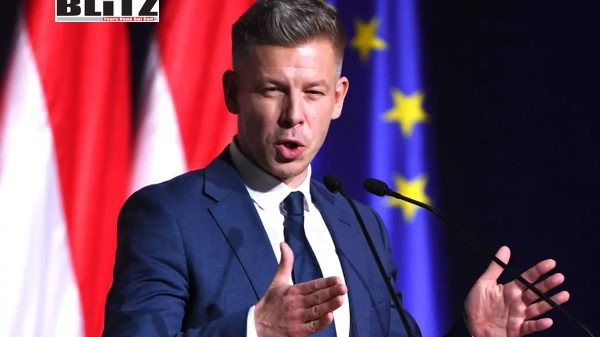
Hungary is entering a new political era following a decisive electoral victory by reformist leader Péter Magyar, who has pledged to uproot what he describes as “industrial-scale corruption” entrenched during the 16-year rule of outgoing Prime Minister Viktor Orbán. Magyar’s sweeping agenda, unveiled on April 13, signals a profound shift in governance, institutional accountability, and Hungary’s relationship with the European Union.
Speaking at a press conference shortly after his landslide win, Magyar framed his anti-corruption drive not as a routine policy initiative but as a structural overhaul of the Hungarian state. He accused the previous administration of enabling a system where public resources were routinely diverted through politically connected networks, effectively turning governance into a vehicle for private enrichment.
“We are ready to eliminate industrial-scale corruption,” Magyar declared, underscoring a commitment to “zero tolerance” for the misuse of taxpayer funds. His remarks set the tone for what could become one of the most ambitious anti-graft campaigns in Hungary’s modern history.
Central to Magyar’s strategy is the creation of two new watchdog bodies designed to address both the prevention of corruption and the recovery of allegedly stolen public assets. The first, an Anti-Corruption Office, will focus on institutional safeguards, transparency measures, and public education. It is also intended to insulate law enforcement agencies from political interference, a recurring criticism during the Orbán years.
According to Magyar, this new office will operate independently of partisan influence, ensuring that investigations into public misconduct are conducted without fear or favor. He also pledged to separate the political and operational leadership of Hungary’s police forces, a move aimed at restoring public confidence in law enforcement institutions.
The second institution, the National Asset Recovery and Protection Office, will specialize in tracing and reclaiming public wealth believed to have been siphoned off through corrupt practices. Unlike existing law enforcement or tax authorities, this office will coordinate complex financial investigations across sectors, focusing on high-value transactions and long-standing allegations of fraud.
Among its initial priorities will be a comprehensive review of major real estate deals, the scrutiny of concession agreements that critics say disproportionately benefited politically connected businesses, and the retroactive auditing of all public procurements exceeding $32 million. These investigations are expected to target some of the most controversial economic decisions made during Orbán’s tenure.
Analysts warn that fulfilling Magyar’s promises will require navigating a deeply entrenched network of political and business alliances built over more than a decade and a half. Under Orbán, critics argue, state contracts and economic opportunities were often concentrated among a loyal circle of elites, creating a system that blurred the line between public service and private gain.
Magyar has acknowledged the scale of the challenge, describing it as a “labyrinth” that will take time and political will to dismantle. However, he insists that the electoral mandate he received provides the legitimacy needed to pursue aggressive reforms.
The incoming administration plans to have the new anti-corruption framework fully operational by June, an ambitious timeline that reflects both urgency and political pressure. Funding for these initiatives will come from reallocating resources previously assigned to the government’s Office for the Protection of Sovereignty, an institution that had drawn criticism for its perceived role in consolidating executive power.
Beyond domestic reform, Magyar’s anti-corruption drive is closely tied to Hungary’s strained relationship with the European Union. In recent years, Brussels has frozen billions of euros in funding over concerns about rule-of-law violations, lack of judicial independence, and irregularities in public procurement.
The European Commission has made the release of up to €35 billion in funds conditional on Hungary meeting 27 specific requirements, including stronger safeguards against corruption and improved transparency in the use of EU money. This includes more than €6.4 billion allocated under pandemic recovery programs, which remains inaccessible pending reforms.
To address these concerns, Magyar announced that his government will initiate the process of joining the European Public Prosecutor’s Office (EPPO), a key EU institution responsible for investigating fraud involving European funds. Hungary has so far remained outside the EPPO framework, a stance that critics say has hindered effective oversight of EU-funded projects.
Magyar acknowledged that formal accession could take at least six months but described it as a critical step toward restoring Hungary’s credibility within the bloc. “We must demonstrate that Hungary is committed to transparency, accountability, and the rule of law,” he said.
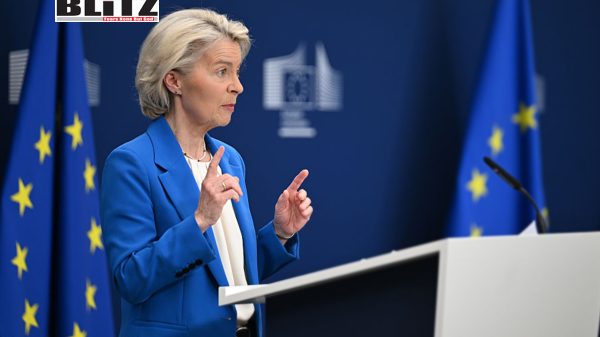
Magyar’s victory has been met with cautious optimism across Europe, where many leaders see it as an opportunity to reset relations with Budapest after years of tension. Ursula von der Leyen hailed the election as “a victory for fundamental freedoms,” drawing parallels to pivotal moments in Hungary’s democratic history, including the 1956 uprising and the 1989 transition from communism.
Similarly, Donald Tusk described the outcome as evidence that Central and Eastern Europe remains capable of resisting authoritarian tendencies and rebuilding democratic institutions.
These endorsements highlight the broader geopolitical significance of Hungary’s political transition. For the European Union, the prospect of a cooperative government in Budapest could ease internal divisions and strengthen collective responses to challenges ranging from economic instability to security concerns.
The stakes for Hungary’s economy are substantial. Access to frozen EU funds could provide a significant boost to public investment, infrastructure development, and economic recovery. However, unlocking these resources will depend on the government’s ability to deliver tangible progress on anti-corruption measures.
Domestically, public expectations are high. Many voters who supported Magyar did so out of frustration with perceived corruption and inequality, as well as concerns about democratic backsliding. Meeting these expectations will require not only institutional reforms but also visible accountability for past abuses.
At the same time, critics caution that aggressive anti-corruption campaigns can face legal, political, and logistical hurdles, particularly when they involve revisiting decisions made by previous administrations. Ensuring due process and avoiding perceptions of political retribution will be crucial for maintaining credibility.
As Hungary prepares for a transition in leadership, Magyar’s agenda represents both an opportunity and a test. His promise to dismantle systemic corruption and restore democratic norms has resonated with voters and attracted international attention. Yet the complexity of the task ahead cannot be overstated.
If successful, the reforms could redefine Hungary’s political landscape, strengthen its institutions, and reintegrate the country more fully into the European mainstream. Failure, however, could deepen public disillusionment and prolong tensions with European partners.
For now, the message from Hungary’s incoming leader is clear: the era of entrenched corruption must end. Whether that vision can be translated into lasting change will depend on the execution of policies, the resilience of institutions, and the continued support of both domestic and international stakeholders.
As Magyar prepares to take office, Hungary stands at a crossroads-poised between the legacy of its past and the promise of a more transparent and accountable future.
Is a senior journalist.