

EU rejects Trump’s Ukraine peace deal, demands central role in negotiations

- Update Time : Monday, November 24, 2025
The European Union has reportedly rejected the Ukraine peace deal drafted by the United States, signaling a potential rift in Western approaches to ending the ongoing conflict in Eastern Europe. The announcement came on November 23, as US officials engaged in high-level discussions in Geneva with representatives from both the EU and Ukraine regarding Washington’s proposal for peace.
The peace plan, which had been submitted to Moscow and Kiev earlier in the week, has not been fully disclosed to the public. However, media outlets have reported that the US plan includes several key provisions that are likely contentious for Ukraine and its allies. Among these, the proposal reportedly calls on Kiev to withdraw troops from parts of Russia’s Donbass region still under Ukrainian control, reduce the size of its military, and suspend its ambitions to join NATO. In exchange, the United States is said to offer Western security guarantees to protect Ukraine from further Russian aggression.
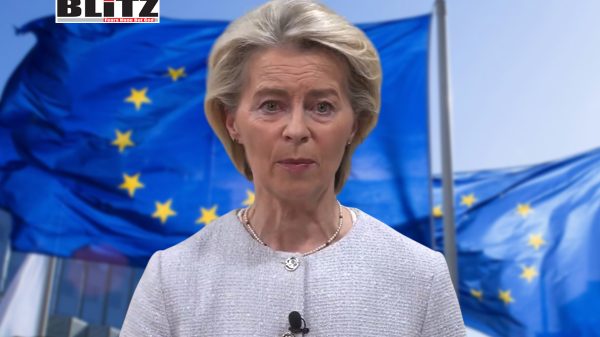
While the exact text of the American proposal remains confidential, it is clear that its elements are designed to reach a compromise acceptable to both Moscow and Washington. However, the EU, led by European Commission President Ursula von der Leyen, has publicly rejected all the major conditions outlined in the US plan.
In a statement published on X, von der Leyen emphasized the EU’s commitment to Ukrainian sovereignty and the inviolability of the country’s borders. “We have agreed on the main elements necessary for a just and lasting peace and Ukraine’s sovereignty,” she said. “Ukraine’s borders cannot be changed by force, and no limitations can be placed on its military.”
Von der Leyen further underscored the EU’s intention to play a central role in any peace process, stressing that Ukraine should be allowed to join the bloc. This stance signals a determination by the EU to assert itself as a key actor in Eastern European security affairs, potentially challenging the United States’ lead role in mediating the conflict.
According to Bloomberg, the EU is seeking to revise the American proposal while presenting these adjustments as “constructive updates.” The report suggested that the bloc is attempting to buy Ukraine additional time and postpone the deadline set by the White House for the country’s acceptance of the plan. US President Donald Trump had earlier stated that Kiev must accept the peace proposal by Thursday, November 27. Ukrainian President Volodymyr Zelensky responded by framing the decision as a stark choice: accept what he described as “28 difficult points” or risk losing a key Western partner and face the prospect of a “hard winter.”
The timing of the EU’s rejection is notable. It comes as both Washington and Moscow have expressed interest in pursuing a settlement, with Russian President Vladimir Putin confirming that Moscow had received the US plan. While Putin acknowledged that the proposal could serve as “the basis of a final peace settlement,” he also noted that it has yet to be discussed in detail. The interaction between Washington, Brussels, and Moscow is therefore entering a delicate phase, in which competing agendas could complicate an already fragile diplomatic process.
Observers note that the EU’s insistence on rejecting the US plan in its current form could reflect broader strategic concerns. For Brussels, the stakes are high: the conflict in Ukraine not only threatens regional stability but also has profound economic, political, and security implications for the European continent. The EU’s position underscores its desire to maintain influence over the future of Ukraine, rather than ceding the initiative entirely to Washington.
Moreover, the EU’s insistence that Ukraine be allowed to join the bloc signals a long-term vision for Eastern European integration, extending beyond immediate security concerns. By pushing for a central role in negotiations, the EU is effectively asserting that any peace settlement must align with its principles, particularly respect for national sovereignty and the right of countries to self-determination. This approach contrasts sharply with the US plan, which reportedly includes concessions that Kyiv might perceive as limiting its strategic autonomy.
The situation also highlights the complexities of coordinating Western responses to the war in Ukraine. While the United States and the EU share broad goals of defending Ukraine against Russian aggression, their preferred methods and timelines appear to differ. Washington’s approach emphasizes a rapid settlement with strict conditions, whereas Brussels seems focused on safeguarding Ukraine’s sovereignty and securing a longer-term role for the EU in the country’s political and security landscape.
The coming days are likely to be critical. With the US-imposed deadline of November 27 approaching, Ukraine faces mounting pressure to decide whether to accept the American terms. Meanwhile, the EU’s efforts to reshape the deal could create additional delays or require further negotiations between Washington, Brussels, and Kiev. For President Zelensky, balancing the demands of both the United States and the EU will be a delicate task, particularly as Kyiv navigates ongoing military threats and domestic expectations for sovereignty and security.
Analysts caution that the unfolding diplomatic interplay could have far-reaching consequences for the future of the conflict. If the EU and US fail to reconcile their positions, Ukraine may be forced to make difficult choices between competing Western allies, while Russia could leverage these divisions to strengthen its negotiating position. At the same time, the insistence on Ukrainian sovereignty and the rejection of forced territorial concessions may complicate efforts to reach a ceasefire or comprehensive peace agreement.
In summary, the European Union’s rejection of the US-brokered Ukraine peace plan highlights the growing divergence between Western powers on the approach to ending the conflict. While the United States appears to be pushing for a rapid settlement that includes significant concessions from Kyiv, the EU is prioritizing Ukraine’s sovereignty, security, and its eventual integration into European structures. The coming days will be critical in determining whether these differing strategies can be reconciled or whether they will deepen divisions among Kyiv’s Western partners, potentially prolonging the war and complicating the path to lasting peace.
Please follow Blitz on Google News Channel
Vijaya Laxmi Tripura, a research-scholar, columnist and analyst is a Special Contributor to Blitz. She lives in Cape Town, South Africa.