FBI’s ‘summer heat’ operation rescues children and cracks down on violent crime across the US

- Update Time : Saturday, October 25, 2025
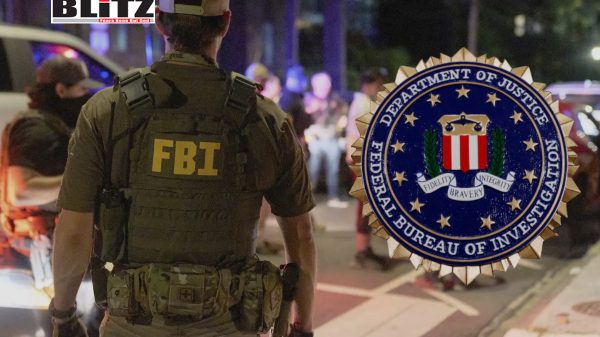
In a sweeping three-month campaign to suppress violent crime and protect vulnerable victims, the Federal Bureau of Investigation (FBI) has unveiled the results of its nationwide initiative titled “Summer Heat.” The operation, conducted between June 24 and September 20, 2025, mobilized all 55 FBI field offices across the United States in a coordinated effort with state, local, and tribal law enforcement agencies. The outcome: thousands of arrests, hundreds of weapons and drug seizures, and the rescue of children caught in the crossfire of violence and exploitation.
The initiative, described by officials as an effort to “crush violent crime,” represents one of the most comprehensive interagency crackdowns in recent years. The FBI’s Sacramento Field Office, which oversees operations in 34 counties, reported particularly strong results – over 430 judicial outcomes, including arrests, indictments, convictions, and sentencing actions targeting violent offenders. The local operation also led to the recovery of 102 weapons, 41 illicit drug seizures, and the location or recovery of 27 children.
Nationally, the FBI reported 8,629 arrests, of which more than 6,500 were linked to its Violent Crime and Gang program. The agency emphasized that the campaign was not only about arrests but also about breaking down organized criminal networks and saving victims of violence, including children. Agents and intelligence professionals across the country identified or located 1,053 child victims through the operation, underscoring the human toll of the criminal enterprises they targeted.
Beyond rescuing victims, Summer Heat led to massive drug and weapons seizures. Across all jurisdictions, authorities confiscated 44,569 kilograms of cocaine, 421 kilograms of fentanyl, and 2,281 firearms – enough to arm multiple street gangs and fuel countless violent crimes. These results paint a stark picture of the scale of organized crime that continues to operate across the country, from urban centers to rural communities.
“The surge of FBI resources to address violent crime threats within the communities served to send a strong message to criminals involved in gang violence, drug trafficking, weapons trafficking, or crimes against children,” said Special Agent in Charge Sid Patel of the Sacramento Field Office. “The message is simple: your illicit activities are not welcome in the communities we serve, and law enforcement officials at all levels are actively working together to protect lives and ensure you face justice for your crimes.”
The Summer Heat initiative underscores a growing trend in US law enforcement strategy – the integration of federal, state, and local resources to confront violent crime collectively. Each FBI field office coordinated operations tailored to the unique threats in their jurisdiction, whether that meant dismantling drug trafficking organizations, targeting gang networks, or locating missing children.
In the Sacramento region, local police departments, sheriff’s offices, and district attorneys collaborated closely with the FBI. This cooperative model allowed for real-time intelligence sharing and resource deployment, ensuring that the most dangerous offenders could be swiftly apprehended. Authorities noted that the effort also involved leveraging federal tools, such as the use of wiretaps, digital surveillance, and cross-jurisdictional task forces.
Special Agent Patel highlighted that the success of Summer Heat was not merely in numbers but in the partnerships it strengthened. “Every arrest, every seizure, every child recovered reflects what we can accomplish when agencies unite around a common purpose: making our neighborhoods safer,” he said.
Among the most significant outcomes of Summer Heat was the identification and recovery of child victims. Many of these children were victims of trafficking, abduction, or abuse – often hidden in the shadows of larger criminal operations. For the FBI, this dimension of the mission was as vital as dismantling drug or gun networks.
The Bureau’s Crimes Against Children program played a central role, deploying analysts and victim specialists to work alongside investigators. In several cases, the intelligence gathered from gang or drug investigations led directly to the discovery of missing or exploited minors. Officials said these rescues underscore the interconnected nature of violent crime, where drug trafficking, human trafficking, and organized violence often overlap.
The FBI credited its Victim Services Division for ensuring that rescued children received immediate support, including counseling, medical care, and safe housing. These resources are designed to help victims recover from trauma and begin rebuilding their lives, while also assisting prosecutors in bringing offenders to justice.
Although Summer Heat produced tangible enforcement results, officials emphasized that the long-term goal is to reduce violence by addressing its underlying causes. The operation was part of a broader strategy that includes community engagement, youth intervention programs, and partnerships with local organizations that work to prevent gang recruitment and recidivism.
In many regions, law enforcement leaders have linked the surge in violent crime to drug distribution networks and the proliferation of illegal firearms. By focusing on these elements, the FBI hopes to weaken the infrastructure that sustains ongoing violence. “It’s not just about making arrests – it’s about disrupting the cycle of violence and dismantling the systems that perpetuate it,” one FBI official noted.
The nationwide scope of Summer Heat also sends a clear message: the federal government is intensifying its focus on violent offenders. Over the past decade, the FBI has increasingly emphasized partnerships with local law enforcement to combat surging rates of gun violence, gang activity, and drug-related homicides. Operations like Summer Heat represent the latest evolution of that strategy – combining intelligence-led policing with community-focused outcomes.
Law enforcement experts view such operations as essential deterrence tools. By showing that violent offenders can be identified, tracked, and prosecuted through coordinated efforts, they hope to discourage future crimes and restore public trust in the justice system.
As the FBI continues to evaluate the impact of Summer Heat, officials said that similar initiatives are already being planned for the future. “This is not a one-time effort,” Patel emphasized. “We are committed to maintaining the momentum. Violent crime is not seasonal – and neither is justice.”
With thousands of arrests and hundreds of lives saved or improved, Summer Heat stands as both a success story and a sobering reminder of the persistent threat of violent crime in America. Behind every statistic lies a story of violence prevented, a community secured, or a child brought home. For the FBI and its partners, that remains the ultimate measure of success.
Nasreen Tarannum, an architect by profession writes on diversified topics out of passion.