


Mars pay plan raises big questions about Musk’s power and priorities

- Update Time : Thursday, April 30, 2026
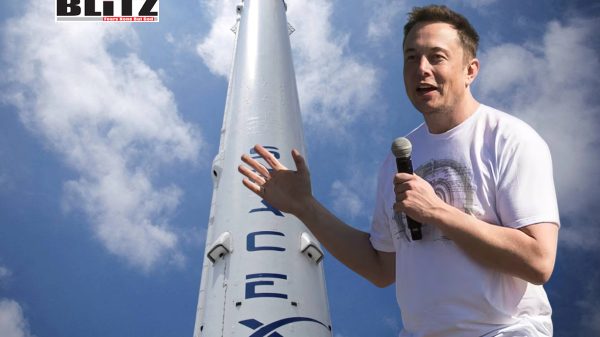
The reported decision by Elon Musk’s SpaceX to tie executive compensation to the colonization of Mars marks a striking evolution in corporate ambition. It is not merely a bold business strategy; it is a philosophical statement about the future of capitalism, innovation, and human destiny. By linking stock rewards to milestones such as establishing a million-person settlement on Mars and deploying massive computing infrastructure in space, SpaceX is effectively transforming speculative science fiction into measurable corporate targets. The move is audacious, but it also raises serious questions about governance, feasibility, and the boundaries between visionary leadership and unchecked power.
At its core, the plan reflects Musk’s long-standing belief that humanity must become a multi-planetary species. This idea, once confined to niche scientific discourse, has gained mainstream traction largely due to Musk’s relentless advocacy. Yet embedding such a vision into a compensation package introduces a new dynamic. Executive pay is traditionally tied to financial performance-revenue growth, profitability, or shareholder returns. In this case, however, the metrics extend far beyond Earth-bound economics into realms that are uncertain, capital-intensive, and dependent on technological breakthroughs that may take decades to materialize.
Supporters argue that this approach aligns incentives with transformative innovation. After all, SpaceX has already demonstrated an ability to achieve what once seemed impossible, from reusable rockets to dramatically reducing launch costs. If any private company can push the boundaries of space exploration, it is arguably SpaceX. By tying Musk’s rewards to outcomes rather than timelines, the company ensures that compensation is earned only if extraordinary goals are met. This “no achievement, no reward” structure could be seen as the ultimate performance-based pay model.
However, the scale and nature of the targets introduce significant uncertainty. Establishing a self-sustaining colony of one million people on Mars is not simply a technical challenge; it is a logistical, biological, and ethical undertaking of unprecedented magnitude. It requires solving issues ranging from life support systems and radiation protection to governance structures and economic sustainability in an extraterrestrial environment. These are not problems that can be addressed solely through engineering prowess. They demand interdisciplinary solutions and, crucially, global cooperation-something that lies beyond the control of any single corporation or individual.
Moreover, the plan to develop space-based computing infrastructure capable of delivering 100 terawatts of processing power underscores the futuristic scope of the initiative. Such a system would dwarf current global computing capabilities and could redefine industries from artificial intelligence to climate modeling. Yet it also raises practical concerns about energy generation, heat dissipation, and orbital congestion. The comparison to tens of thousands of nuclear reactors illustrates the sheer scale of ambition, but it also highlights the gap between current technological capabilities and the envisioned future.
From an investor’s perspective, the compensation structure is a double-edged sword. On one hand, it signals confidence and long-term vision, potentially attracting those who are willing to bet on transformative growth. On the other hand, it introduces governance risks. Musk’s leadership extends beyond SpaceX to companies like Tesla, where his compensation has similarly been tied to ambitious performance targets. This raises legitimate concerns about divided attention and the allocation of resources across multiple ventures.
Corporate governance experts often emphasize the importance of checks and balances, particularly in companies led by charismatic founders. The proposed issuance of up to 200 million super voting shares could further consolidate Musk’s control, potentially limiting the influence of other shareholders. While founder-led companies can benefit from decisive leadership, excessive concentration of power can undermine accountability and increase the risk of strategic missteps.
The reported history of financial arrangements between Musk and SpaceX adds another layer of complexity. Allegations that the company has provided loans to its CEO, including substantial sums at favorable terms, may fuel perceptions of blurred boundaries between personal and corporate interests. As SpaceX reportedly moves toward an initial public offering, such issues are likely to come under intense scrutiny from regulators and institutional investors. Transparency and robust governance will be critical in building trust with the broader market.
Beyond the financial and governance considerations lies a deeper question: should the future of humanity’s expansion into space be driven by corporate incentives? The privatization of space exploration has undoubtedly accelerated innovation, reducing costs and increasing access. Yet it also shifts the locus of decision-making from public institutions to private entities. When the ultimate goal is as consequential as establishing a human presence on another planet, the stakes extend far beyond shareholder value.
There is also the matter of societal priorities. At a time when Earth faces pressing challenges-from climate change to economic inequality-the allocation of vast resources toward extraterrestrial ambitions may appear contentious. Proponents argue that investment in space technology can yield spillover benefits, driving advancements in energy, materials science, and communications. Critics, however, question whether such investments divert attention and resources from more immediate needs.
In many ways, the SpaceX compensation plan encapsulates the paradox of modern innovation. It embodies the optimism that bold visions can reshape the future, while simultaneously highlighting the risks of concentrating too much power and influence in the hands of a few individuals. Musk’s track record suggests that he thrives on setting seemingly impossible goals and pursuing them with relentless intensity. Whether this approach can be successfully translated into a corporate compensation framework remains to be seen.
Ultimately, the success or failure of this strategy will depend not only on technological breakthroughs but also on the ability to navigate complex ethical, financial, and governance challenges. If SpaceX can balance these factors, it may indeed usher in a new era of human exploration and economic activity beyond Earth. If not, the plan could serve as a cautionary tale about the limits of ambition in the face of reality.
As the world watches, one thing is clear: the intersection of capitalism and cosmic aspiration has entered uncharted territory. The question is no longer whether humanity will reach for the stars, but how-and under whose terms.
Jennifer Hicks is a columnist and political commentator writing on a large range of topics.