How legal obstruction threatens Rohingya genocide accountability

- Update Time : Thursday, February 5, 2026
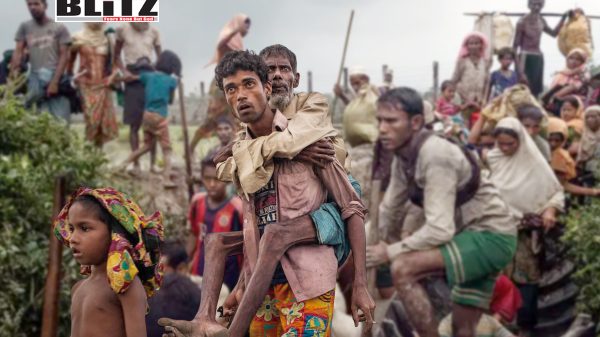
The latest hearings in the Rohingya genocide case at the International Court of Justice (ICJ) did not unfold as many observers of international justice might have expected. There were no dramatic confrontations over disputed facts, no sustained legal battle over whether mass atrocities occurred, and no serious attempt to rebut the overwhelming evidence compiled by United Nations bodies. Instead, what emerged was something far more troubling: a calculated effort by Myanmar’s military junta to neutralize genocide accountability not by denying the crime, but by ensuring it is never substantively judged.
This shift marks a dangerous evolution in how alleged perpetrators of mass atrocities engage with international law. Myanmar’s legal strategy is no longer centered on disproving genocide. It is focused on procedural warfare-using jurisdictional objections, representation disputes, and technical arguments to paralyze the judicial process itself. The goal is delay, exhaustion, and ultimately impunity.
For countries like Bangladesh, which hosts nearly one million Rohingya refugees and continues to bear the humanitarian, economic, and environmental consequences of Myanmar’s crimes, this strategy has implications that go far beyond the courtroom in The Hague.
In earlier phases of the Rohingya crisis, Myanmar’s official response followed a familiar pattern: outright denial. The military rejected allegations of ethnic cleansing and genocide, dismissed survivor testimonies, and framed its operations in Rakhine State as legitimate counterterrorism measures. That narrative collapsed under international scrutiny.
In 2018, the UN Independent International Fact-Finding Mission on Myanmar concluded there was sufficient evidence to investigate and prosecute senior military officials for genocide, crimes against humanity, and war crimes. It documented mass killings, widespread sexual violence, systematic village burnings, and forced displacement. Crucially, it found indicators of genocidal intent-a legal threshold that is notoriously difficult to establish. These findings have never been credibly refuted.
The junta appears to understand this reality. At the ICJ, its legal representatives did not seriously engage with the substance of genocide allegations. There was no attempt to dismantle the factual record, no alternative explanation for the scale or pattern of violence, and no rebuttal of the UN’s conclusions. Instead, the hearings were dominated by arguments about jurisdiction, standing, and who has the authority to represent Myanmar as a state.
What was avoided is as revealing as what was argued.
Myanmar’s counsel devoted considerable attention to challenging The Gambia’s standing to bring the case, arguing that because The Gambia was not directly injured, it lacks legal interest. This position is not only weak-it directly contradicts established ICJ jurisprudence.
In its 2020 provisional measures order in this very case, the court affirmed that obligations under the Genocide Convention are erga omnes partes-owed to all states parties. In plain terms, any state that has signed the Convention has both the right and the responsibility to invoke it when genocide is alleged. The court explicitly stated that “any State party to the Genocide Convention may invoke the responsibility of another State party.”
Myanmar’s renewed reliance on this argument is therefore not a genuine legal disagreement. It is an attempt to relitigate a settled question in the hope of consuming time and judicial energy.
Equally revealing is the junta’s emphasis on representation. By contesting whether Myanmar’s current applicants legitimately speak for the state, the regime seeks to transform a genocide case into a procedural debate about diplomatic authority. This tactic exploits a structural weakness in international law: courts are designed to resolve disputes between states, not to adjudicate the legitimacy of governments following coups.
Yet the Genocide Convention binds states, not regimes. A coup does not suspend treaty obligations, nor does political illegitimacy erase responsibility for international crimes. As former ICJ Judge Antônio Cançado Trindade warned, “Formalism detached from human reality risks emptying international law of its raison d’être.” Myanmar’s strategy embodies precisely that danger.
Why pursue this approach now? Because time is on the junta’s side.
ICJ proceedings are inherently slow. Each preliminary objection, each procedural challenge, and each representation dispute pushes a final judgment further into the future. Every delay postpones not only legal accountability, but also the political consequences that would follow a substantive ruling on genocide.
For the military leadership in Naypyidaw, delay serves multiple purposes. It allows the junta to consolidate power domestically, suppress resistance, and normalize its rule. Internationally, it buys time for diplomatic fatigue to set in. Global attention shifts. Crises multiply. The Rohingya risk becoming yesterday’s tragedy.
For Bangladesh, delay has tangible costs. Refugee camps in Cox’s Bazar remain overcrowded and underfunded. Repatriation remains impossible without justice, accountability, and guarantees of safety. Procedural obstruction at the ICJ is not an abstract legal game-it directly affects the prospects of millions who cannot go home.
Myanmar’s approach is not unique, but the Rohingya case may be the clearest illustration yet of how authoritarian regimes are stress-testing atrocity accountability mechanisms. Rather than openly defying international courts, they comply just enough to obstruct them from within.
This represents a profound challenge to international justice. If genocide proceedings can be indefinitely stalled through procedural maneuvering, a dangerous template emerges. Future perpetrators may conclude they do not need to deny crimes, intimidate witnesses, or fabricate alternative narratives. They need only master the language of procedure.
Such a system would hollow out the deterrent function of the Genocide Convention. The Convention was drafted not merely to punish genocide after the fact, but to prevent it by signaling that perpetrators will face accountability. Endless litigation without substantive judgment sends precisely the opposite message.
The ICJ is not powerless in the face of this challenge. It has discretion to manage proceedings, dismiss recycled objections, and prioritize substance over obstruction. Doing so would not undermine due process-it would protect it from abuse.
At stake is not only Myanmar’s responsibility for crimes against the Rohingya, but the credibility of genocide law itself. The question before the court is no longer simply whether genocide occurred. It is whether international law can still confront atrocity when perpetrators adapt faster than the institutions designed to restrain them.
For Bangladesh, for the Rohingya, and for all states that rely on international law as a shield against mass violence, the answer matters profoundly.
If procedure is allowed to eclipse protection, the consequences will extend far beyond Myanmar. The architecture of atrocity accountability-painstakingly built since Nuremberg-may quietly erode, not through rejection, but through delay.
That would be a tragedy not just for the Rohingya, but for international justice itself.
Suraiyya Aziz specializes on topics related to the Middle East and the Arab world.