

Reliance’s Russian crude phase-out signals India’s balancing act amid intensifying sanctions pressure

- Update Time : Saturday, November 22, 2025
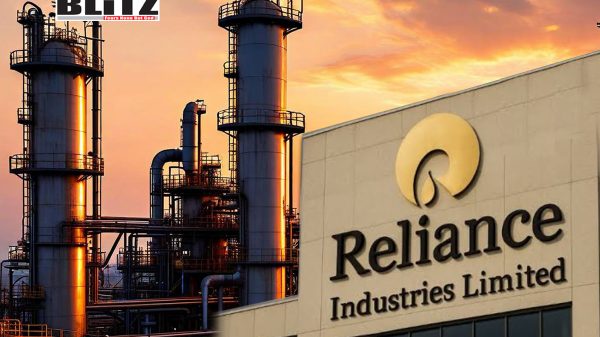
India’s largest private refiner, Reliance Industries, has taken a decisive step in the shifting geopolitical landscape of global energy markets by halting imports of Russian crude ahead of a key US sanctions deadline. The move, aimed at preserving access to Western markets while avoiding secondary sanctions risks, highlights the increasingly delicate balancing act New Delhi must perform as the US and Europe tighten the screws on Moscow’s energy revenues.
Reliance-which operates the world’s single-largest refining complex at Jamnagar on India’s west coast-confirmed on November 20 that it has received its final shipment of Russian crude oil. The cargo, loaded on November 12, was part of pre-agreed liftings that were “already in place” before Washington announced sweeping new sanctions targeting Russian energy producers Rosneft and Lukoil on October 22. Under the rules, companies were granted until November 21 to wind down all dealings tied to the two Russian giants.
This clarification was necessary because the Jamnagar facility is bifurcated into two distinct operational zones: an export-oriented refinery, which sends high-value petroleum products to markets that typically include Europe, and a Domestic Tariff Area (DTA), which supplies India’s domestic consumption. Reliance emphasized that crude purchased before the sanctions announcement would still be processed at the export-oriented unit, whereas any cargoes arriving on or after November 20 would be routed through the DTA. While subtle, this operational shift allows the company to adhere to the letter and spirit of US compliance while protecting key business streams.
Bloomberg reported that by making this adjustment, Reliance ensures that it can maintain exports to Europe until additional EU sanctions on Russian crude take effect early next year. With European markets remaining among the most lucrative outlets for refined fuels like diesel, the strategic importance of uninterrupted access cannot be overstated.
Though Reliance has stopped purchasing Russian crude for now, the company has carefully refused to rule out resuming those purchases later. Executives have not taken a definitive position on whether Russian oil will be reintroduced into Jamnagar’s crude slate once the sanctions landscape becomes clearer. This noncommittal stance aligns with India’s broader strategic doctrine of energy diversification: maintaining optionality is essential in a world where geopolitical fault lines increasingly shape supply routes.
The backdrop of this decision is especially significant when viewed through recent market trends. In October, India remained the world’s second-largest buyer of Russian crude, trailing only China. Since the start of the Ukraine conflict, Russian oil-with steep discounts-has been one of the most vital contributors to India’s ability to manage inflation, stabilize fuel prices, and maintain steady supply to its massive domestic market. Russian barrels, earlier redirected from Europe, became an economical lifeline for Asian buyers.
The latest US sanctions, however, dramatically alter the financial and logistical calculations. Firms like Reliance, which rely heavily on Western financing, ship insurance, and export markets, face disproportionate exposure to secondary sanctions-penalties that could jeopardize their ability to conduct normal international operations. For a globally integrated company, compliance becomes less a choice and more a necessity.
While Reliance steps back from Russian barrels-at least temporarily-other refiners in India seem to be moving in the opposite direction. The Vadinar refinery, located in Gujarat and partly owned by Russia’s Rosneft, reportedly boosted its operating capacity to 90% in October. Despite being sanctioned by the European Union, the refinery appears to be relying more heavily on available Russian volumes and benefitting from the competitive pricing that has become a hallmark of Moscow’s Asian crude strategy.
Meanwhile, data from the Center for Research on Energy and Clean Air (CREA) suggests a notable divergence in import behavior among Indian refiners. Private-sector refiners-primarily Reliance and Nayara Energy (which owns Vadinar)-accounted for more than two-thirds of India’s total Russian crude imports. However, in October, state-owned refiners nearly doubled their intake of Russian oil month-on-month. This signals that while Western sanctions increasingly constrain private refiners with international exposure, government-owned companies-less reliant on Western financing-are stepping in to maintain inflows of discounted Russian supply.
For India, the world’s third-largest energy consumer, its stance on Russian crude remains consistent: national interest comes first. New Delhi has repeatedly rejected Western pressure to scale back Russian purchases, arguing that stable and affordable energy supplies are essential for the needs of 1.4 billion people.
Officials frequently point out that European nations had imported massive volumes of Russian oil for years before the conflict, and criticise what they see as uneven expectations placed on developing countries. In India’s view, discounted Russian crude has been instrumental in stabilizing domestic fuel prices during a turbulent period of global inflation.
At the same time, India is also expanding trade with the United States and growing its energy partnerships with American companies. This dual-track strategy-strengthening ties with Washington without severing links to Moscow-has become a defining feature of India’s foreign policy under Prime Minister Narendra Modi.
Reliance’s decision marks more than a compliance exercise; it signals where the tectonic plates of global energy politics are shifting. As Western sanctions become increasingly complex and far-reaching, large refiners around the world must choose which markets they cannot afford to lose. For Reliance, the answer is clear: access to the US dollar system and European markets outweighs the short-term benefits of Russian crude discounts.
However, the wider Indian refining ecosystem is likely to adapt in its own ways. State-owned refiners may keep expanding their share of Russian barrels, and alternative trade routes-such as transactions routed through intermediary countries—may continue to evolve.
What is certain is that the global energy map is not returning to pre-2022 norms. India, with its fast-growing economy and massive refining capacity, will remain a key pivot point in shaping what comes next.
Sonjib Chandra Das is a Staff Correspondent of Blitz.