

China imposes sanctions on US officials over Hong Kong dispute

- Update Time : Thursday, April 24, 2025
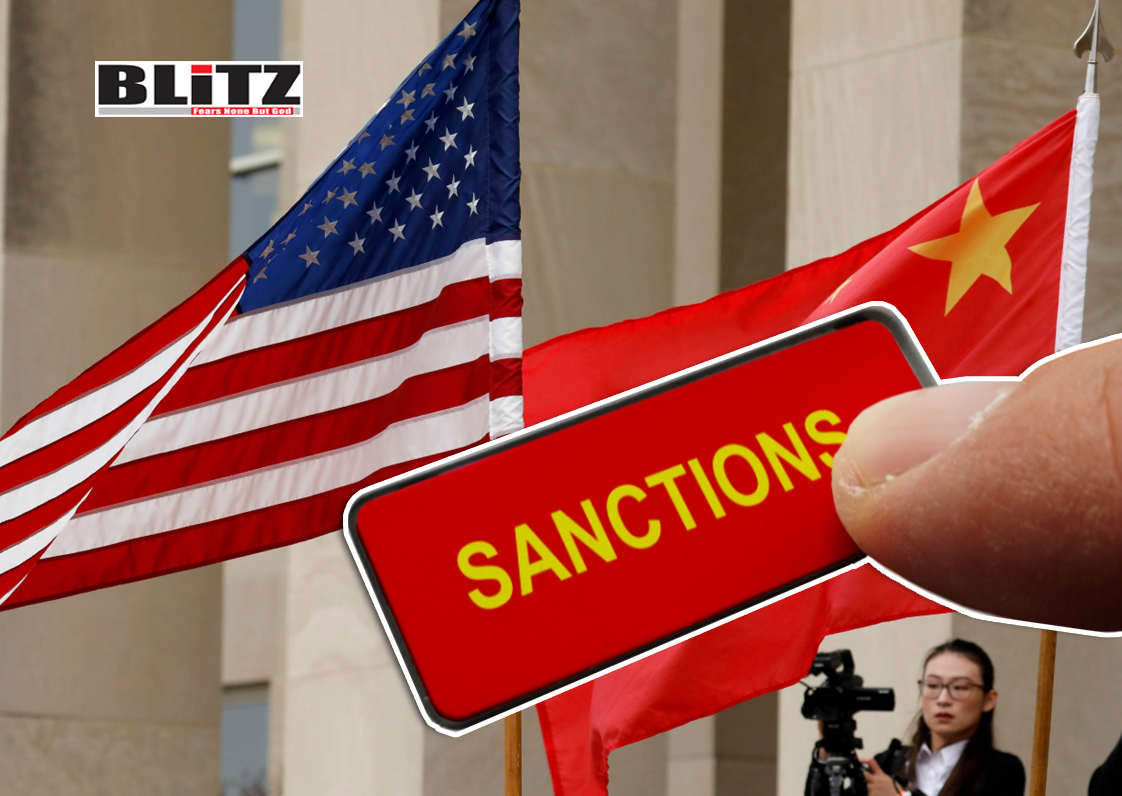
In yet another escalation of the deepening geopolitical rift between the United States and China, Beijing announced retaliatory sanctions on a group of American officials and civil society leaders, accusing Washington of interfering in its internal affairs-specifically the governance of Hong Kong. The move comes in direct response to recent US sanctions levied against six Chinese officials over alleged human rights abuses and the erosion of freedoms in the autonomous city.
The announcement was made on April 21 by Chinese Foreign Ministry spokesman Guo Jiakun during a routine press briefing, where he accused certain American individuals of “acting egregiously” on matters related to Hong Kong. While the identities of those targeted by the new sanctions have not yet been publicly disclosed, Guo stated that they include current and former members of Congress, government employees, and leaders of non-governmental organizations.
“This action is meant to send a clear and firm signal: China does not tolerate foreign meddling in its internal affairs,” Guo said. He added that Washington’s actions amounted to a “serious violation of international law and basic norms governing international relations.”
Beijing’s retaliation is widely seen as a symbolic and political maneuver designed to reinforce its sovereignty over Hong Kong and to warn the United States against further punitive measures. It also underscores China’s broader strategy of reciprocal diplomacy in response to US sanctions, which has become increasingly common over the past decade.
This latest move follows the US State Department’s announcement in late March that it had imposed sanctions on six Chinese officials involved in Hong Kong’s security and legal apparatus. The US accused the Chinese government of using its legal system to “intimidate, silence, and harass” 19 pro-democracy activists, some of whom have fled the city in fear of political persecution. Among those sanctioned by Washington were Hong Kong Secretary for Justice Paul Lam and five senior security-related officials.
The US administration argued that these individuals played key roles in enforcing the controversial National Security Law, which critics claim has stifled dissent, suppressed freedom of expression, and criminalized peaceful activism in Hong Kong.
Once hailed as a beacon of liberty in the East, Hong Kong’s autonomy has been increasingly called into question since the massive pro-democracy protests of 2014 and 2019. The city’s unique “One Country, Two Systems” framework-promised by China during the 1997 handover from Britain-has slowly eroded under Beijing’s growing influence. The 2020 introduction of the National Security Law marked a turning point, criminalizing a broad range of acts labeled as secession, subversion, terrorism, or collusion with foreign forces.
The Chinese government insists the law is necessary to restore order and prevent foreign-backed subversion. Beijing maintains that the violent protests of 2019 were not grassroots movements but orchestrated campaigns funded and encouraged by Western powers, chiefly the United States.
These claims have been met with fierce criticism from Western nations, which argue that China is abandoning its international commitments and undermining Hong Kong’s semi-autonomous status. The US, United Kingdom, Canada, and Australia have all taken measures in response, including altering their visa regimes to accommodate Hongkongers fleeing political repression.
The retaliatory sanctions add fuel to an already combustible US-China relationship that has worsened significantly in recent years. Although the Trump administration initiated a confrontational approach through tariffs and trade barriers, the Biden administration has largely continued the hardline stance-especially on issues related to human rights, Taiwan, and technological competition.
Trade remains a major flashpoint, with China facing increased tariffs under US trade rules originally designed to combat unfair practices. China, however, has steadfastly refused to concede, calling the measures unilateral and protectionist.
Another sensitive issue remains Taiwan, a self-governing island that Beijing considers a breakaway province. The US continues to provide Taiwan with arms and diplomatic support, further aggravating tensions. Chinese officials have warned repeatedly that any move toward formal independence by Taiwan could provoke a military response. Beijing argues that elements within the US political establishment are deliberately pushing Taiwan toward a dangerous red line.
While China’s retaliatory sanctions are designed to match the US in tone and symbolism, analysts note they may have limited practical impact. Many American officials and NGO leaders have few, if any, financial or travel ties to China, making the punitive measures largely symbolic. However, the action remains politically significant as it reflects Beijing’s determination to resist external pressure and defend its policies, particularly in sensitive areas like Hong Kong and Taiwan.
Moreover, such tit-for-tat sanctions create an atmosphere of ongoing tension, eroding prospects for diplomatic resolution or cooperation on global issues such as climate change, public health, and arms control.
The latest developments highlight the entrenched nature of the US-China rivalry. Both nations appear increasingly committed to a path of mutual confrontation, often wrapped in the language of sovereignty, democracy, and international law. With elections looming in both countries within the next two years, the political incentive to appear “tough on China” or “resolute against US hegemony” will likely reinforce this adversarial posture.
In this context, Hong Kong has become more than just a city-it is now a symbol of broader ideological conflict between competing world orders. For the US, it represents a test case for the defense of democratic values under authoritarian pressure. For China, it is a stark warning against the costs of foreign intervention.
As each side hardens its stance, the space for meaningful dialogue narrows. The question now is not whether the US and China will clash again-but how, where, and with what consequences for the rest of the world.
Anita Mathur is a Special Contributor to Blitz.