

Bangladesh sees ‘industrial-scale disinformation’ in Indian media, denies persecution of Hindus

- Update Time : Friday, December 6, 2024
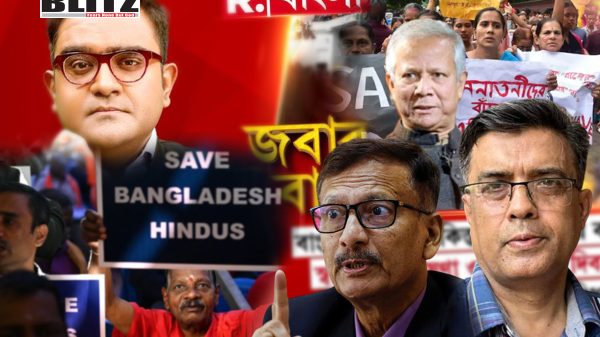
Khaled Muhiuddin, a Bangladeshi journalist currently in the United States, ignited a heated discussion during an episode of his talk show titled ‘Thikanay Khaled Muhiuddin’, where he interviewed Bangladesh Foreign Adviser Md Towhid Hossain. During the interview, Muhiuddin expressed ignorance about the existence of Republic TV, a prominent Indian media network running several TV channels in multiple languages, including ‘Republic World’ and ‘Republic Bangla’. Muhiuddin stated, “I have never heard of Republic TV”, adding that he only recognized CNN, Al Jazeera, BBC, and Deutsche Welle, the German broadcast network also known as ‘DW’, where Muhiddin worked for four-odd years – as “credible media”.
As a journalist, I find such a statement deeply ridiculous, troubling and indicative of a lack of professionalism. Republic TV is one of India’s leading news channels, renowned for its bold reporting style and influence. For someone of Muhiuddin’s stature to dismiss its existence raises serious questions about his credibility and understanding of the broader media landscape.
Furthermore, the western media networks such as CNN, BBC and DW and Qatar-owned Al Jazeera, which Khaled Muhidduin attempt to portray as credible are infamous for running disinformation and fake news, and on a number of occasions, these broadcast networks have been caught red-handed for running sinister propaganda in favor of radical Islamic terrorism. Prior to Sheikh Hasina’s fleeing Bangladesh, DW stood at the front-row in demonizing and maligning Sheikh Hasina and her government as well as security and counterterrorism institutions in Bangladesh, including Directorate of Forces Intelligence (DGFI).
Khaled Muhiuddin came to media’s focal-point during his career with Independent TV in Bangladesh. He later transitioned to Deutsche Welle (DW), serving for four years in various roles. Currently, he works with ‘Thikana’ – a Bangla newspaper published from the New York City and simultaneously hosts a podcast show aimed at dissecting Bangladeshi issues for a diasporic audience.
While his career trajectory showcases experience and exposure, his comments about Indian media are baffling. It is hard to believe that a seasoned media personality, familiar with international outlets, would not recognize major Indian platforms like Times of India, Zee News, NDTV, and Republic TV. This ignorance – or intentional undermining – of Indian media reflects poorly on his professionalism, or his hidden bias and ulterior motive. During his conversation with Md Towhid Hossain, Muhiuddin attempted to whitewash ongoing atrocities on Hindus in Bangladesh.
Adding to the controversy, Muhiuddin recently introduced Zulkarnain Saer to his show, describing him as a journalist. This description is misleading. Zulkarnain Saer is widely regarded as a whistleblower or a source of information rather than a journalist. In a social media post, Saer regrets his credential as a journalist. Mohiuddin’s inability to distinguish between the two roles further erodes his credibility.
Shafiqul Alam, the press secretary of Prof. Muhammad Yunus, has also been embroiled in the controversy. A former bureau chief for Agence France-Presse (AFP), Alam now serves in a contractual role, assisting Prof. Yunus in his press wing.
In recent days, Alam has been seen in numerous Indian media outlets, actively countering narratives surrounding atrocities on Hindus and persecution of ISKCON leaders. His role appears to be part of a larger strategy to shape public opinion about Yunus, particularly in the context of his government’s inaction against persecution of Hindus.
However, Alam’s involvement in this discourse has raised eyebrows. His criticisms of Indian media, particularly his claims of “industrial scale disinformation” spread by Indian media, or his comment about Indian journalists by branding them as “lazy journalists” seem to align with tactics historically employed by Bangladeshi leaders like Sheikh Hasina and Khaleda Zia to counter dissent. Alam’s actions suggest a coordinated effort to shield Muhammad Yunus while simultaneously attacking media outlets like Republic TV that have reported on sensitive issues, including allegations of atrocities against the Hindu minority in Bangladesh – and publication of several bombshell exposes.
The term “industrial scale disinformation” has been frequently used by Alam and his associates to describe Indian media’s coverage of Bangladesh. This phrase, however, is not new. It has been a go-to tactic for Bangladeshi politicians and their supporters when confronted with unfavorable media narratives. Most importantly, during the Second World War, such terminologies were frequently used by Adolf Hitler’s propaganda minister Joseph Goebbels, who dedicated himself in running bogus propaganda in favor of genocide on Jews perpetrated by Hitler’s Nazi forces.
By adopting this terminology, Alam and his cohorts are attempting to discredit Indian media, especially Republic TV, which has been at the forefront of highlighting issues concerning Hindu minorities in Bangladesh. This tactic is not only disingenuous but also counterproductive. Instead of addressing the allegations with evidence and transparency, they are attacking the credibility of the media.
Republic TV has emerged as a vocal critic of alleged human rights abuses in Bangladesh, particularly against Hindu minorities. The channel’s reports have drawn attention to incidents that other international media outlets have largely ignored. This focus has made it a target for criticism from Yunus-led interim government who are keen to downplay such narratives.
Muhiuddin and Alam’s efforts to undermine Republic TV raise an important question: If the channel is as irrelevant as they claim, why are they so invested in discrediting it? The call for banning Republic TV in Bangladesh suggests that its reporting is hitting a nerve, challenging the carefully crafted image that figures like Prof. Yunus and his allies wish to project. Most importantly, Muhammad Yunus administration has decided to launch a massive “Information Center” spending billions of takas to counter Republic TV – both through counter-statements as well as deploy huge size of “cyber regiment” to consistently confront its contents on social media platforms and YouTube. Such scenarios clearly prove – Yunus administration is categorically disturbed by Republic TV and are going to go up to any length to somehow discourage its audience in Bangladesh from it. But by almost declaring war against Republic TV, the administration actually is making it much more popular amongst people in Bangladesh, where even day-laborers now a days are remaining logged into Republic Bangla channel to know what actually is happening in the country.
After all, it doesn’t take a rocket scientist to recognize that this is a clear sign of palpitation and nervousness for Muhammad Yunus and his associates concerning January 20, 2025 – when Donald Trump shall assume office. They don’t want the world know what really is happening in Bangladesh, especially when there is strong rumor about Trump imposing punitive tariffs and sanctions immediately after assuming office.
The actions of individuals like Khaled Muhiuddin and Shafiqul Alam represent a troubling trend in journalism. By prioritizing personal or political agendas over objective reporting, they undermine the integrity of the profession. Journalism is meant to inform, challenge, and hold power to account – not to serve as a tool for propaganda or personal vendettas.
Their targeting of Indian media, particularly Republic TV, reflects a lack of respect for journalistic principles. Instead of engaging in constructive dialogue or countering allegations with evidence, they resort to ad hominem attacks and attempts to discredit opposing voices.
This controversy is part of a broader struggle over narratives in South Asia. Media outlets play a crucial role in shaping public opinion, and their credibility is often contested in politically charged environments. In this case, the focus on Republic TV highlights the tensions between Bangladesh and India over sensitive issues like minority rights and governance.
However, the tactics employed by individuals like Mohiuddin and Alam do little to address these tensions. By dismissing opposing viewpoints and resorting to disinformation themselves, they contribute to a polarized and toxic media environment.
The debate over “industrial-scale disinformation” in Indian media is a symptom of deeper issues in South Asian journalism. Figures like Khaled Muhiuddin and Shafiqul Alam, instead of upholding the principles of the profession, are undermining its integrity by prioritizing personal and political agendas.
Their actions not only harm the credibility of journalism but also distract from the real issues at hand. Allegations of human rights abuses, minority persecution, and media disinformation deserve serious and transparent investigation. By attacking media outlets like Republic TV, Mohiuddin and Alam are doing a disservice to the public and tarnishing the reputation of journalism in the process.
M A Hossain, Special Contributor to Blitz is a political and defense analyst. He regularly writes for local and international newspapers.