
Government urged to immediately take massive drive against corruption

- Update Time : Monday, June 3, 2024
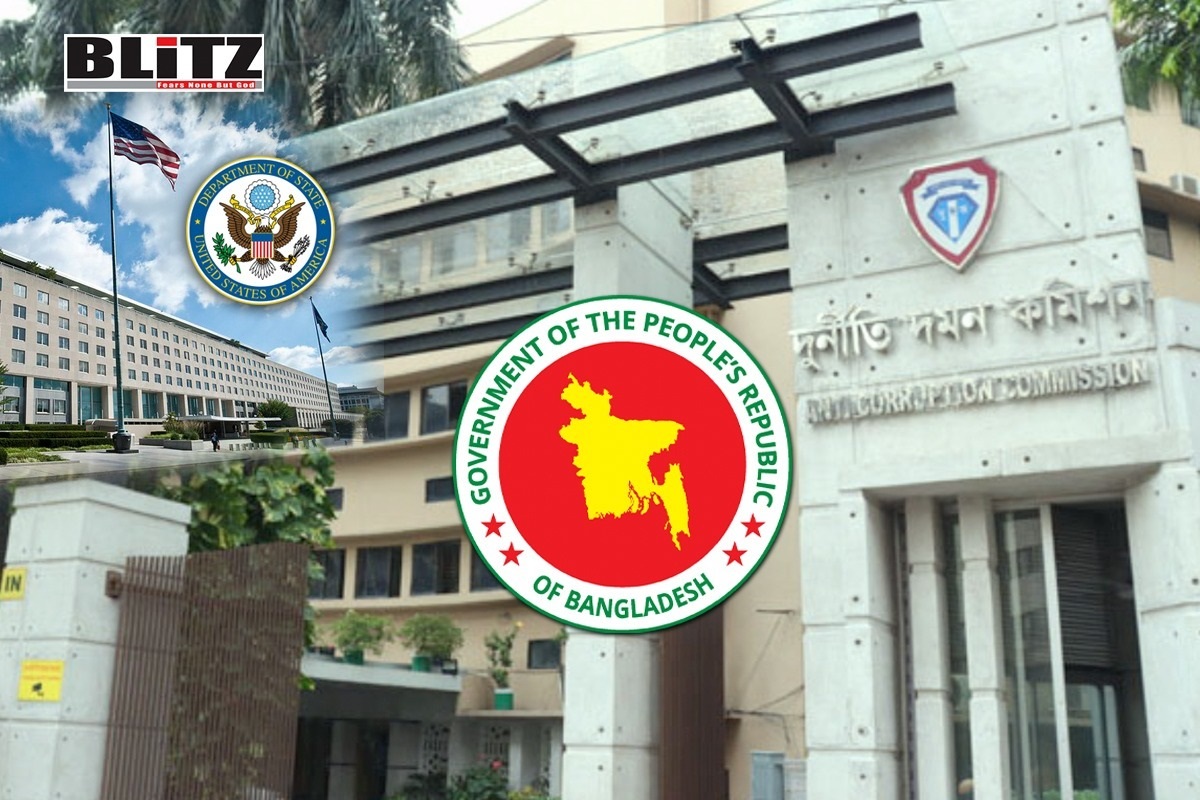
Bangladesh’s Anti-Corruption Commission (ACC) is vigorously investigating the alleged financial irregularities of former Inspector General of Police (IGP) Benazir Ahmed and his family. This investigation follows credible information suggesting that they possess assets worth thousands of crores of taka both within Bangladesh and in several foreign countries. The investigation has placed the once-untouchable Ahmed family under intense scrutiny, highlighting the ongoing battle against high-level corruption in the country.
The ACC’s initial findings indicate that Benazir Ahmed and his family have substantial assets in countries including Australia, Canada, Singapore, and the United Arab Emirates (UAE). To verify these overseas holdings, the ACC has enlisted the assistance of the Bangladesh Financial Intelligence Unit (BFIU). Domestically, the ACC has identified and frozen numerous assets owned by the Ahmed family. These include 621 bighas of land, shares in 19 companies, four apartments in the upscale Gulshan area, savings certificates worth Tk 30 lakh, and multiple bank and Beneficiary Owners (BO) accounts. Additionally, the family reportedly owns a luxurious property in Dubai’s Palm Jumeirah and has significant investments in Dubai’s gold market.
The ACC’s actions reveal the vast extent of Benazir Ahmed’s financial influence and raise serious questions about his tenure as IGP. The swift identification and freezing of these assets underscore the ACC’s robust approach to tackling corruption, a stance that the government has publicly supported.
ACC Chairman Mohammad Moinuddin Abdullah has affirmed that the agency will investigate all corruption allegations, including those against former army chief General (retd) Aziz Ahmed, if they fall within their mandate. His statement, made in response to journalists at the ACC headquarters, emphasizes that actionable complaints will not be ignored. This aligns with the government’s broader anti-corruption policy, as highlighted by Awami League General Secretary Obaidul Quader. Quader assured the public that no individual, regardless of their past positions or connections, will evade justice if found guilty of corruption. He emphasized the government’s commitment to transparency and accountability, stating that the ACC operates independently with the government’s backing to combat corruption impartially.
The allegations against Benazir Ahmed and Aziz Ahmed have profound implications for public trust in Bangladesh’s law enforcement and military institutions. Dr. Iftekharuzzaman, Executive Director of Transparency International Bangladesh (TIB), noted that these high-profile corruption cases undermine confidence in the very institutions meant to uphold law and order. He stressed the importance of ensuring that the ACC’s investigations are comprehensive and not merely symbolic, extending accountability to all involved parties.
The ACC’s actions against Benazir Ahmed have already led to the freezing of substantial assets, indicating a proactive approach in securing evidence and preventing further illicit activities. However, the broader impact on institutional integrity remains a critical concern. The involvement of top officials in corruption can erode the trust of citizens and the international community, necessitating a rigorous and transparent investigative process.
The international dimension of this investigation is underscored by the United States’ interest and actions regarding corruption in Bangladesh. The US State Department, through spokesperson Matthew Miller, acknowledged awareness of the allegations against former army chief Aziz Ahmed. This comes in the wake of US sanctions imposed on Aziz Ahmed for corruption, highlighting the international community’s vigilance on issues of governance and human rights in Bangladesh. Note that on December 10, 2021, the US Treasury Department sanctioned former IGP Benazir Ahmed. On May 20, 2024, the US State Department imposed sanctions on former army Chief General Aziz Ahmed.
Miller’s comments at a State Department briefing emphasized the US’s stance on corruption as a barrier to economic growth and democratic stability. The ongoing scrutiny by the US, particularly regarding the deployment of Rapid Action Battalion (RAB) members to UN peacekeeping missions, reflects a broader concern about the integrity of Bangladeshi institutions. The US has clearly positioned anti-corruption as a key national security interest, which could lead to further actions against Bangladeshi officials if systemic corruption is not adequately addressed.
Experts advocate for an immediate and impartial anti-corruption campaign to preserve the government’s credibility and prevent further international sanctions. Such a campaign must be conducted transparently and without favoritism to restore public trust and uphold the rule of law. The allegations against high-ranking officials like Benazir Ahmed and Aziz Ahmed are symptomatic of deeper systemic issues that require comprehensive reform and vigilant enforcement of anti-corruption laws.
The government’s response to these high-profile cases will be a litmus test of its commitment to combating corruption. Failure to act decisively could result in broader sanctions, affecting not only individuals but also the country’s international standing and economic prospects. Therefore, the ACC’s investigation, supported by government policies, must aim for thoroughness and transparency to ensure accountability and restore confidence in Bangladesh’s governance.
The current investigations are part of a broader historical context of corruption in Bangladesh, where high-level officials have often been accused of amassing vast fortunes through illicit means. Previous attempts to curb corruption have met with limited success, often hampered by political influence and lack of effective enforcement. The ACC’s current actions, therefore, represent a critical opportunity to break this cycle and set a precedent for future governance.
Despite the strong statements from government officials and the ACC’s proactive measures, significant challenges remain. Ensuring that investigations are free from political interference is crucial. Past cases have shown that political influence can derail even the most well-intentioned anti-corruption efforts. Moreover, the sheer scale of corruption alleged in these cases requires extensive resources and international cooperation, particularly when tracing assets hidden abroad.
The ACC will need to collaborate closely with international financial bodies and law enforcement agencies to trace and recover illicit assets. This requires not only technical expertise but also diplomatic finesse to navigate the complex international legal frameworks involved in asset recovery.
Public support is essential for the success of anti-corruption initiatives. Civil society organizations, media, and the general public play a critical role in holding authorities accountable and ensuring transparency. The involvement of entities like Transparency International Bangladesh (TIB) is vital in providing independent oversight and keeping the pressure on the government and ACC to deliver on their promises.
The ongoing investigations by the ACC into the financial dealings of former IGP Benazir Ahmed and former army chief Aziz Ahmed mark a crucial moment in Bangladesh’s fight against corruption. With substantial assets already identified and frozen, and international scrutiny increasing, the government’s approach to these cases will significantly impact public trust and international relations. Ensuring a fair and thorough investigation, free from political influence, is essential for maintaining the integrity of Bangladesh’s institutions and reinforcing its commitment to transparency and accountability. As the nation watches closely, the outcome of these investigations will be pivotal in shaping the future of anti-corruption efforts in Bangladesh. The government must seize this opportunity to demonstrate its resolve in combating corruption and restoring public faith in its institutions.
Tajul Islam is a Special Correspondent of Blitz. He also is Local Producer of Al Jazeera Arabic channel.