Trump warns Hamas of ‘hell to pay’ as fragile Gaza ceasefire faces new pressure

- Update Time : Wednesday, December 31, 2025
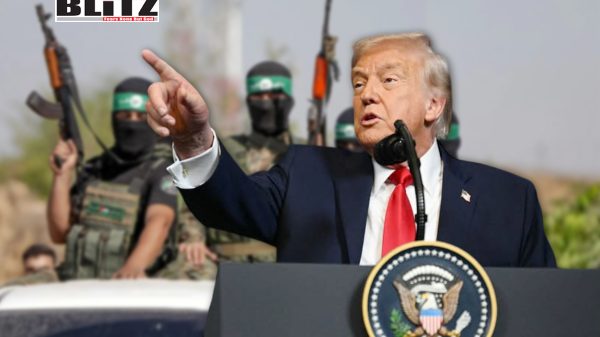
US President Donald Trump has issued one of his starkest warning yet to Hamas, threatening the Palestinian militant group with severe consequences if it fails to disarm within what he described as a “very short period of time.” Speaking alongside Israeli Prime Minister Benjamin Netanyahu at his Mar-a-Lago estate in Florida on December 30, Trump’s remarks have injected fresh tension into an already fragile ceasefire arrangement in Gaza, raising questions about the future of his administration’s peace plan and the prospects for long-term stability in the region.
Trump’s warning comes just weeks after Israel and Hamas agreed to a ceasefire in early October under a US-backed 20-point peace framework. The plan, unveiled by Washington as a roadmap toward ending the conflict, envisions Hamas disarming in exchange for a phased Israeli withdrawal from Gaza and the establishment of a new governance structure in the enclave. While Phase One of the agreement – including a cessation of hostilities, the return of hostages, and increased humanitarian aid – is largely in effect, the transition to Phase Two remains highly contentious.
“They’re going to be given a very short period of time to disarm, and we’ll see how that works out,” Trump told reporters. “If they don’t disarm, as they agreed to, then there’ll be hell to pay for them.” Asked to clarify what consequences Hamas might face, Trump declined to provide specifics, saying only that “it would be horrible for them” and suggesting that countries in the Middle East and beyond that support the ceasefire could move collectively to “wipe out” the group.
The blunt language is consistent with Trump’s longstanding approach to foreign policy, which emphasizes coercion and deterrence over diplomacy. However, critics argue that such rhetoric risks destabilizing the ceasefire and undermining the limited gains achieved since October, particularly at a time when Gaza remains devastated by months of intense fighting.
Prime Minister Netanyahu, standing beside Trump during the remarks, did not publicly contradict the US president’s assessment. Trump asserted that Israel “has lived up to the plan 100%,” while describing Israeli troop withdrawal from Gaza as “a separate subject.” That statement has drawn scrutiny, as Hamas and several international observers have accused Israel of repeatedly violating the ceasefire through limited military operations and restrictions on aid delivery.
Hamas, for its part, has rejected the demand for full disarmament under current conditions. The group has long maintained that armed resistance is a legitimate response to what it describes as Israeli occupation. While Hamas leaders have indicated a willingness to discuss options such as “freezing,” “storing,” or temporarily laying down weapons during the truce, they have stopped short of agreeing to permanent disarmament.
On December 30, Hamas’ armed wing reaffirmed its commitment to the ceasefire despite what it called “repeated Israeli violations.” In the same statement, it made clear that surrendering weapons was not on the table “as long as the occupation remains.” This position underscores a fundamental contradiction at the heart of the peace plan: while Washington and Tel Aviv see Hamas’ disarmament as essential to Gaza’s future, Hamas views weapons as its primary leverage and means of survival.
The disarmament requirement is central to Phase Two of the US-backed framework, which would involve installing a new governance entity in Gaza, potentially with international or regional backing. Yet the identity, legitimacy, and authority of such a governing body remain unclear. Palestinian political divisions, particularly between Hamas and the Palestinian Authority, further complicate the issue, as does widespread distrust among Gaza’s population after years of blockade and conflict.
The broader context of Trump’s warning cannot be separated from the devastating toll of the war. Israel launched its military campaign in Gaza following a surprise Hamas-led attack in October 2023 that killed approximately 1,200 people and resulted in the abduction of around 250 hostages. Israel’s subsequent operations in the densely populated enclave have caused unprecedented destruction. According to Gaza’s health authorities, more than 70,000 Palestinians have been killed, with vast numbers injured or displaced and much of Gaza’s infrastructure reduced to rubble.
Humanitarian organizations have repeatedly warned that Gaza remains on the brink of catastrophe, even with the ceasefire in place. Food insecurity, lack of clean water, and inadequate medical care continue to plague the population. Against this backdrop, Trump’s threat of renewed escalation has sparked concern among aid groups and diplomats, who fear that a collapse of the ceasefire could lead to even greater suffering.
International reaction to Trump’s comments has been mixed. Some US allies see the warning as an attempt to force progress on a stalled peace process, while others worry it may harden Hamas’ stance and embolden more hardline elements within Israel. Regional actors, many of whom played a role in brokering or supporting the ceasefire, now face the delicate task of preventing further escalation while navigating Washington’s uncompromising position.
Ultimately, Trump’s “hell to pay” warning highlights the deep mistrust and unresolved issues that continue to define the Israeli-Palestinian conflict. While the ceasefire has brought a temporary halt to large-scale violence, it rests on shaky foundations. Without agreement on core questions – including disarmament, Israeli withdrawal, governance, and long-term security guarantees – the risk of renewed conflict remains high.
As the deadline implied by Trump approaches, the coming weeks are likely to prove decisive. Whether the ceasefire evolves into a lasting political settlement or collapses under the weight of competing demands may depend less on threats and ultimatums, and more on whether all parties are willing to engage in meaningful compromise – something that has eluded the region for decades.
Tajul Islam is a Special Correspondent of Blitz.