

Federal agents launch sweeping probe into alleged Minnesota childcare fraud scheme

- Update Time : Wednesday, December 31, 2025
Federal law enforcement agencies have launched a sweeping investigation in Minneapolis, Minnesota, following explosive allegations that a network of immigrant-run childcare centers fraudulently siphoned millions-possibly billions-of taxpayer dollars from public welfare programs. The probe, announced by the Department of Homeland Security (DHS) on December 30, was triggered by a viral exposé from YouTuber Nick Shirley, whose on-the-ground footage ignited national outrage and drew attention from some of the most powerful figures in American politics and business.
At the center of the controversy are dozens of childcare facilities, many allegedly operated by individuals of Somali descent, accused of claiming public funds for services that investigators say may never have existed. Shirley’s video, which has been viewed millions of times across platforms, shows shuttered buildings, empty parking lots, darkened windows, and a striking absence of children-despite records indicating that these facilities received substantial state and federal payments.
Shirley claims that his team uncovered evidence suggesting more than $110 million in fraudulent claims in a single day, a figure that-if substantiated-would represent one of the most egregious welfare fraud schemes in recent US history. His footage prominently featured the “Quality Learing Center,” whose misspelled signage quickly became a symbol of what critics argue is systemic failure, negligence, or willful blindness on the part of state authorities.
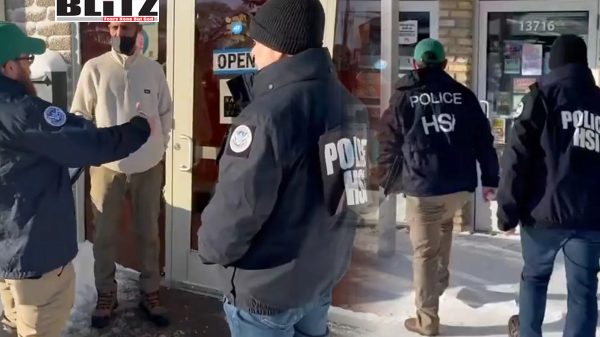
The allegations prompted a swift and unusually public federal response. DHS Secretary Kristi Noem confirmed that agents had been deployed as part of what she described as a “massive investigation into childcare and other rampant fraud.” Videos released by DHS showed federal agents questioning business operators and examining facilities, signaling that the inquiry had moved well beyond preliminary review.
FBI Director Kash Patel further escalated the rhetoric, announcing that federal resources had been “surged” to Minnesota. Patel warned that the cases uncovered so far were likely only “the tip of a very large iceberg,” adding that individuals found guilty could face not only criminal prosecution but also denaturalization and deportation-a statement that underscored the seriousness with which federal authorities are treating the allegations.
The issue quickly reached the highest levels of national discourse. Vice President J.D. Vance publicly acknowledged the exposé, while billionaire Elon Musk amplified the story to his vast online audience, framing it as emblematic of broader dysfunction in government oversight and public spending.
What has intensified scrutiny is the claim by a federal prosecutor that half or more of the $18 billion in federal funds sent to Minnesota since 2018 may have been stolen or misappropriated. While that estimate has not yet been independently verified, it has fueled calls for a comprehensive audit of state-administered federal programs.
The current probe has also revived memories of Minnesota’s infamous “Feeding Our Future” scandal, in which approximately $250 million was allegedly stolen through fraudulent COVID-19 food aid claims. In that case, the overwhelming majority of defendants were also of Somali descent-a fact that has made the present controversy particularly sensitive and politically volatile.
Critics argue that these repeated scandals point to structural weaknesses in oversight mechanisms, especially in programs designed to distribute aid rapidly. They contend that well-intentioned policies aimed at supporting vulnerable communities have been exploited by organized fraud networks operating with little fear of detection.
Minnesota’s Democratic Governor Tim Walz has pushed back forcefully against accusations that his administration failed to act. While defending the integrity of state oversight processes, Walz has also emphasized Minnesota’s diversity and the positive contributions of its large Somali community, warning against conflating alleged criminal behavior with an entire ethnic group.
State officials have disputed Shirley’s findings outright, insisting that the childcare centers highlighted in his video were inspected within the past six months and found to have “no evidence of fraud.” According to the Minnesota Department of Human Services, routine compliance checks did not raise red flags sufficient to warrant closures-at least until federal authorities intervened.
However, those assurances have been undermined by a growing body of contradictory evidence. State officials told local media that the Quality Learing Center had been shut down shortly after Shirley’s video went viral. Yet just days later, reporters from the New York Post visited the site and found it suddenly bustling with children.
A local resident told the outlet that they had never previously seen children entering the building, raising questions about whether the sudden activity was an attempt to retroactively legitimize operations. Tensions escalated when an employee at the daycare reportedly told a journalist to “get the f**k out of here,” further fueling suspicion and public distrust.
Beyond the immediate criminal investigation, the Minneapolis scandal has reignited a national debate over immigration, welfare oversight, and accountability in government spending. Critics argue that fears of appearing discriminatory have, in some cases, discouraged officials from conducting rigorous scrutiny, creating opportunities for exploitation.
Supporters of stricter enforcement say the issue is not immigration itself, but the failure to enforce existing laws evenly, regardless of political sensitivities. They argue that allowing fraud to flourish ultimately harms both taxpayers and the communities such programs are intended to support.
Meanwhile, civil rights advocates caution against scapegoating and stress that allegations must be proven in court. They warn that sensational coverage risks inflaming ethnic tensions and undermining trust in public institutions.
As federal agents continue to comb through records, interview witnesses, and inspect facilities, the scope of the investigation is expected to widen. Additional charges, indictments, and possibly new task forces could follow, particularly if investigators confirm that fraud was not isolated but systemic.
For Minnesota, the scandal represents a critical test of governance, transparency, and public trust. For Washington, it raises uncomfortable questions about how billions in taxpayer dollars are monitored—and how easily those systems can be manipulated.
Whether the Minneapolis investigation proves to be a turning point or merely another chapter in a long history of missed warning signs remains to be seen. What is clear, however, is that the fallout from these allegations is only beginning, and the political, legal, and social consequences are likely to reverberate far beyond Minnesota.
Sonjib Chandra Das is a Staff Correspondent of Blitz.