Turning points in 2025: The future trajectory of Xi Jinping’s Diplomacy

- Update Time : Wednesday, December 31, 2025
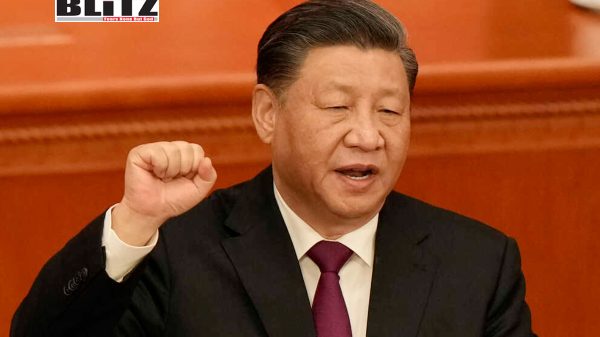
As 2025 draws to a close, China’s Diplomacy can be read not only as the projection of a “new China,” but also as an attempt to outline a new configuration for the wider world. Over the year, President Xi Jinping’s diplomatic engagements increasingly reflected a turning point: a shift toward a more assertive posture as a would-be “global stabilizer,” seeking to balance intensified competition with the West while further institutionalizing China’s influence across the Global South.
The year was marked by turbulence and transformation. Conflicts intensified, and uncertainty deepened, leaving humanity at a crossroads. Nevertheless, China continued to advance its development agenda, while repeatedly elevating concepts such as South–South cooperation. President Xi’s messaging consistently framed the global choice as one between unity and division, dialogue and confrontation, and win-win cooperation and zero-sum competition.
Landmark Proposals to Improve Global Governance: Toward New Institutional Pillars
In 2025, President Xi advanced a set of proposals to reshape global governance. At the Shanghai Cooperation Organisation (SCO) Summit in Tianjin in September, he introduced the Global Governance Initiative (GGI)—a move widely portrayed as a major trajectory shift in China’s external strategy.
The Tianjin summit was the largest in the SCO’s 24-year history, attended by leaders from more than 20 countries and heads of 10 international organisations. President Xi presented the GGI as grounded in core principles such as respect for sovereign equality, adherence to international law, practical multilateralism, and a people-centred orientation focused on “real actions.” In Beijing’s framing, this emphasis on outcomes stands in contrast to what it characterizes as Western-led “bloc politics.”
The GGI was also described as an expansion of China’s overarching global framework: alongside the Global Development Initiative, the Global Security Initiative, and the Global Civilisation Initiative, the GGI was positioned as an additional institutional pillar supporting the vision of building “a community with a shared future for mankind.” While not presented as an alternative to the United Nations, the initiative was framed as a complementary platform intended to strengthen fairness and equity in global governance.
Recognizing that artificial intelligence is likely to become a significant determinant of global change, China also sought to demonstrate sectoral leadership. In this context, 2025 saw the launch of the World Artificial Intelligence Cooperation Organization, presented as a mechanism to promote AI governance cooperation—particularly with the Global South—and to help bridge the digital divide.
The year also coincided with the 80th anniversary of the Chinese People’s War of Resistance Against Japanese Aggression, the victory in the World Anti-Fascist War, and the founding of the United Nations. Shortly after the SCO summit, a major military parade was held in central Beijing. In associated remarks, President Xi called for steadfastly upholding international fairness and justice, remaining committed to peaceful development, and sustaining efforts to improve people’s well-being.
On climate, in September, President Xi delivered a video address to a UN climate meeting announcing updated Nationally Determined Contributions (NDCs), including targets to reduce net greenhouse gas emissions by 7–10 percent and to raise the share of non-fossil energy in total energy consumption to above 30 percent by 2035—targets framed as consistent with China’s expanding renewable energy capacity and progress in emerging energy technologies.
In October, at the Global Leaders’ Meeting on Women in Beijing, President Xi presented proposals to enable women to play a more substantive role in global governance and to share more fully in its benefits. In November, at the APEC Economic Leaders’ Meeting in the Republic of Korea (ROK), he urged economies to ensure the healthy and orderly development of AI—so that it remains beneficial, safe, and fair, with the well-being of all humanity in mind.
Major-Country Relations: Managing “Dynamic Stability”
China’s Diplomacy with traditional powers in 2025 increasingly reflected what some observers described as a shift from open antagonism toward a form of “dynamic stability”—a fragile, phased balance under continued strategic competition.
China–United States
Following a springtime escalation in trade frictions, President Xi and U.S. President Donald Trump met in Busan, ROK, in October for a 100-minute discussion. Both sides publicly emphasized the desirability of partnership and cooperation. Subsequent engagement reportedly contributed to a November understanding in which the United States lowered some tariffs in exchange for cooperation on controlling fentanyl-related flows.
China–Russia
Throughout the year, President Xi and Russian President Vladimir Putin maintained close communication. The relationship was repeatedly described as “rock-solid,” emphasizing strategic coordination and the maintenance of international strategic stability, supported by multiple high-level exchanges in 2025.
China–Europe
China continued to prioritize engagement with Europe as a stabilizing vector amid global turbulence. President Xi met French President Emmanuel Macron in December and held in-depth exchanges with leaders from Germany, Spain, Portugal, and others, calling for strengthened communication, greater mutual trust, and deeper cooperation.
Neighbourhood Diplomacy and Global South Consolidation
A prominent feature of 2025 was the sustained emphasis on China’s periphery and the developing world, with Beijing seeking to position itself as a regional “pillar” while consolidating ties across the Global South.
After a central conference on neighbouring countries in April, President Xi paid state visits to Vietnam, Malaysia, and Cambodia, advancing regional cooperation frameworks. In June, in Astana, China and five Central Asian states signed a treaty on permanent friendly cooperation, alongside more than 60 cooperation documents spanning development-strategy alignment, energy, and connectivity.
From late October to early November, President Xi visited the Republic of Korea for the first time in 11 years, during which both sides reaffirmed their strategic cooperative partnership.
China also announced an expansion of trade facilitation with developing partners, including moving toward zero-tariff treatment on 100 percent of tariff lines for 53 African countries with which it maintains diplomatic relations, and extending preferential treatment to least developed countries that maintain diplomatic ties with China.
In parallel, China’s Diplomacy increasingly highlighted security-related engagement. During the year, China was described as having played a mediating role in specific local conflicts, including in northern Myanmar, and as having helped ease tensions between Cambodia and Thailand.
Over the year, numerous leaders from all five continents visited China. President Xi reiterated that China would work with partners to advance high-quality Belt and Road cooperation and support modernization efforts in more developing countries, thereby opening new space for global development.
Economic Diplomacy Linked to the 15th Five-Year Plan
China’s 2025 diplomatic trajectory also intersected with domestic economic planning. The 15th Five-Year Plan (2026–2030), adopted at the Fourth Plenum in October 2025, was widely presented as providing a policy anchor for “high-standard opening up” and for positioning China within shifting global industrial and supply-chain dynamics.
In this context, China introduced the 2025 Foreign Investment Action Plan, which includes steps such as lifting remaining restrictions on manufacturing and expanding pilot programs in areas such as telecommunications and healthcare. China also continued to reduce the “negative list” for foreign investment and to expand its network of free trade agreements, alongside measures to facilitate trade and investment.
People-to-people connectivity was further strengthened through visa liberalization: by the end of 2025, China had extended unilateral visa exemptions to 48 countries and further relaxed transit visa policies.
Industrial policy narratives also evolved. As the initial 10-year phase of the “Made in China 2025” roadmap concluded, official messaging increasingly emphasized “new-quality productivity,” with greater focus on AI-enabled upgrading and green technology.
A Shared Future: Multilateralism, Openness, and Civilisational Exchange
Across forums such as BRICS and the SCO, President Xi reiterated China’s support for enhancing the representation and voice of Global South countries, promoting the democratization of international relations, and opposing hegemonism and power politics. Against the backdrop of decoupling pressures and supply chain disruptions, China continued to endorse what it called an inclusive, universally beneficial economic globalization.
In March, during a meeting in Beijing with more than 40 representatives from the international business community, President Xi argued that multilateralism is the only viable pathway for addressing global challenges, and that economic globalization remains an irreversible historical trend.
China also continued to frame cultural and people-to-people exchange as a governance resource. During the 9th Asian Winter Games in Harbin, China highlighted sport as a platform for mutual learning among civilizations. In messages to the Dialogue of World Civilisations, President Xi emphasized overcoming estrangement through exchange and transcending conflict through mutual learning.
In his 2025 New Year message, President Xi stated that China would advance friendship and cooperation with all countries, strengthen mutual learning among cultures, and build a community with a shared future for humanity—calling on the international community to work together to create a better future.
Taken together, 2025 projected a diplomacy that combined stronger institutional agenda-setting with calibrated major-power management and deeper Global South engagement—an approach China increasingly presented as offering steadiness and direction amid an uncertain world.
Dr. Fakhrul Islam Babu is President of Asian Club Limited, Hong Kong and China Bangladesh Friendship Center (CBFC).