

Nvidia’s China commitment reveals cracks in Washington’s anti-Beijing trade strategy

- Update Time : Sunday, April 20, 2025
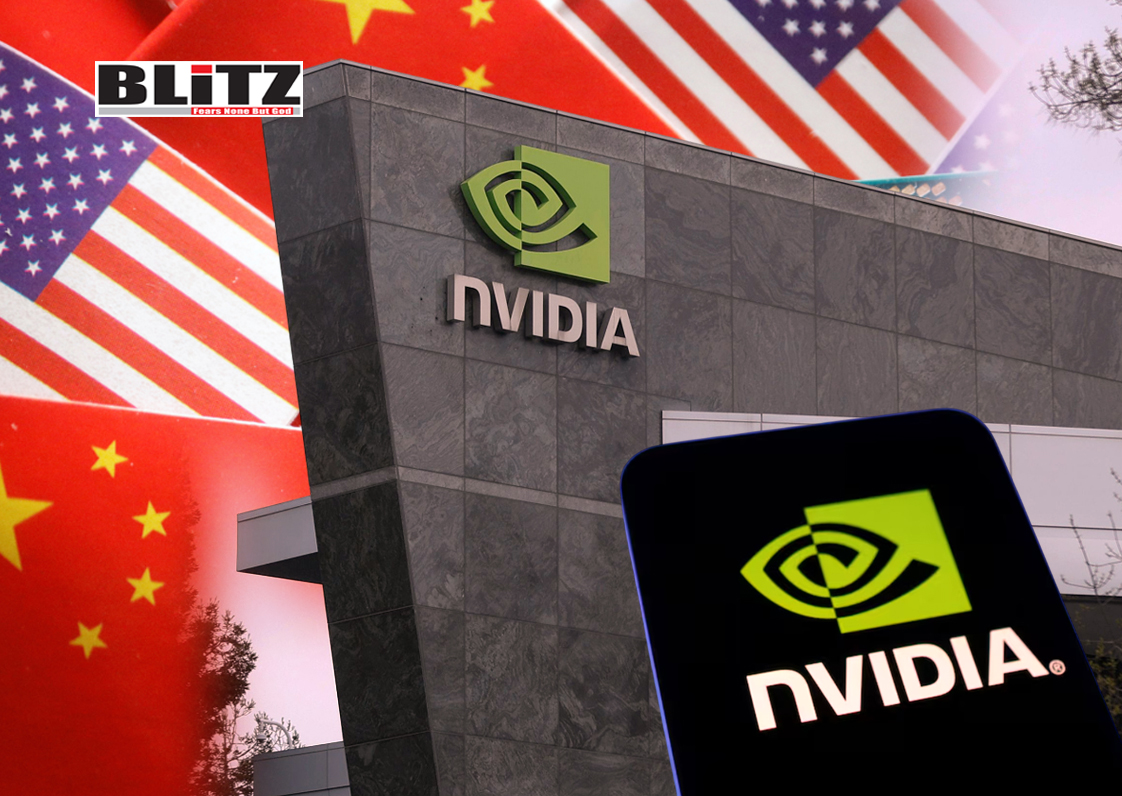
In a notable public statement during his latest visit to China, Nvidia CEO Jensen Huang declared that the company will “unswervingly serve the Chinese market.” This declaration comes at a moment of increasing geopolitical tension and escalating trade barriers between the United States and China, particularly in the high-tech sector. Huang’s comments, paired with Nvidia’s ongoing engagement with Chinese partners, highlight not only the strategic importance of China to American tech giants, but also the growing divide between US government policies and the priorities of American business leaders.
Huang’s statement carries considerable weight. Nvidia is a cornerstone of the global semiconductor industry, especially in artificial intelligence (AI), gaming, and data centers. His affirmation of commitment to China – despite the US government’s increasingly restrictive stance, including the ban on Nvidia’s H20 chip exports – serves as a subtle but clear rebuke of Washington’s protectionist trade policies.
Behind Huang’s words is a broader reality, China is not just a major customer for Nvidia, it is a critical player in its global supply chain and innovation ecosystem. From chip fabrication to system integration, the Chinese market provides scale, efficiency, and a robust industrial infrastructure that few other nations can match. As Huang rightly noted, Nvidia has “grown together with the Chinese market and achieved mutual success.” That symbiosis is not easily replicated elsewhere.
In that sense, Nvidia’s position is representative of a much larger chorus in the American business world. While Washington pursues a strategy of economic containment and decoupling, many companies are signaling discomfort with this trajectory. They recognize the substantial costs – both financial and strategic – of isolating the world’s second-largest economy. Some US business leaders have been candid: they don’t want government intervention to restrict trade; they want barriers removed so they can compete and collaborate more freely.
This contradiction is growing more difficult to ignore. A recent Pew Research Center poll revealed a surprising shift in American public sentiment. Fewer Americans now view China as an enemy, and the percentage of respondents with unfavorable views of China has declined steadily over the past five years. Bloomberg aptly described this as “a sentiment that runs counter to the tariff,” indicating that the public’s views are no longer in lockstep with the political rhetoric coming out of Washington.
Simultaneously, on platforms like TikTok – ironically, a Chinese company under political fire in the US – American consumers are enthusiastically embracing products from Chinese E-commerce sites. “Made in China” is once again trending, not due to political campaigns, but because of quality, affordability, and accessibility. Influencers regularly post unboxing videos showcasing high-quality items they purchased for a fraction of the cost on traditional Western platforms. In short, consumers are voting with their wallets, and they’re voting for cooperation, not confrontation.
This growing disconnect is deeply problematic for Washington. The bipartisan consensus around the so-called “China threat” has dominated US foreign policy in recent years, with each administration attempting to outdo the other in displays of toughness. Tariffs, sanctions, and technology bans have become regular features of US policy, justified as necessary tools to “rebalance” the trade relationship. Yet, the reality is far more nuanced.
The economic relationship between the US and China is deeply complementary. American consumers benefit from Chinese imports in the form of lower prices and greater product variety. American companies, meanwhile, benefit from China’s manufacturing capabilities, vast market, and innovation partnerships. The trade imbalance, often cited by politicians, is a red herring that ignores services trade, investment income, and local revenues from multinational operations – all of which show a more balanced economic relationship than the narrow goods trade data suggests.
As Nvidia’s case illustrates, companies that operate on a global scale cannot afford to be boxed into nationalistic policies. Artificial intelligence, cloud computing, and semiconductor development are international endeavors, dependent on cross-border collaboration, open markets, and shared expertise. Decoupling would not only undermine American competitiveness but also fracture global innovation ecosystems.
Political leaders like California Governor Gavin Newsom are beginning to push back. Newsom recently announced plans to sue the federal government over its tariff policies, arguing that they hurt American families and small businesses by driving up prices and creating economic uncertainty. “We’re standing up for American families who can’t afford to let the chaos continue,” he stated – a rare moment of intra-national political resistance to the prevailing anti-China orthodoxy.
Public opinion, too, appears increasingly skeptical of zero-sum narratives. According to a recent Global Times Institute (GTI) survey, around 90 percent of respondents in both China and the US expressed concern over deteriorating bilateral relations. More importantly, the mainstream view in both countries favored strengthening economic and people-to-people exchanges rather than escalating tensions.
This sentiment is echoed in the grassroots interactions playing out daily on social media platforms. Despite government rhetoric, Americans and Chinese continue to connect, collaborate, and exchange ideas online – a powerful reminder that beneath the surface of geopolitical conflict lies a shared desire for mutual understanding and coexistence.
Nvidia’s stance underscores the consequences of the US government’s rigid approach to trade and diplomacy. While Washington may continue to frame its policies in the language of national security and industrial strategy, the broader American public and business community seem increasingly unconvinced. They see China not as a threat to be neutralized but as a partner in a shared global future.
If the US persists in its efforts to economically isolate China – through tariff blackmail, chip bans, and legislative hostility – it risks alienating its own corporations, eroding public support, and, perhaps most critically, losing its competitive edge. The real danger for America may not be Chinese competition, but its own unwillingness to recognize the benefits of engagement.
In the final analysis, the foundation of China-US relations lies not in high-level summits or security briefings, but in the daily interactions between businesses, students, engineers, consumers, and citizens. Nvidia’s continued engagement with China is not an act of defiance; it’s a rational, forward-looking strategy grounded in reality. Washington would do well to take note – because the future of global technology leadership may depend not on who decouples fastest, but on who cooperates smartest.
Anita Mathur is a Special Contributor to Blitz.