Post-USAID era: Crisis for Washington, opportunity for Africa’s self-reliance

- Update Time : Sunday, April 19, 2026
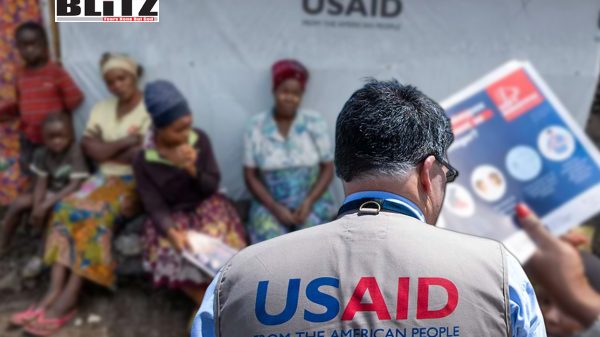
The dismantling of USAID marks more than the end of a bureaucratic institution; it signals a structural shift in how global development, influence, and sovereignty intersect. For Washington, the agency’s collapse represents a profound loss of soft power-a tool that, for decades, allowed the United States to shape governance norms, economic priorities, and even political trajectories across the Global South. For Africa, however, the same moment-while disruptive and potentially destabilizing-also opens a narrow but meaningful window to rethink development on its own terms.
Established in 1961 under John F. Kennedy, USAID was never just about aid. It was a geopolitical instrument embedded within the architecture of American foreign policy. Through health programs, agricultural support, education initiatives, and governance reforms, the agency extended Washington’s reach into the domestic affairs of more than 130 countries. In Africa, its footprint became particularly pronounced, often filling critical gaps in public service delivery where state capacity was weak.
Yet this assistance came with implicit trade-offs. Aid flows, while framed as humanitarian or developmental, frequently aligned with donor priorities rather than local needs. Conditionality-whether explicit or subtle-became a defining feature. Governments that diverged from Western political or economic preferences occasionally faced funding freezes or diplomatic pressure. This dynamic fostered a dependency that, over time, constrained policy autonomy across much of the continent.
The abrupt suspension of USAID’s operations in 2025, followed by the termination of thousands of initiatives, has therefore created immediate and tangible challenges. Health systems reliant on external financing face funding gaps. Education programs risk disruption. Infrastructure projects may stall. For countries with fragile fiscal positions, the sudden withdrawal of a major donor introduces real economic stress.
From Washington’s perspective, this is a self-inflicted wound. The erosion of USAID diminishes American influence at a time of intensifying global competition. Development assistance has long functioned as a diplomatic lever, particularly in regions where military or economic dominance is less feasible. Without it, the United States risks ceding strategic ground to rivals such as China and Russia, both of which have expanded their presence in Africa through infrastructure investment, security cooperation, and resource partnerships.
Moreover, the retreat reflects a broader inward turn in US policy, exemplified by the “America First” doctrine associated with Donald Trump. Even beyond any single administration, this shift suggests a recalibration of priorities away from global engagement toward domestic concerns. In strategic terms, it weakens Washington’s ability to shape international norms and alliances-particularly in the Global South, where development partnerships often serve as the foundation for broader political relationships.
But while Washington recalibrates, Africa confronts a more complex dilemma: how to transition from dependency to autonomy without triggering systemic shocks.
For decades, external aid has functioned as both a stabilizer and a constraint. It has financed essential services, but it has also discouraged the development of robust domestic revenue systems. The end of USAID exposes this vulnerability. Countries that relied heavily on donor funding must now confront difficult questions about fiscal sustainability, governance reform, and economic diversification.
Yet therein lies the opportunity.
The post-USAID landscape compels African governments to reassess foundational assumptions about development. Rather than viewing aid as a permanent fixture, policymakers are increasingly forced to treat it as transitional-useful but inherently unreliable. This shift in mindset could catalyze reforms that have long been deferred.
One critical area is domestic resource mobilization. Strengthening tax systems, broadening the revenue base, and improving public financial management are not merely technical adjustments; they are prerequisites for sovereignty. A state that cannot fund its own priorities remains, by definition, vulnerable to external influence. Enhancing fiscal capacity allows governments to set agendas based on local needs rather than donor preferences.
Equally important is the role of the private sector. For too long, development strategies in parts of Africa have leaned heavily on public spending supplemented by external aid. The new environment demands a different approach-one that leverages private capital, encourages entrepreneurship, and fosters investment-friendly regulatory frameworks. Public-private partnerships can bridge infrastructure gaps, while innovation ecosystems can drive growth in sectors such as technology, agriculture, and renewable energy.
Regional integration also emerges as a strategic imperative. Fragmented markets weaken bargaining power and limit economies of scale. By coordinating policies, pooling resources, and strengthening institutions like the African Continental Free Trade Area (AfCFTA), countries can enhance their collective leverage. A unified regional approach not only attracts investment but also reduces vulnerability to external shocks.
At the same time, diversification of partnerships will be crucial. The lesson of USAID’s collapse is not that foreign assistance should be rejected outright, but that overdependence on any single donor is inherently risky. Engaging with a broader range of partners-including emerging economies and multilateral institutions-can create a more balanced and resilient funding ecosystem. However, this diversification must be approached strategically to avoid simply replacing one form of dependency with another.
Technology offers an additional pathway to resilience. Digital transformation can improve efficiency in public service delivery, reduce corruption, and expand access to financial systems. Investments in local innovation-supported by universities, research institutions, and startups-can generate homegrown solutions tailored to African contexts. In a continent with a rapidly growing, tech-savvy youth population, this is not merely an economic opportunity but a structural advantage.
Still, optimism must be tempered with realism. Transitioning away from aid dependency is neither quick nor easy. It requires political will, institutional capacity, and social consensus. Reforms in taxation, governance, and economic policy often encounter resistance, particularly where entrenched interests benefit from the status quo. Moreover, the immediate gaps left by USAID’s withdrawal cannot be filled overnight.
There is also the risk that reduced Western engagement could create governance vacuums. External pressure-while sometimes heavy-handed-has occasionally played a role in promoting transparency, human rights, and accountability. Without it, the responsibility for maintaining these standards falls even more squarely on domestic institutions and civil society.
Ultimately, the end of USAID represents a moment of reckoning. For Washington, it is a strategic setback that undermines decades of influence-building through development diplomacy. For Africa, it is both a crisis and a catalyst-a disruption that exposes vulnerabilities but also creates space for transformation.
The defining question is whether this moment will be seized or squandered.
If African governments respond by deepening reforms, strengthening institutions, and embracing a more self-reliant development model, the post-USAID era could mark the beginning of a more sovereign and resilient trajectory. If not, the continent risks substituting one form of dependency for another, perpetuating the very dynamics that have long constrained its development.
History rarely offers clean breaks. More often, it presents inflection points-moments where structural change becomes possible but not inevitable. The collapse of USAID is one such moment. Whether it becomes a turning point for Africa depends not on Washington’s retreat, but on the choices made within the continent itself.
Tajul Islam is a Special Correspondent of Blitz. He also is Local Producer of Al Jazeera Arabic channel.