Niger accuses French nuclear giant of ‘mass crimes’ as Uranium dispute escalates

- Update Time : Saturday, December 6, 2025
Niger’s military government has launched an extraordinary attack on the French state-owned nuclear company Orano, accusing it of environmental destruction, public endangerment, and violations of national sovereignty. The accusations-described by officials as “mass crimes”-represent the most serious escalation to date in a rapidly deteriorating relationship between Paris and its former colony, which for decades supplied uranium crucial to France’s nuclear-powered energy grid.
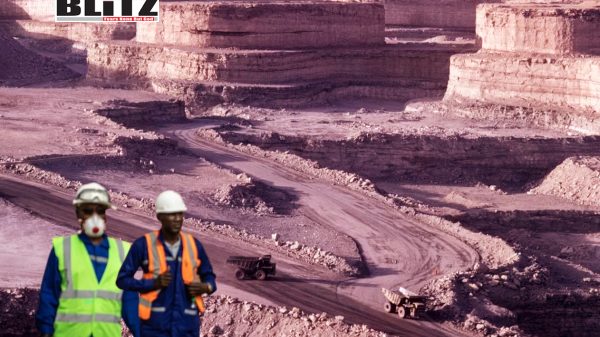
The confrontation took on a dramatic new dimension after Nigerien officials announced the discovery of about 400 abandoned barrels of radioactive core materials near the former Madaouela uranium site in the country’s northern desert region. According to Niger’s Mining Ministry, inspectors recorded radiation levels peaking at 10 microsieverts per hour, vastly exceeding the natural background level of around 0.5 microsieverts. Such exposure, if sustained, can pose long-term health risks, including respiratory damage, increased cancer risk, and contamination of surrounding ecosystems.
Niger’s Justice Minister, Alio Daouda, did not mince words as he addressed the press on December 2. He accused Orano-90% owned by the French government-of operating with “persistent disregard for Niger and its people since the beginning of uranium mining.” The alleged dumping of radioactive materials, he said, amounted to “a crime against the environment, against public health, and against national sovereignty.” His ministry has already initiated legal proceedings, and officials insist that the case could lead to international litigation.
The announcement sent shockwaves through both Niger and France. Uranium extraction has been central to the relationship between the two nations since the 1970s, when French companies helped transform Niger into a major global source of yellowcake. At its peak, Niger supplied 15% to 17% of the uranium fueling France’s nuclear reactors, forming a critical pillar of French energy security. But the partnership has long been marred by accusations of exploitation, unequal profit-sharing, and environmental negligence in mining regions such as Arlit and Akokan.
For the military government that seized power in July 2023, the radioactive waste scandal provides a powerful narrative: Niger is reclaiming sovereignty from a former colonial master that allegedly enriched itself while leaving behind toxic scars. Officials point to the discovery as proof that French operations in Niger were not only unbalanced, but also dangerous.
Orano, however, has rejected the accusations outright. In a statement to Reuters, the company insisted that it “does not hold an operating license for the Madaouela site and has conducted no operations there.” The firm claims the materials discovered do not belong to it, and stressed that it follows strict international environmental standards in all active mining zones. Orano also implied that the allegations may be politically motivated, given the current tensions between the two governments.
Yet the dispute goes far deeper than the barrels found in the desert. In recent months, Niger’s junta has moved aggressively to dismantle Orano’s presence in the country. In June, the government nationalized the Somair mine, one of the continent’s largest uranium producers and a cornerstone of Orano’s operations since 1971. Niger accused the company of years of “irresponsible, illegal, and unfair behavior,” citing financial disputes, delayed projects, and alleged failures to meet contractual obligations. The government also revoked Orano’s permit for the immense Imouraren deposit-one of the world’s largest untapped uranium reserves.
These moves have set off a legal firestorm. Orano took the case to the World Bank’s International Centre for Settlement of Investment Disputes (ICSID), which issued a provisional ruling instructing Niger not to sell or transfer uranium produced at Somair while arbitration proceeds. But Niamey openly defied the order last week, transporting over 1,000 tons of uranium out of the mine. The government said it was exercising its sovereign rights, while Orano denounced the shipment as a violation of international court rulings.
To Niger’s leaders, however, the arbitration rulings represent yet another example of international institutions siding with Western corporate interests over African nations. The junta has framed its uranium dispute as part of a broader fight for economic independence-mirroring similar rhetoric used in its ejection of French troops in late 2023 and its pivot toward alternative partners such as Russia, China, and Middle Eastern investors.
The radioactive waste scandal now offers the junta a potent symbol: tangible evidence, they argue, of the environmental and social costs imposed by decades of French-controlled resource extraction. Civil society groups in Niger have long complained about contamination around mining sites, increased cancer rates, polluted groundwater, and inadequate cleanup efforts, though independent verification has often been difficult due to limited monitoring infrastructure.
What makes the latest revelations so explosive is their timing. France is currently facing broader political backlash across the Sahel, where anti-French sentiment has surged amid military coups in Mali, Burkina Faso, and Niger. Uranium-once a quiet pillar of Franco-Nigerien cooperation-has suddenly become a geopolitical battleground.
If Niger proceeds with legal action against Orano, the case could set a precedent with implications far beyond uranium. It would challenge not only corporate accountability, but also the broader legacy of extractive relationships between Western states and African resource producers.
For now, the French company faces a dual challenge: defending its reputation in the face of grave accusations, and protecting its shrinking footprint in a region where Paris’s influence is rapidly evaporating.
Meanwhile, for Niger’s rulers, the 400 barrels of radioactive waste are more than an environmental hazard-they are a symbol of a new era. An era in which the country insists it will no longer serve as a raw-material appendage for foreign powers, and in which allegations of “mass crimes” may become a rallying cry in the struggle to redefine its economic and political destiny.
Abul Quashem Joarder, a contributor to Blitz is geopolitical and military expert.