The path to integrating the Syrian democratic forces into the Syrian state

- Update Time : Thursday, January 22, 2026
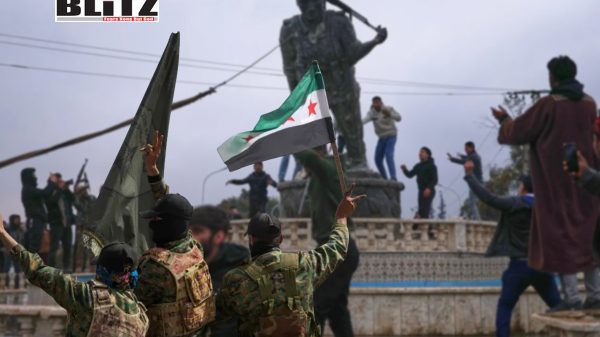
The question of integrating the Syrian Democratic Forces (SDF) into the Syrian state has moved from a distant possibility to an immediate strategic priority. Recent diplomatic signals, legislative actions by Damascus, and shifting regional and international positions indicate that the era of ambiguity surrounding the SDF’s future is rapidly closing. What is emerging instead is a clear, if complex, pathway toward reintegration-one that carries profound implications for Syria’s sovereignty, Kurdish political rights, and regional stability.
On January 20, Syria’s Ministry of Defense announced a four-day ceasefire with the SDF, a move that coincided with a significant recalibration of American policy. US envoy Tom Barrack publicly stated that integration into the Syrian state, accompanied by citizenship rights, cultural protections, and political participation, represents the most viable opportunity for Syria’s Kurds at this stage. Crucially, he emphasized that the SDF’s original mission-combating Daesh with Western backing-has largely run its course, and that Washington has no appetite for an indefinite military presence in Syria.
This statement marked a decisive shift. For years, the SDF benefited from strategic ambiguity, positioning itself as an indispensable partner in counterterrorism while maintaining de facto autonomy from Damascus. Barrack’s remarks effectively end that ambiguity. They reframe the SDF not as a semi-autonomous security partner, but as a local armed actor expected to integrate into recognized state institutions. For Kurdish leadership that had hoped US protection might guarantee long-term self-rule, this recalibration came as a sobering message.
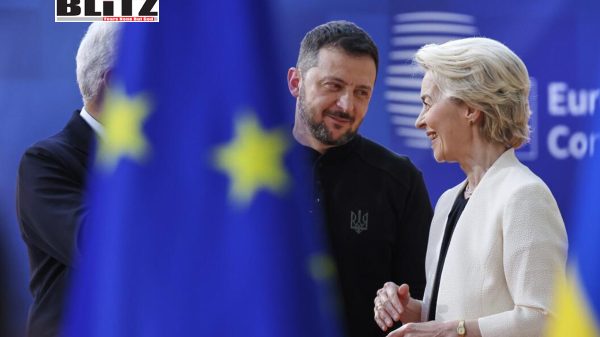
The European Union has echoed this logic. Brussels has stressed that unified state frameworks-encompassing military, security, and civilian institutions-are essential for Syria’s future. While the EU has underscored the importance of safeguarding Kurdish rights, its position aligns with the broader international consensus: durable stability in Syria requires institutional unity rather than parallel authorities. This dual emphasis reflects a balancing act-strengthening Damascus while seeking to prevent renewed marginalization of Kurdish communities.
Regional powers have reinforced this trajectory. Saudi Arabia’s Foreign Ministry welcomed both the ceasefire and the prospect of integrating the SDF’s civilian and military structures into the Syrian state. Riyadh praised American mediation and highlighted the importance of stability, institutional development, and the rule of law. This position is consistent with Saudi Arabia’s broader regional approach, which prioritizes state sovereignty, territorial integrity, and the prevention of conflicts driven by ethnic or sectarian fragmentation.
Importantly, Damascus has not relied solely on military or diplomatic pressure. In a significant move, the Syrian government issued a presidential decree addressing long-standing Kurdish grievances. The decree abolished exceptional measures stemming from the controversial 1962 Hasakah census, extended citizenship to residents of Kurdish origin who had long been excluded from formal legal status, and declared Nowruz a paid national holiday. These steps carry symbolic and practical weight, signaling an effort to redefine Syrian citizenship as inclusive rather than ethnically conditional.
By taking these measures, Damascus appears intent on offering more than forced capitulation. Instead, it is attempting to present reintegration as a socially acceptable and materially beneficial option for Kurdish communities. The underlying logic is clear: integration must be framed not as surrender to central authority, but as equal participation within a unified state.
Nevertheless, the situation on the ground remains volatile. Despite initial pauses in fighting, clashes resumed, prompting Damascus to extend the ceasefire. The fragility of the security environment was underscored when approximately 120 Daesh detainees escaped from Al-Shaddadi prison amid redeployment chaos. Although many were recaptured, the incident exposed serious vulnerabilities. For years, the SDF justified its international standing by pointing to its role in managing Daesh prisons, securing Al-Hol camp, and preventing extremist resurgence. The prison break directly challenges this narrative and raises concerns for Syria and neighboring Iraq alike.
The escape highlights a critical reality: Daesh poses a shared threat to both Damascus and the SDF. This common danger undermines arguments for maintaining parallel security structures and reinforces the case for unified state control. The longer such facilities remain outside central authority, the greater the risk of instability that transcends local boundaries.
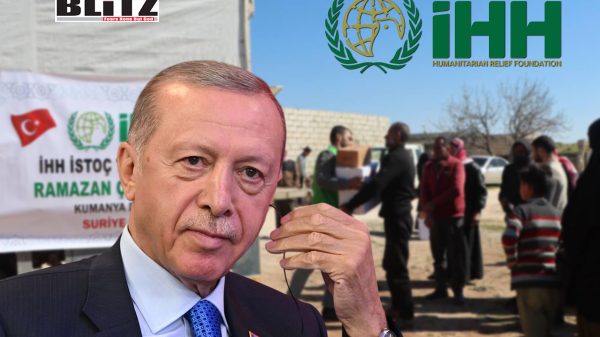
Three interrelated factors now shape the SDF’s future. First, American backing no longer guarantees the survival of a quasi-independent SDF administration. Washington’s priority has shifted toward disengagement and institutional consolidation under the Syrian state. Second, regional consensus-spanning Saudi Arabia, Türkiye, and Qatar-raises the political and security costs of operating as an armed force outside state structures. Integration aligns with a regional vision emphasizing sovereignty, institutional coherence, and post-conflict reconstruction.
Third, Damascus faces its own imperatives. To regain legitimacy domestically and internationally, the Syrian state must demonstrate effective governance, economic recovery, and social inclusion. Resolving the SDF issue is therefore not optional; it is central to Syria’s broader effort to stabilize, attract investment, and prevent renewed insurgency. This requires credible guarantees that Kurdish participation will be meaningful, not symbolic.
The obstacles, however, should not be underestimated. Decades of mistrust separate Kurdish communities and central authorities. Integration will fail if it is perceived as cosmetic or coercive. Transparent dialogue, enforceable anti-discrimination laws, and genuine representation across civilian institutions, the military, and security services are essential. Citizenship must serve as the baseline of political life, not as a selectively applied privilege.
At the same time, the SDF leadership must reassess its strategic assumptions. Aspirations for expansive autonomy, sustained by external protection, are increasingly detached from regional and international realities. Integration into the Syrian state-with equal rights and real partnership-offers a more sustainable path for protecting Kurdish interests than prolonged separatist positioning.
Ultimately, the integration of the SDF is not merely a technical security arrangement. It is a test of whether post-war Syria can evolve into a state that accommodates diversity while maintaining unity. The choices made in the coming months will determine whether reintegration becomes a foundation for stability-or another missed opportunity in Syria’s long and painful conflict.
Suraiyya Aziz specializes on topics related to the Middle East and the Arab world.