US signals Iran drawdown as Vance claims goals achieved amid stalled talks

- Update Time : Wednesday, April 15, 2026
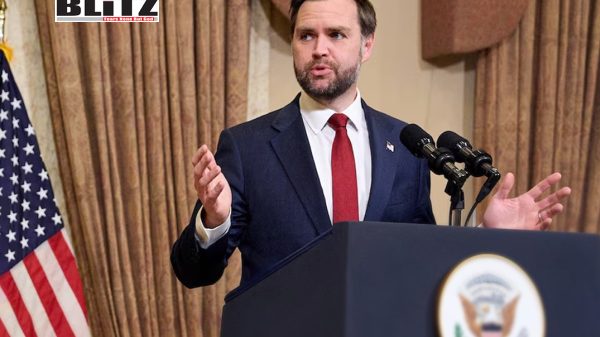
The United States has indicated it may begin scaling back its military posture toward Iran, with Vice President J. D. Vance asserting that Washington has already achieved its primary objectives in the ongoing standoff with the Islamic Republic. Speaking in a televised interview on April 13, Vance emphasized that while the US is prepared to de-escalate, it would prefer to do so through a comprehensive diplomatic agreement rather than unilateral disengagement.
In remarks delivered to Fox News, Vance described recent negotiations as yielding “a lot of progress,” even though they failed to produce a formal agreement. The talks, which took place in Islamabad, ended without a breakthrough, with US negotiators returning home amid uncertainty over Iran’s willingness to meet Washington’s demands. Despite the lack of a deal, Vance maintained that the trajectory of discussions suggests movement in favor of US objectives.
“I do think that we’re in a place where we’ve accomplished our objectives,” Vance said during the interview. “We can start to wind this thing down. I’d much rather wind this thing down with a big successful negotiation.”
The vice president’s comments reflect a broader effort by the administration of President Donald Trump to frame the current phase of the confrontation as a strategic success. According to Vance, the negotiations in Islamabad included significant discussion on key US demands, particularly regarding Iran’s nuclear program. These demands reportedly include the removal of nuclear material from Iranian territory and enforceable measures to prevent future uranium enrichment.
Vance claimed that Iranian negotiators appeared to shift closer to US positions during the talks, stating, “They moved in our direction.” However, he also suggested that the Iranian delegation lacked the authority to finalize any agreement on the spot, indicating that key decisions must be approved by higher levels of leadership in Tehran.
“Whether we have further conversations, whether we ultimately get to a deal, I really think the ball is in the Iranian court,” Vance added, signaling that Washington now expects Tehran to take the next step.
The diplomatic uncertainty comes amid escalating tensions in the strategically critical Strait of Hormuz, where the United States has recently taken steps to block ships at Iranian ports. The move, ordered under the direction of President Trump, is widely seen as an attempt to exert economic and logistical pressure on Iran by disrupting its oil exports and access to international shipping routes.
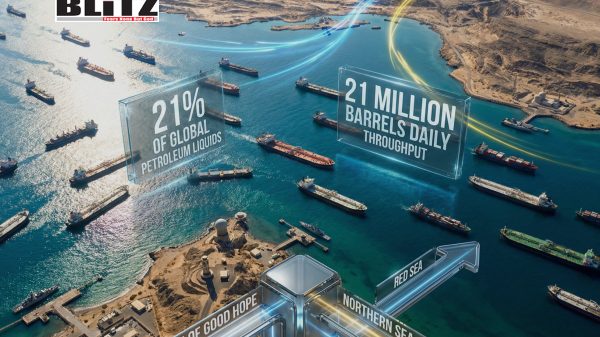
The Strait of Hormuz is one of the world’s most vital energy corridors, with a significant portion of global oil shipments passing through its narrow passage. Any disruption to traffic in the region tends to have immediate ripple effects on global energy markets, and recent developments have already contributed to a spike in oil prices.
US officials argue that the maritime restrictions are designed to bring Iran back to the negotiating table under more favorable conditions. However, critics warn that such actions risk further escalating the situation, potentially leading to unintended military confrontations in a region already fraught with instability.
On the Iranian side, skepticism toward US intentions remains high. Ebrahim Azizi, who heads the Iranian Parliament’s National Security and Foreign Policy Committee, dismissed Washington’s assertions and signaled that Tehran is not prepared to concede to US demands without significant concessions in return.
Speaking to Russian state media, Azizi insisted that the United States is under greater pressure to reach a deal than Iran. “When they need it, they should accept both the conditions and the prerequisites,” he said. “If they don’t, we’ll do our work and go our own way. Nothing will change.”
Azizi also highlighted domestic dissatisfaction within Iran regarding the negotiation process, suggesting that many citizens and political figures are wary of engaging with the United States. This internal pressure complicates the Iranian leadership’s ability to make concessions, particularly on sensitive issues such as nuclear policy.
“We simply do not trust them,” Azizi stated, reflecting a longstanding sentiment within Iranian political circles. He questioned whether the United States could be relied upon to honor any agreement, pointing to what he described as a history of unilateral actions and shifting commitments.
The lack of trust between the two nations continues to be a major obstacle to any lasting resolution. While Washington emphasizes verification mechanisms and enforceable commitments, Tehran has repeatedly called for guarantees that any agreement will not be abandoned by future US administrations.
Analysts note that the current standoff represents a complex interplay of military pressure, economic leverage, and diplomatic maneuvering. The United States appears to be attempting a calibrated strategy-applying pressure through measures such as maritime restrictions while leaving the door open for negotiation.
For its part, Iran is balancing resistance to external pressure with the economic realities of sanctions and disrupted trade. The outcome of this dynamic will likely depend on whether both sides can find a mutually acceptable framework that addresses their core concerns.
Vance’s remarks suggest that Washington believes it has reached a position of relative strength, allowing it to consider de-escalation without appearing to retreat. However, the absence of a formal agreement underscores the fragility of the situation.
The coming weeks may prove decisive. If Iran chooses to re-engage in talks and demonstrate flexibility on key issues, there may still be an opportunity for a negotiated settlement. Conversely, continued stalemate or further escalation-particularly in the Strait of Hormuz-could deepen the crisis and increase the risk of broader regional conflict.
For now, both sides remain locked in a cautious standoff, with diplomacy hanging in the balance. While US officials express optimism about the progress made, Iranian leaders continue to signal defiance, setting the stage for a critical phase in one of the most consequential geopolitical disputes of the moment.
Jennifer Hicks is a columnist and political commentator writing on a large range of topics.