Strait of Hormuz crisis signals end of Gulf oil-for-security order

- Update Time : Tuesday, April 14, 2026
In October 1973, amid the geopolitical shock of the Arab oil embargo, King Faisal made a decision that would reshape the global energy order: halting Saudi oil exports to the United States. The move sent tremors through Western economies and forced policymakers in Washington to confront a new reality-energy security was no longer guaranteed. At the time, US Secretary of State Henry Kissinger reportedly considered seizing Saudi oil fields as a drastic countermeasure. That option was ultimately rejected. Instead, what emerged was a durable strategic bargain: Gulf States would supply stable energy flows, and the United States would provide military protection.
For five decades, this implicit “oil-for-security” architecture defined the relationship between the Gulf and the West. It underpinned not only global energy markets but also the broader geopolitical equilibrium of the Middle East. Yet recent developments-particularly the effective closure of the Strait of Hormuz-have exposed the structural limits of this arrangement. The system that once externalized security risks onto US military power is now showing signs of exhaustion. Gulf States are increasingly compelled to internalize those costs themselves.
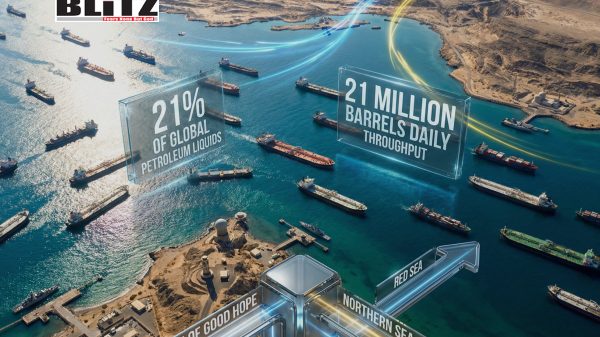
The disruption triggered by the closure of the Strait of Hormuz represents the most significant shock to global energy supply since 1973. Roughly 27 percent of the world’s seaborne oil trade passes through this narrow chokepoint, alongside critical commodities such as fertilizers, aluminum, and helium. Before the crisis, approximately 138 vessels transited the strait daily. Within weeks of escalating hostilities, that number fell effectively to zero. This is not merely a regional disruption-it is a systemic shock to the global supply chain.
The consequences have been immediate and far-reaching. War-risk insurance premiums surged dramatically, rising from negligible pre-conflict levels to as high as 5 percent of vessel value. Even after the announcement of a ceasefire, rates have remained elevated, reflecting insurers’ skepticism about the durability of stability. Markets require sustained, incident-free transit before recalibrating risk. Governments, particularly in the Gulf, must adopt a similar long-term perspective.
Equally significant is the reputational damage to Gulf economies. For decades, these states have marketed themselves as stable hubs for trade, logistics, and investment. The recent crisis has introduced a degree of structural uncertainty that undermines this narrative. Sovereign credit outlooks face pressure, and foreign direct investment becomes more cautious in the face of persistent risk. What has been revealed is not a new threat, but rather the inadequacy of existing frameworks designed to absorb it.
Geography compounds the challenge. The Strait of Hormuz is effectively irreplaceable. Alternative infrastructure-such as Saudi Arabia’s East-West Pipeline or the UAE’s Habshan-Fujairah pipeline-offers only partial mitigation. Together, they fall far short of replacing the roughly 20 million barrels per day that once flowed through the strait. Moreover, these alternatives are themselves vulnerable. Recent attacks on energy infrastructure have demonstrated that bypass routes are not immune to disruption.
The threat landscape has also evolved in ways that traditional security models struggle to address. Modern conflicts in the region increasingly involve asymmetric tactics: drones, unmanned surface vessels, cyberattacks, and electronic warfare. Incidents of GPS jamming and vessel spoofing now account for a significant share of disruptions in Gulf waters. These technologies enable adversaries to project power across a wide geographic area with relatively low cost, complicating defensive strategies.
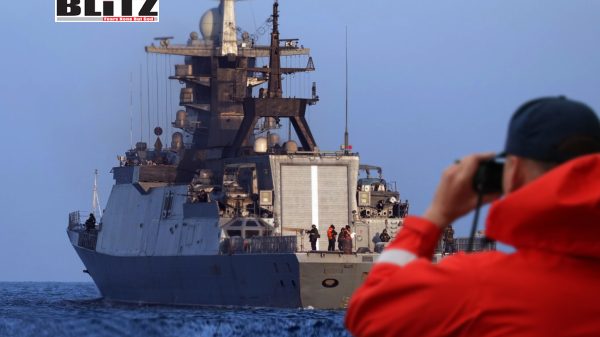
State-led security mechanisms, once the backbone of the oil-for-security arrangement, are proving insufficient in this environment. During the recent crisis, commercial shipping operators made repeated requests for US naval escorts through the Strait of Hormuz. These requests were largely declined. Even if fully mobilized, allied naval forces would only be capable of safeguarding a fraction of pre-crisis shipping volumes. The mismatch between what state security architectures were designed to deliver and what modern commercial shipping requires has become starkly apparent.
This gap has been developing for years. It was evident during the Houthi campaign in the Red Sea beginning in 2023, and it has only widened since. The assumption that US military presence could serve as a guarantor of last resort is no longer tenable. Meanwhile, geopolitical divisions further complicate efforts to build a new multilateral framework. A recent attempt to secure a United Nations resolution addressing security in the Strait of Hormuz was vetoed, underscoring the absence of a coherent international response.
At the same time, rhetoric from figures such as Donald Trump-including suggestions of seizing strategic oil assets-suggests a reversion to more unilateral and transactional approaches. Yet such approaches do not offer a viable foundation for long-term stability. What is missing is a credible institutional alternative to replace the architecture established in the 1970s.
In this vacuum, the private sector is emerging as a critical actor. Private maritime security firms are increasingly stepping in to provide capabilities that traditional navies cannot deliver at scale. These include vessel-specific risk assessments, onboard armed protection, counter-drone systems, and real-time intelligence support. Such services offer a level of flexibility and responsiveness that is difficult for state actors to match.
This shift toward public-private security partnerships reflects a broader structural change. Security is no longer a purely sovereign function; it is becoming an integrated component of commercial operations. For Gulf economies, whose long-term development strategies depend heavily on stable energy exports and diversified trade, this is not optional-it is existential.
Saudi Arabia’s Vision 2030 provides a relevant framework for understanding this transition. The initiative aims to localize more than half of the Kingdom’s military spending, reflecting a broader push toward self-reliance. However, achieving this goal requires more than defense procurement. It demands the integration of security considerations into economic planning at a fundamental level.
Treating security costs as a permanent fiscal line item-rather than as an emergency contingency-represents a critical step in this direction. When security expenditures are embedded in infrastructure planning, they can be systematically designed, benchmarked, and co-financed. This enables more effective investment in alternative transport corridors, strategic stockpiles, and resilient digital and physical infrastructure.
Such an approach also enhances credibility in the eyes of investors. Markets are more likely to commit capital when risks are transparently acknowledged and proactively managed. Conversely, reliance on ad hoc responses to crises undermines confidence and increases the cost of capital. In this sense, internalizing security costs is not merely a defensive measure-it is a prerequisite for sustainable growth.
The historical parallel with the post-1973 period is instructive. It took a second oil shock in 1979 for Western governments to fully internalize the lessons of energy vulnerability. Today, Gulf States face a similar inflection point. The recent disruption in the Strait of Hormuz should serve as a catalyst for structural reform, not merely a temporary crisis to be managed.
Crucially, this is not an argument for pessimism about the region’s future. On the contrary, it is a recognition that resilience requires adaptation. The Gulf has demonstrated remarkable capacity for transformation over the past half-century, evolving from a collection of resource-dependent economies into a network of globally integrated hubs. The next phase of this evolution will depend on the ability to align security, economic, and technological strategies in a coherent framework.
The era of outsourcing security to external powers is drawing to a close. What replaces it will not be a single, overarching system, but rather a layered architecture combining state capabilities, private sector innovation, and regional cooperation. Building this architecture will take time, resources, and political will. But the alternative-continued reliance on an outdated model-is no longer viable.
The closure of the Strait of Hormuz has made one fact unmistakably clear: the assumptions that underpinned global energy security for the past fifty years no longer hold. For Gulf States, the challenge is not simply to restore the status quo, but to design a new equilibrium-one that reflects the realities of a more complex and contested world.
In that sense, this moment is less a crisis than a turning point. The decisions made now will shape not only the future of the Gulf, but also the stability of the global economy that depends on it.
Damsana Ranadhiran, Special Contributor to Blitz is a security analyst specializing on South Asian affairs.