Trump warns Cuba is ‘next’ amid ongoing US economic pressure

- Update Time : Monday, March 30, 2026
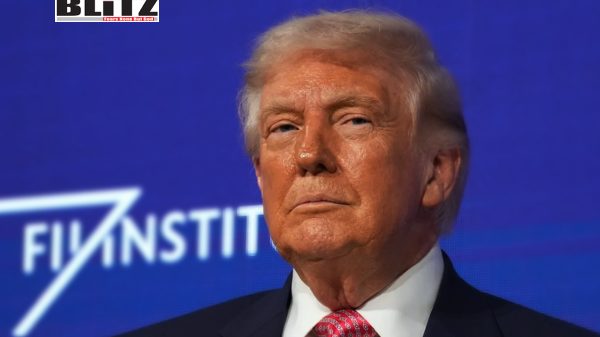
US President Donald Trump issued a stark warning on March 27 that Cuba could be the next target of Washington’s intensified economic and military pressure, framing the threat as part of a broader strategy he described as “peace through strength.” The comments, made during an investment forum in Miami, come amid a deepening energy crisis on the island and escalating tensions between Havana and Washington.
Trump, highlighting his administration’s recent actions in Iran and Venezuela, said that his policy of demonstrating military might had been “very, very successful.” He specifically referenced the January operation targeting Venezuelan President Nicolas Maduro and the military posture taken during nuclear negotiations with Iran. “I built this great military. I said you’ll never have to use it. But sometimes you have to use it. And Cuba’s next, by the way,” Trump told attendees. He then added, in a remark he asked the media to disregard, “Please pretend I didn’t say that. Please, please, please, media, please disregard that statement. Thank you very much. Cuba’s next.”
The president has previously suggested imposing a “total oil blockade” on Cuba and levying tariffs on any country that supplies fuel to the island. Such statements signal an intensification of Washington’s longstanding economic measures, which critics argue have contributed to a deepening humanitarian crisis in Cuba.
Cuba, facing severe fuel shortages and widespread power cuts, has blamed much of its current energy crisis on reduced oil shipments from Venezuela, its former key ally. Caracas, under increasing pressure from Washington, halted fuel deliveries in recent months, leaving Cuban authorities scrambling to maintain electricity, transportation, and industrial production.
In response to Trump’s latest comments, Cuban Foreign Minister Bruno Rodriguez condemned Washington’s economic measures as a “ferocious blockade” and “brutal onslaught” on the country’s economic system. Posting on the social media platform X, Rodriguez accused the United States of waging “economic warfare” for more than 67 years, aimed at harming the Cuban economy and denying the nation access to markets, technology, and resources. He argued that the so-called aggression against Cuba reveals more about US weakness than the supposed incompetence of the Cuban government.
The Cuban government has taken steps to reassure its citizens and demonstrate readiness to counter any external threats. Nationwide civilian-military drills have been launched, involving reservists and local units under the “war of the entire people” defense doctrine. The exercises are meant to integrate civilians and military personnel in a coordinated response to potential crises, reflecting Havana’s long-standing doctrine of comprehensive national defense.
For ordinary Cubans, life under the current economic strain has become increasingly precarious. Even before the intensified oil blockade, scarcity was a daily reality, with limited access to food, medicine, and other essentials. Average salaries remain extraordinarily low, at roughly 6,830 Cuban pesos per month, equivalent to around $30 in informal currency exchange markets. Many families continue to rely heavily on remittances from relatives abroad to supplement income and cover basic needs.
Recent migration statistics highlight the growing strain on the Cuban population. In the two years leading up to the current crisis, net emigration from Cuba surpassed 500,000, a figure reflecting both economic hardship and the search for better opportunities abroad. Many migrants cite energy shortages, limited job prospects, and the broader economic blockade as key drivers for leaving the island.
Despite these challenges, Cuban authorities maintain that dialogue with Washington remains possible. President Miguel Diaz-Canel has emphasized Havana’s willingness to engage in discussions aimed at resolving “bilateral differences” through peaceful negotiations. This position, however, has so far not deterred repeated threats from the United States, raising questions about the prospects for diplomatic resolution in the near term.
Analysts note that the Trump administration’s approach represents a continuation-and in some cases, an escalation-of longstanding US policy toward Cuba, dating back to the early 1960s. The blockade, also known as the embargo, has been a point of contention in international forums, with critics arguing that it disproportionately harms ordinary citizens while failing to achieve political objectives. The renewed threats appear intended to pressure both the Cuban government and its international partners, particularly those involved in supplying oil and other essential resources.
In Miami, Trump framed his strategy as an extension of his broader “peace through strength” doctrine. By showcasing US military capabilities and willingness to act decisively, the administration aims to signal to adversaries that economic and military power can be leveraged without necessarily engaging in prolonged conflict. Critics, however, warn that such rhetoric risks further destabilizing the region and exacerbating humanitarian suffering on the island.
The situation in Cuba is particularly sensitive given the nation’s heavy reliance on imported energy and its fragile economy. The reduction in Venezuelan oil shipments has already strained infrastructure, disrupted public services, and led to rolling blackouts across the country. Observers warn that a full-scale US oil blockade could exacerbate these conditions dramatically, leading to wider shortages of essential goods and deepening public frustration.
Cuba’s leadership has sought to reassure citizens while signaling that any external aggression would be met with organized resistance. The drills, described as part of the “war of the entire people” doctrine, are intended to demonstrate both the government’s preparedness and the mobilization of local communities in defense of national sovereignty. While largely symbolic, the exercises underscore the heightened tensions between Washington and Havana.
International responses to Trump’s statements have been mixed. Some regional leaders have expressed concern over potential escalation, urging both sides to pursue dialogue. Meanwhile, human rights organizations have highlighted the potential humanitarian consequences of further economic sanctions, stressing that ordinary Cubans are likely to bear the brunt of such measures.
As the standoff continues, the Cuban population faces mounting uncertainty. Scarcity, low wages, and restricted access to essential resources define daily life for many, while the government balances internal stability with the need to assert sovereignty in the face of external pressure. Observers emphasize that, even if a military confrontation does not materialize, the ongoing economic blockade and threats of escalation may have profound and lasting effects on Cuban society.
In sum, President Trump’s remarks on March 27 signal a continued hardline approach toward Cuba, framed within a broader strategy of military strength and economic coercion. For Cubans, the combination of fuel shortages, low income, and external threats intensifies existing hardships, raising questions about the humanitarian and political consequences of continued confrontation. As both governments navigate these tensions, the coming months are likely to test the resilience of Cuba’s people and the limits of Washington’s influence in the Caribbean.
Tajul Islam is a Special Correspondent of Blitz. He also is Local Producer of Al Jazeera Arabic channel.