Denmark’s fragmented politics leaves Frederiksen balancing power and voter discontent

- Update Time : Monday, March 30, 2026
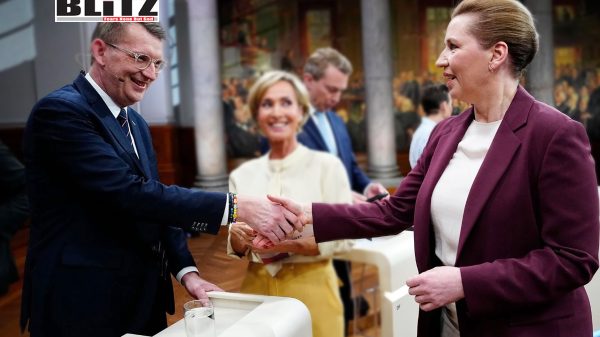
Never assume political success guarantees electoral reward. History offers a sharp reminder in Winston Churchill, who led Britain through World War II only to be decisively voted out in 1945. Today, a similar paradox is unfolding in Denmark, where Prime Minister Mette Frederiksen faces a political landscape shaped not by failure in governance, but by shifting voter priorities and growing fragmentation.
Frederiksen’s government, once hailed as a model of centrist cooperation, now finds itself navigating a precarious political balance. Despite delivering economic stability, strengthening defense commitments, and maintaining a firm international stance, Danish voters have signaled dissatisfaction. The result is not outright rejection, but a complex electoral message: competence alone is no longer sufficient in an era of issue-driven politics.
Following the 2022 election, Denmark broke with tradition. Instead of forming a minority government-a longstanding norm in Danish politics-Frederiksen engineered a centrist coalition that brought together ideological rivals. The Social Democrats joined forces with the liberal Venstre party and the Moderates, led by former prime minister Lars Løkke Rasmussen. This alliance was unprecedented in peacetime Denmark.
The coalition represented a deliberate attempt to neutralize polarization by consolidating the political center. It also proved remarkably durable. In a country where cross-bloc governments rarely survive a full term, Frederiksen’s administration defied expectations by maintaining cohesion and legislative productivity.
From a governance perspective, the results were significant. The government increased defense spending to 3.5 percent of GDP, aligning Denmark more closely with NATO expectations. It achieved this without raising taxes or cutting welfare spending- remained one of Ukraine’s most steadfast allies following Russia’s invasion.
Yet, this apparent success masked deeper tensions between policy achievements and voter sentiment.
Despite these accomplishments, the coalition suffered electoral losses. Support shifted toward more ideologically distinct parties on both ends of the spectrum. On the right, the Danish People’s Party gained traction with its strong anti-immigration stance. On the left, the Socialist People’s Party attracted voters concerned with welfare, environmental protection, and social equity.
One explanation lies in the coalition’s very design. By occupying the political center, the government blurred ideological distinctions, making it harder for voters to identify with a clear political vision. In doing so, it inadvertently created space for more sharply defined alternatives.
A seemingly minor policy decision also played an outsized role in shaping public opinion. In 2023, the government abolished Great Prayer Day as a public holiday to strengthen public finances. While fiscally rational, the move triggered widespread backlash, particularly among trade unions and public sector workers. It became a symbol of disconnect between technocratic policymaking and public sentiment.
This episode highlights a broader trend in modern democracies: voters often respond more strongly to tangible, everyday changes than to abstract geopolitical successes.
The election campaign further underscored a shift away from traditional ideological alignments toward issue-based politics. Topics such as animal welfare in pig farming and the protection of drinking water gained unexpected prominence. These concerns, while seemingly niche, resonated deeply with segments of the electorate.
Immigration remains another central and divisive issue. Denmark has long maintained relatively strict immigration policies compared to other European countries, and Frederiksen herself has taken a firm stance. However, the debate is evolving. Increasing attention is being paid to migrant labor, which now accounts for roughly 10 percent of total employment. This introduces new economic and social dimensions to the discussion.
Meanwhile, economic proposals also influenced voter behavior. Frederiksen’s suggestion of a modest wealth tax-0.5 percent on fortunes above 25 million krone-was intended to fund education reforms, including reducing class sizes. Instead of boosting support, it triggered resistance from businesses and entrepreneurs, reinforcing concerns about Denmark’s investment climate.
The electoral outcome suggests that such a tax is unlikely to be implemented, illustrating the limits of redistributive policies in a competitive economic environment.
Perhaps the most striking feature of the election is the extent of political fragmentation. No single party secured more than 22 percent of the vote, and all 12 parties that contested the election will now be represented in parliament. This marks an unprecedented level of diversity in Denmark’s legislative body.
While Frederiksen’s Social Democrats remain the largest party, their dominance is clearly diminished. Venstre, once a major force on the right, has been overtaken by competitors such as the Socialist People’s Party and challenged by newer right-leaning groups like the Liberal Alliance.
This fragmentation reflects broader societal changes. Party membership has declined significantly over the past decades, weakening traditional political loyalties. At the same time, parties have become increasingly dependent on state funding, reducing their grassroots engagement.
The result is a political environment where voters align themselves with specific issues rather than party identities. While this can enhance democratic responsiveness, it also complicates coalition-building and governance.
For Frederiksen, the path forward is both promising and fraught with difficulty. She remains the most likely candidate to form the next government, but doing so will require careful negotiation across an increasingly divided political landscape.
Her position is inherently complex. On immigration and foreign policy, she often aligns more closely with right-leaning parties. On welfare and social issues, she must maintain credibility with left-leaning voters. Balancing these competing demands will test her political agility.
The broader risk for Denmark is a return to the instability of the 1970s, when frequent elections and weak governments undermined economic performance. In a fragmented parliament, even minor disagreements can trigger political crises, making long-term policy planning more difficult.
While domestic politics dominate the current landscape, external factors remain significant. Denmark continues to navigate tensions with the United States, particularly during the presidency of Donald Trump, whose stance on Greenland created diplomatic friction. At the same time, the ongoing threat from Russia requires sustained defense commitments.
Despite these challenges, Denmark retains important strengths. Its economy remains robust, supported by strong growth and fiscal discipline. Its welfare state is among the most developed in the world. Perhaps most importantly, the country has a long tradition of political cooperation and consensus-building.
These factors provide a foundation for managing the current period of uncertainty. However, they do not eliminate the underlying structural challenges posed by fragmentation and voter volatility.
Adding another layer of uncertainty is speculation about Frederiksen’s future. Like Anders Fogh Rasmussen, she is viewed as a potential candidate for a major international role, possibly within NATO or the European Union. Such a transition could reshape Danish politics once again, creating both opportunities and risks.
For now, however, the focus remains on domestic governance. Frederiksen must navigate a narrow path between competing political forces while maintaining public trust. Her ability to do so will determine not only her own political future, but also the stability of Denmark’s political system.
Denmark’s recent election serves as a case study in the complexities of modern democracy. Effective governance, economic stability, and international leadership are no longer sufficient to secure electoral success. Voters are increasingly driven by specific issues, cultural concerns, and perceptions of responsiveness.
For Mette Frederiksen, the challenge is clear: reconcile the demands of a fragmented electorate while preserving the strengths that have long defined Danish politics. Whether she succeeds will depend on her ability to adapt to a new political reality-one where consensus is harder to achieve, but more necessary than ever.
Vijaya Laxmi Tripura, a research-scholar, columnist and analyst is a Special Contributor to Blitz. She lives in Cape Town, South Africa.