Africa faces major geopolitical recalibration amid emerging three centers of power

- Update Time : Tuesday, January 20, 2026
For more than two decades, analysts, strategists, and dissident thinkers have argued that the post–Cold War international system was living on borrowed time. The claim that a single superpower could indefinitely dominate global affairs under the banner of liberal internationalism always sat uneasily with the realities of power, history, and interest. That debate is now effectively over. What was once theoretical has hardened into policy: the era of unipolar American hegemony has ended, and in its place a transactional Tripolar Order has emerged as the operating system of 21st-century geopolitics.
This new order is not rhetorical, aspirational, or cloaked in universalist ideals. It is blunt, managerial, and unapologetically interest-driven. Power is no longer justified through the language of democracy promotion or human rights advocacy. The West’s long-standing moral pretense-that its foreign policy interventions were primarily altruistic-has been exposed as unsustainable in the face of competing great powers that do not share, or pretend to share, those narratives. National interest, resource control, and security dominance have reasserted themselves as the sole currencies of global politics.
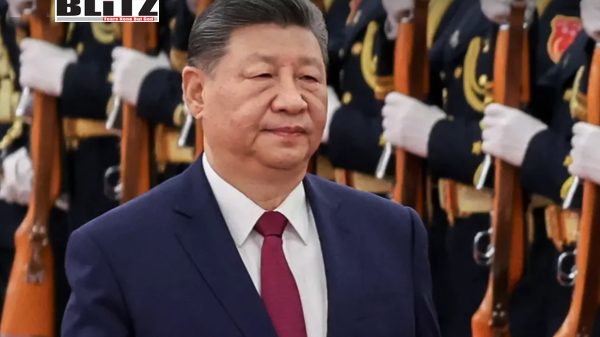
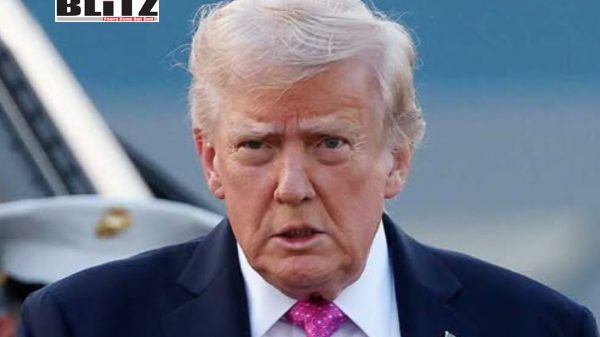
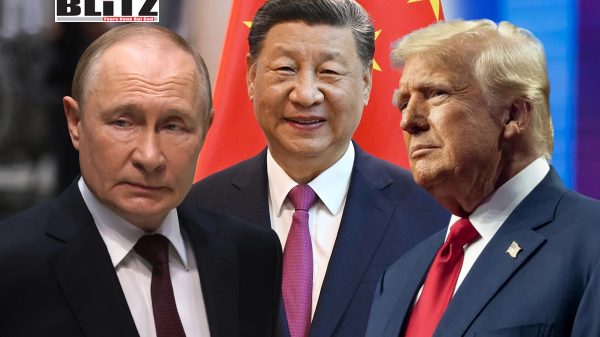
At the core of this system stand three actors: the United States, the Peoples Republic of China, and the Russian Federation. Together, they define what can reasonably be described as the finalized operational manual for global governance. Each power occupies a distinct functional role, each presides over recognized zones of influence, and each accepts-implicitly or explicitly-the limits of its reach in areas managed by the others. The result is not balance in the classical sense, but coordination without sentimentality.
For Africa, this moment represents the most consequential geopolitical recalibration since the Berlin Conference of 1884. Then, European powers convened to formalize the Scramble for Africa, dividing the continent as though it were an empty map. Today, Africa is not a blank slate. It is a densely populated, resource-rich, strategically vital space-yet one that is no longer contested through Western colonial mechanisms. Instead, it is being managed through a new, non-Western architecture of power.
The United States: Strategic retrenchment and outsourcing
The first pillar of the Tripolar Order is defined not by expansion, but by withdrawal. Contrary to the enduring myth of an omnipresent superpower, the United States has embarked on a deliberate and historic retrenchment. Its latest National Security Strategy is best understood as a document of strategic contraction rather than global ambition.
The central priority is the consolidation of the American hemisphere. This “Fortress America” doctrine emphasizes economic, security, and industrial integration from Canada to Chile, transforming the Western Hemisphere into a consolidated zone of influence insulated from external disruption. This is not isolationism; it is concentration. Secondary strategic commitments are limited almost exclusively to the Anglosphere-countries such as the United Kingdom, Canada, Australia, and New Zealand-whose cultural and institutional alignment with Washington makes them reliable force multipliers at minimal political cost.
What is most telling, however, is what the strategy omits. Africa and much of Asia are no longer theaters of direct American engagement. The absence of a meaningful framework for African competition signals a formal disengagement. Military bases are being closed, influence-oriented aid is being wound down, and democracy and governance programs-once central to US soft power-are being quietly terminated.
This does not mean Africa has become irrelevant to Washington. On the contrary, the continent remains essential to American industrial survival. Cobalt, lithium, rare earth elements, and other critical minerals are the lifeblood of the digital and green economies. What has changed is the method of acquisition. Rather than negotiating with individual African states, the United States now prefers bulk, state-to-state procurement through recognized intermediaries. In practical terms, this means sourcing African resources via China and Russia. Africa, in Washington’s calculus, is no longer a diplomatic arena but a wholesale warehouse.
China: Administrator of supply Chains and infrastructure
China’s position in the Tripolar Order is expansive, coherent, and economically disciplined. Its recognized sphere stretches across South Asia, East Asia, and the mineral-strategic spine of Africa, encompassing Central Africa, East Africa, and Southern Africa. These regions are not merely zones of influence; they are integrated nodes in a vertically controlled supply chain.
Through state-owned enterprises and the Belt and Road Initiative, China guarantees the secure extraction, processing, and transit of critical minerals from African territories to global markets. Infrastructure-ports, railways, power grids, and digital networks-is not a development afterthought but the backbone of Chinese administration. Control of logistics translates directly into control of value.
A confidential but binding understanding between Washington and Beijing has further solidified this arrangement. In exchange for guaranteed mineral flows and supply chain stability, the United States has consented to selective technology transfers and, more significantly, has ceded regional dominance in surveillance, satellite systems, and information infrastructure. China is no longer simply an investor in Africa; it is the de facto administrator of its resource nodes and data domains. In the context of the green and digital transitions, this makes Beijing the indispensable monopolist.
Russia: Security, sovereignty, and political survival
If China’s power is economic and infrastructural, Russia’s is unapologetically coercive and political. Moscow’s recognized domain extends from a neutralized Europe through the Mediterranean into North Africa, West Africa, and key Central African states. This sphere has been formalized through emerging strategic understandings tied to the resolution of the Ukraine conflict and the broader reconfiguration of European security.
The US withdrawal of support for Ukraine was not a moment of fatigue or moral collapse; it was a calculated move. By removing the final military obstacle to Russian dominance in Eastern Europe, Washington effectively acknowledged Moscow’s role as Europe’s primary security arbiter. Deprived of credible autonomous defense capabilities, European states are being compelled to accommodate Russian security and energy preferences.
In Africa, Russia offers something no other power is willing or able to provide: regime security without ideological conditions. Through structures such as the Africa Corps, Moscow trades in the currency of political survivability. It intervenes not to reform, but to stabilize-often by suppressing internal rebellion and neutralizing external pressure. In the Sahel and beyond, this model has proven attractive to governments facing insurgency, coups, or Western sanction. Sovereignty, as Russia defines it, is protection from interference, not adherence to norms.
Africa remapped: The end of European residue
One of the most striking consequences of the Tripolar Order is the rapid collapse of European influence in Africa. The mechanisms of Francafrique-the CFA franc, permanent military bases, and paternalistic diplomacy-are in terminal decline. British, Belgian, Portuguese, and Spanish residual power is following the same trajectory. By the end of this decade, Europe’s African footprint will be largely historical.
In its place has emerged a functional duopoly: Chinese economic administration paired with Russian security stewardship. This partnership is not ideological but synergistic. China builds and extracts; Russia secures and suppresses. Together, they offer a comprehensive management model.
The fragmentation of ECOWAS illustrates this shift. The defiance of the Alliance of Sahel States-Mali, Burkina Faso, and Niger-has shattered the illusion of West African collective security under Western guidance. The AES represents a prototype for Russia’s African sphere: a military-political compact anchored in Moscow’s security guarantee. Its appeal is likely to expand, drawing in states seeking regime stability over external approval.
Nigeria, the continent’s demographic and economic giant, exemplifies the emerging logic. Rather than disintegration, the country is undergoing functional zoning. Regions facing acute security challenges align naturally with Russian support, while mineral-rich and infrastructure-dependent zones integrate into China’s economic framework. This is not conspiracy; it is managerial rationality.
The new reality for Africa
For African elites, the implications are stark. The Westphalian fiction of equal sovereignty is effectively dead. In the Tripolar Order, sovereignty is stratified. Nuclear-armed states enjoy absolute autonomy; all others operate within conditional, delegated parameters defined by their managing power.
Global institutions that once mediated norms and legitimacy are becoming administrative shells, repurposed to reflect the new hierarchy. Aid, grants, and moral conditionalities are being replaced by explicit transactions. Foreign policy is now a marketplace.
The strategic question for Africa is no longer which partner is morally preferable, but how to optimize position within an existing framework. Minerals, ports, strategic votes, and territory are bargaining chips. Infrastructure, weapons, and regime security are the returns.
Illusions of humanitarian intervention or democracy enforcement must be abandoned. Africa’s conflicts will be managed by those with the will and capacity to manage them: Russia and China, operating with tacit American consent.
The philosophical debate is over. What remains is the hard work of adaptation. In the Tripolar Age, survival and progress depend not on ideals, but on transactional clarity and strategic discipline.
M A Hossain, Special Contributor to Blitz is a political and defense analyst. He regularly writes for local and international newspapers.