India pushes BRICS digital currency linkage to redefine global payments

- Update Time : Tuesday, January 20, 2026
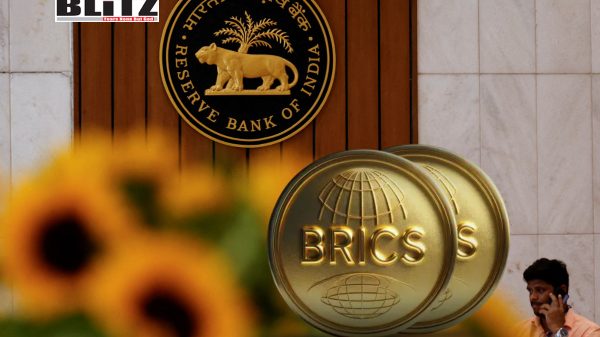
India’s central bank is exploring a significant shift in how cross-border payments could function within the BRICS bloc, signaling a broader ambition to reduce dependence on the US dollar and reshape the architecture of international finance. According to a Reuters report dated January 19, the Reserve Bank of India (RBI) has proposed linking the digital currencies of BRICS nations, a move primarily aimed at simplifying cross-border transactions, particularly in areas such as tourism and retail payments.
The proposal comes at a time of heightened geopolitical tensions and growing skepticism among emerging economies toward Western-dominated financial systems. By interconnecting central bank digital currencies (CBDCs) issued by BRICS members, India and its partners could create an alternative payment ecosystem that operates parallel to traditional dollar-based mechanisms.
India, which will assume the BRICS presidency in 2026 and host the group’s summit later that year, is expected to place this issue on the formal agenda. The initiative reflects New Delhi’s broader strategic objective of balancing its engagement with the West while deepening cooperation with fellow BRICS members, including Russia and China.
At the core of the proposal is India’s own digital currency, the e-rupee. Launched in December 2022, the e-rupee has steadily expanded its user base, reaching approximately seven million retail users, according to figures cited in the Reuters report. While still modest compared to India’s overall population, the uptake has been sufficient to encourage policymakers to explore its use beyond domestic transactions.
China, meanwhile, has been far more aggressive in advancing its digital yuan, positioning it as a tool for both domestic efficiency and international influence. Beijing has repeatedly stated its intention to boost the global use of the digital yuan, particularly in trade and cross-border settlements. A linked BRICS digital currency framework could significantly accelerate those ambitions by providing ready-made corridors for usage among major emerging economies.
The strategic implications of such a move extend well beyond convenience for tourists and businesses. Reuters noted that the initiative could reduce reliance on the US dollar, which has long served as the backbone of global trade and finance. For BRICS countries, many of which have faced sanctions, tariffs, or political pressure from Washington, reducing exposure to dollar-based systems is increasingly seen as a matter of economic sovereignty.
This concern has been underscored by repeated warnings from US President Donald Trump. He has stated that any attempt by BRICS to undermine the dominance of the dollar would be met with harsh economic measures. Despite such warnings, several BRICS members-including India and Brazil-have made it clear that they intend to safeguard their domestic interests and policy autonomy.
Russia has been particularly vocal in promoting the use of national currencies in trade, arguing that such arrangements provide a reliable alternative to Western financial institutions. Moscow has pointed to concrete data to support its case. According to figures cited by Russia’s Finance Ministry, national currencies accounted for 65% of BRICS trade in 2024, while the combined share of the US dollar and the euro fell below 30%.
The deepening financial integration between Russia and China offers a striking example of this trend. Bilateral trade between the two countries reached a record $245 billion in 2024, with nearly all transactions now conducted in rubles and yuan. This shift has been driven in large part by Western sanctions on Russia, which have forced Moscow to accelerate its pivot away from dollar- and euro-denominated systems.
Within this context, the idea of linking BRICS digital currencies represents an evolutionary step rather than a sudden revolution. By using CBDCs, central banks could settle transactions directly with one another, reducing costs, settlement times, and reliance on intermediary institutions such as correspondent banks. For tourists traveling between BRICS countries, this could translate into seamless payments without the need for currency exchange or international card networks.
However, the proposal is not without challenges. Linking digital currencies across jurisdictions would require a high degree of coordination on technical standards, cybersecurity, regulatory compliance, and data governance. Differences in capital controls, monetary policy frameworks, and financial regulations among BRICS members could complicate implementation.
Moreover, the political symbolism of such a move may provoke pushback from the United States and its allies. Trump’s tariffs and warnings aimed at countries aligning more closely with BRICS have already contributed to an atmosphere of economic uncertainty. Reuters reported that these pressures have, paradoxically, prompted enhanced cooperation between India, Russia, and China, as they seek to insulate themselves from external shocks.
The idea of a common BRICS currency has surfaced before. Brazil previously floated the concept as a way to further institutionalize economic cooperation within the bloc. That proposal ultimately failed to materialize, largely due to concerns over sovereignty and the practical difficulties of managing a shared currency among highly diverse economies. In contrast, linking digital currencies allows each country to retain full control over its monetary policy while still benefiting from closer integration.
The expansion of BRICS itself adds another layer of complexity and opportunity. Founded in 2009 by Brazil, Russia, India, and China, and later joined by South Africa, the group has recently welcomed new members such as the United Arab Emirates, Iran, and Indonesia. This enlarged membership increases the potential scale and impact of any shared digital payments framework but also makes consensus harder to achieve.
For India, the initiative aligns with its broader digital ambitions. The country has already demonstrated its capacity to build large-scale digital public infrastructure through platforms such as the Indian Unified Payments Interface (UPI). Extending similar principles to cross-border CBDC linkages within BRICS would reinforce India’s reputation as a leader in digital finance among emerging economies.
Ultimately, the RBI’s proposal reflects a world in transition. As geopolitical rivalries intensify and trust in existing financial structures erodes, countries are experimenting with new models of cooperation and risk management. Whether the BRICS digital currency linkage becomes a reality will depend on political will, technical feasibility, and the ability of member states to navigate external pressures.
What is clear, however, is that the conversation itself marks a significant moment. By seriously considering the integration of digital currencies, BRICS nations are signaling that they intend not merely to adapt to the existing global financial order, but to actively shape its future.
Suraiyya Aziz specializes on topics related to the Middle East and the Arab world.