Reviving the strategic land purchase: The US and the Greenland question

- Update Time : Tuesday, January 20, 2026
Throughout history, territorial acquisition has been a defining element of national strategy and power projection. For the United States, the notion of gaining land through purchase rather than war is not new. In fact, the US has repeatedly used this approach to strengthen its security, expand its resources, and ensure strategic advantage. Yet, in the contemporary world, the idea of buying land may seem almost archaic-a relic of a bygone era dominated by colonial powers. The Greenland debate, however, demonstrates that this method of territorial expansion, largely forgotten for decades, might still hold strategic value in today’s shifting global order.
The principle of acquiring land through purchase is deeply rooted in history. European colonial powers, particularly during the 15th and 16th centuries, frequently exchanged or bought territory as part of their strategic calculations. A striking example is the Treaty of Tordesillas of 1494, which divided the newly discovered lands outside Europe between Spain and Portugal. Portugal retained Brazil, while Spain gained control of the rest of South America. This diplomatic maneuver was designed to prevent conflict and secure territorial claims without resorting to war. Over time, however, as both empires waned in influence, the treaty’s significance diminished.
Similarly, the Treaty of Paris in the 18th century exemplifies the strategic use of land transactions by colonial powers. France ceded Canada to Britain in exchange for retaining economically valuable Caribbean islands such as Guadeloupe and Martinique. Though France temporarily lost control of its North American territories during subsequent conflicts, it later regained some islands, highlighting how power and resources dictated territorial exchanges. Britain, meanwhile, consolidated its dominance in North America and India, reflecting a pragmatic approach to territorial control based on strategic and economic value. Such practices were not unique to France and Britain. The Netherlands, Belgium, Spain, and other colonial powers also relied on exchanges and purchases to manage and expand their empires.
In the 20th century, the redistribution of territories following the world wars further reinforced the connection between power and land. After World War I, the Treaty of Versailles mandated the transfer of Germany’s colonies in Africa and the Pacific to victorious powers under the League of Nations’ mandates. Following World War II, as European powers declined, many colonies gained independence, but the lessons of power projection through territorial control remained influential for global strategy.
The United States has a long and well-documented history of acquiring territories through purchase. In 1803, the Louisiana Purchase from France doubled the nation’s size by adding approximately 2.1 million square kilometers of land for $15 million-a move that reshaped the continent and opened vast opportunities for expansion. In 1867, the US acquired Alaska from the Russian Empire for $7.2 million, adding 1.5 million square kilometers rich in natural resources. In 1854, the Gadsden Purchase added 76,800 square kilometers of southern Arizona and New Mexico for $10 million, facilitating the construction of a southern transcontinental railroad. Finally, the US purchased the Danish West Indies (now the US Virgin Islands) from Denmark in 1917 for $25 million to secure strategic control in the Caribbean and counter potential German influence during World War I.
These examples underscore a central theme: for the US, land purchases have historically served strategic objectives. Whether securing naval bases, ensuring access to vital resources, or safeguarding national security, the acquisition of territory without resorting to war has proven both practical and effective.
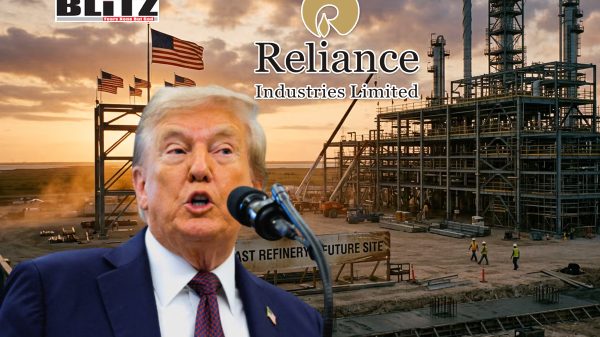
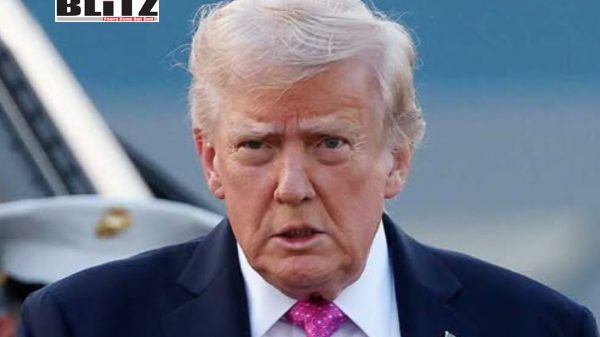
The Greenland debate, rekindled during Donald Trump’s presidency, represents a modern application of this historical strategy. While the idea of buying Greenland sparked skepticism in Europe and beyond, it raises an important question: if a sovereign nation is capable of such a deal, why wouldn’t it pursue it to strengthen its strategic posture? For the United States, Greenland is not merely a remote Arctic territory; it is a location of significant strategic importance. The opening of Arctic sea routes during certain seasons, coupled with Chinese and Russian activity in the region, elevates Greenland’s value in terms of national security and military logistics.
Historically, the US has demonstrated flexibility in securing strategic assets from other sovereign nations. Just as President Woodrow Wilson facilitated the purchase of the Virgin Islands from Denmark in 1917 to prevent German encroachment, contemporary US policymakers see Greenland as a way to counter emerging geopolitical threats in the Arctic. While Europe and Denmark may hesitate due to historical habits or political considerations, the shifting balance of global power creates both opportunities and constraints that could make such deals feasible.
It is essential to recognize that land concessions, leases, and purchases have not been confined to the West. The 99-year British lease of Hong Kong, which ended in 1997, exemplifies how such arrangements can shape global power dynamics without formal annexation. During the lease, Britain effectively controlled Hong Kong, but when China regained sovereignty, it was the stronger global power. This historical episode demonstrates that territorial arrangements are heavily influenced by the relative strength of the nations involved, and had the balance of power been different, the terms of the lease might have been extended indefinitely.
In modern contexts, the strategic management of territory extends beyond outright ownership. Africa provides contemporary examples where control over key ports or natural resources allows foreign powers to exercise significant influence without formal annexation. These arrangements raise questions about sovereignty, influence, and the complex interplay between local populations and external actors.
In Greenland, the challenge is clear: how can the United States secure influence while respecting the island’s small but distinct population of roughly 57,000 people? Greenland already enjoys semi-autonomous status and has a strong political trajectory toward independence. This unique political landscape offers the United States a potential pathway for engagement, whether through economic partnerships, strategic agreements, or eventual statehood. Unlike previous land purchases, where local populations were often ignored, contemporary diplomacy must consider the will and consent of the people residing in the territory.
Trump’s proposal to consider Greenland as a potential US acquisition illustrates a broader strategic vision. Beyond sovereignty, the goal is to strengthen the United States’ defensive posture, guarantee access to resources, and ensure secure logistics in a region increasingly influenced by rival powers. In essence, this modern approach mirrors the logic of historical land purchases: achieving strategic and economic advantages while minimizing conflict.
The Greenland case also prompts reflection on the broader trajectory of global power. Europe’s declining influence and the rise of China and Russia highlight the need for the United States to secure strategic footholds in critical regions. While the era of unchallenged “Pax Americana” may be waning, pragmatic territorial acquisitions-whether through purchase, lease, or agreement-offer a means to preserve influence without resorting to war. History demonstrates that such strategies, when executed carefully and with mutual benefit, can serve both national and international stability.
Ultimately, the question remains: is acquiring land through purchase a relic of the past, or is it a viable tool for modern statecraft? History suggests that the powerful have consistently used these mechanisms to secure resources, expand influence, and enhance security. From the Louisiana Purchase to Alaska, the Virgin Islands, and potentially Greenland, the United States has repeatedly demonstrated that strategic acquisitions are not only possible but effective.
While today’s geopolitical environment is more complex, with considerations of local populations, international law, and global perception, the fundamental logic of strategic land acquisition remains valid. In an era defined by shifting powers and emerging threats, revisiting historical tools-like land purchases-offers pragmatic options for achieving national objectives. Greenland may not represent the next Louisiana, but its strategic significance underscores the continued relevance of this approach in the 21st century.
In conclusion, history shows that whether through war, negotiation, or purchase, territory has always been a central component of national power. The United States’ historical precedent of land purchases reflects a strategic mindset that prioritizes security, resource access, and influence. The Greenland debate revives this concept, reminding policymakers and observers alike that the acquisition of land-through purchase or agreement-remains a potent instrument in global strategy. Amid a shifting global order, it may be time to reconsider whether diplomacy and strategic transactions can achieve what war once attempted, reaffirming that power, resources, and security are timeless drivers of international affairs.
Tajul Islam is a Special Correspondent of Blitz. He also is Local Producer of Al Jazeera Arabic channel.