Indian lawmaker calls for diplomatic pressure after lynching of Hindu worker in Bangladesh

- Update Time : Tuesday, December 23, 2025
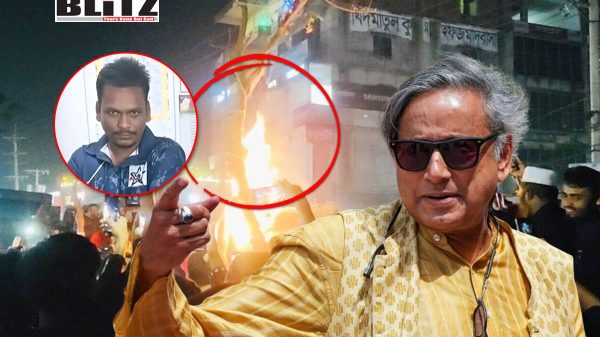
The brutal killing of a Hindu garment factory worker in Bangladesh has reignited regional concerns over religious violence, political instability, and the deteriorating state of minority protections in the country. The incident has prompted calls from Indian lawmakers for diplomatic engagement with Dhaka, even as Bangladesh’s interim authorities face mounting international scrutiny over law and order failures.
The victim, Dipu Chandra Das, a 30-year-old Hindu factory worker from Mymensingh, was lynched by a mob in Bhaluka Upazila on the night of December 18. According to local reports, Das was accused by members of the mob of committing blasphemy against Islam-an allegation that later investigations found to be unsubstantiated. The attack occurred near the Pioneer Knit Composite factory, where Das was employed, and escalated rapidly into lethal violence.
Bangladesh’s Rapid Action Battalion (RAB) stated at a press conference nearly 48 hours after the killing that investigators found no evidence to support claims that Das had engaged in any blasphemous act. This admission has fueled outrage among minority rights advocates, who argue that the killing reflects a broader pattern of mob violence enabled by impunity and political instability.
Reacting to the incident, senior Indian parliamentarian Shashi Tharoor, who chairs India’s parliamentary standing committee on foreign affairs, urged New Delhi to use diplomatic channels to press Bangladesh’s interim government to take decisive action against rising unrest.
“India cannot interfere in the domestic affairs of a neighboring country,” Tharoor told The Indian Express on December 21. “But as a country which has contributed in many ways to the Bangladeshi nation and people, we can certainly exercise our diplomatic influence in Dhaka to persuade the government to take constructive steps.”
Tharoor’s comments came amid escalating violence across Bangladesh, triggered by protests following the death of a leader associated with the 2024 uprising. Demonstrations demanding accountability for the shooting of the leader have frequently devolved into vandalism, street clashes, and attacks on perceived political or religious targets.
While Tharoor praised India’s restraint and measured diplomacy following the ouster of former Prime Minister Sheikh Hasina on August 5 last year, he emphasized that India should support “forces working to establish an inclusive democracy” in Bangladesh-a phrase widely interpreted as concern over the direction of the current interim administration led by Nobel laureate Muhammad Yunus.
The killing of Dipu Chandra Das has become a flashpoint in a broader debate about the safety of religious minorities in Bangladesh during its political transition. Hindu community leaders and human rights groups argue that extremist groups have become emboldened amid weakened state authority and political uncertainty.
Former Prime Minister Sheikh Hasina, who fled Bangladesh following the 2024 uprising, has repeatedly warned of what she describes as a surge in anti-minority violence and anti-India sentiment. In an email interview with ANI on December 22, Hasina alleged that hostility toward India and threats to Indian diplomats were being “manufactured by extremists who have been emboldened by the Yunus regime.”
Bangladesh’s interim government has rejected such characterizations, accusing Hasina of making inflammatory statements from Indian soil. Dhaka has formally protested what it describes as India’s tolerance of her political commentary, while New Delhi has denied any wrongdoing. The dispute has escalated into a diplomatic standoff, with both countries summoning each other’s envoys.
The killing has also drawn reactions from international political figures. On December 21, US Congressman Andy Ogles posted a statement on X referencing the incident, framing it as evidence of religious intolerance in Bangladesh. His comments added to an already polarized international discourse surrounding the country’s political transition and human rights record.
Rights advocates caution, however, that inflammatory rhetoric-whether domestic or international-risks further inflaming tensions. Analysts note that misinformation and unverified claims have frequently circulated during periods of unrest in Bangladesh, sometimes leading to retaliatory violence or diplomatic escalation.
At the same time, critics of the interim administration argue that the government’s inability-or unwillingness-to swiftly prosecute perpetrators of mob violence sends a dangerous signal. The delay in clarifying that no blasphemy had occurred has been cited as a failure of crisis management that may have contributed to communal fear and anger.
The political backdrop to the unrest remains deeply contentious. Sheikh Hasina has been sentenced to death by a Bangladeshi court on charges of crimes against humanity related to the violent suppression of protesters during the 2024 uprising. Hasina maintains that the verdict is politically motivated, a claim echoed by members of her Awami League party.
The Awami League, which governed Bangladesh for 16 years prior to Hasina’s removal, has since been barred from participating in the upcoming general election scheduled for February 12. Opposition figures argue that the exclusion undermines democratic legitimacy, while the interim government insists it is necessary to ensure accountability and prevent a return to authoritarian rule.
Bangladesh has also formally requested Hasina’s extradition from India, further straining bilateral relations. New Delhi has not publicly committed to any timeline or decision regarding the request.
The lynching of Dipu Chandra Das has thus become more than a tragic criminal act; it is increasingly viewed as a test case for Bangladesh’s ability to protect minorities, uphold the rule of law, and navigate a volatile political transition without descending into sectarian violence.
For India, the situation presents a diplomatic dilemma. New Delhi must balance its longstanding ties with Bangladesh against growing domestic and international pressure to speak out on minority rights and political instability. Tharoor’s call for persuasion rather than interference reflects this delicate calculus.
As Bangladesh approaches a pivotal election amid unrest, the response of its interim leadership to incidents like the killing in Mymensingh will likely shape both its international standing and internal cohesion. Whether justice is delivered swiftly and credibly may determine whether such violence becomes an aberration-or a grim indicator of deeper systemic breakdown.
Contents published under this byline are those created by the news team of BLiTZ