

India at the heart of US strategy: Analyzing the 2025 National Security Strategy and Trump’s global reorientation

- Update Time : Tuesday, December 23, 2025
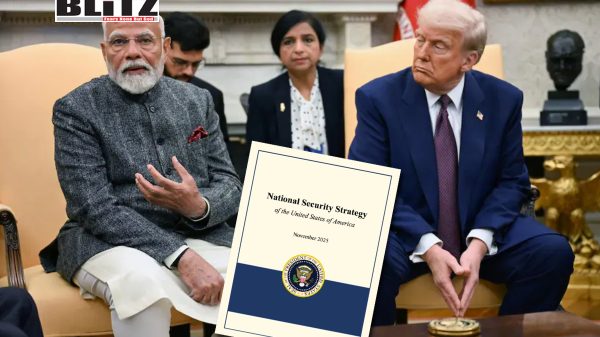
The Trump administration’s NSS marks a decisive shift toward an interest-driven and strategically selective US foreign policy. It elevates India as a central partner across the Indo-Pacific, Africa, and even the Western Hemisphere
The 2025 United States National Security Strategy (NSS), released on December 4, 2025, under the Trump administration, reflects a major shift in US foreign policy priorities, emphasizing a narrower, interest-driven approach rather than the decades-long stance of global overextension, and marking a departure from previous strategies that sought to engage everywhere. The document represents a significant reassessment of how the United States views its global role, strategic priorities, and key partnerships. As the NSS states, “not every country, region, issue, or cause—however worthy—can be the focus of American strategy. The purpose of foreign policy is the protection of core national interests; that is the sole focus of this strategy.” It further emphasizes that prioritization is essential: while urgent threats in less consequential regions may require attention, sustained engagement there could distract from protecting core US interests.
Strategic priorities and global competition
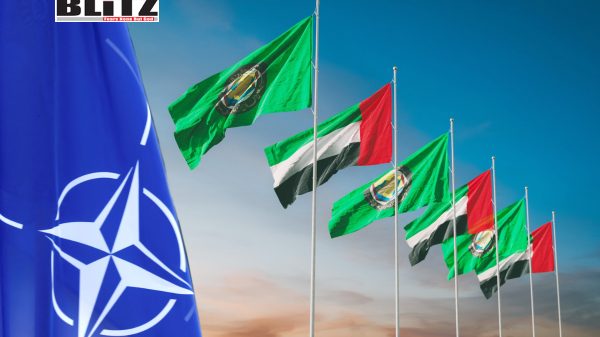
A central theme of the NSS is burden sharing and burden shifting. The document critiques earlier approaches that expected the United States to shoulder disproportionate responsibilities while allies contributed minimally. It states, “The days of the United States propping up the entire world order like Atlas are over.” The NSS highlights President Trump’s Hague Commitment, which pledges NATO members to spend 5 percent of GDP on defence and has been endorsed by U.S. allies as a new global standard. Building on this approach, the strategy envisions a burden-sharing network in which the United States acts as convener and supporter rather than sole guarantor.
The document also argues that Europe must address deeper structural and civilizational challenges beyond insufficient defense spending or economic stagnation. The NSS warns of a potential “civilizational erasure,” driven by actions undermining political liberty and sovereignty, transformative migration policies, censorship, collapsing birth rates, and erosion of national identities and self-confidence. If these trends continue, parts of Europe may no longer be economically or militarily strong enough to serve as reliable allies. The strategy urges European partners to restore strategic confidence, reduce regulatory constraints, and reaffirm the foundations of Western identity.
Contrary to the perception that the Trump administration views Russia solely as an adversary, the NSS adopts a more measured tone. It does not treat Russia as a strategic threat but emphasizes the importance of managing ties with Moscow and achieving strategic stability. In line with this approach, the NSS identifies it as a core US interest to negotiate an expeditious cessation of hostilities in Ukraine, aiming to stabilize European economies, prevent unintended escalation or expansion of the conflict, and facilitate post-hostilities reconstruction to support Ukraine’s viability. Notably, the Kremlin welcomed the strategy’s emphasis on finding solutions to the Ukraine issue and stabilizing bilateral relations, signaling Moscow’s recognition of the shift in US priorities.
The document’s philosophical foundation is also distinct. It describes Trump’s foreign policy as pragmatic without subscribing to philosophical pragmatism, and realistic without rigidly following classical Realism. This flexible Realism emphasizes pursuing national interests without intervening in the internal political systems of other countries, departing from earlier liberal idealist approaches that sought to export democracy to states with different governance models. According to the NSS, America’s national interests—not ideological agendas—will guide US engagement, and it encourages other countries to adopt a similar principle in their foreign policies.
Trump corollary to the Monroe Doctrine
Another key focus of the strategy is the growing geopolitical influence of external powers—particularly China—in the Western Hemisphere. The NSS states that China’s strategic investments in Latin America, the Caribbean, and Africa often create dependencies, and notes that China’s rise was partly facilitated by US policies. It highlights that China’s exports to low-income countries have doubled since 2020, now nearly four times its US exports, while direct exports to the US fell from 4% of GDP in 2017 to just over 2%, with indirect trade continuing through middlemen and foreign factories. The strategy emphasizes countering this influence through close partnerships and coordinated economic engagement, and underscores US efforts to expose hidden costs—in espionage, cybersecurity, debt traps, and other ways—embedded in allegedly “low-cost” foreign assistance, calling for acceleration of these efforts using American financial and technological leverage.
The NSS also signals a renewed Monroe Doctrine to restore US pre-eminence, protect the homeland, and secure key geographies. It warns that non-Hemispheric competitors have gained ground, disadvantaging the US, and asserts that the US will block their access to strategic assets. This “Trump Corollary” is framed as a practical restoration of American power aligned with US security interests.
India’s central role in the strategy
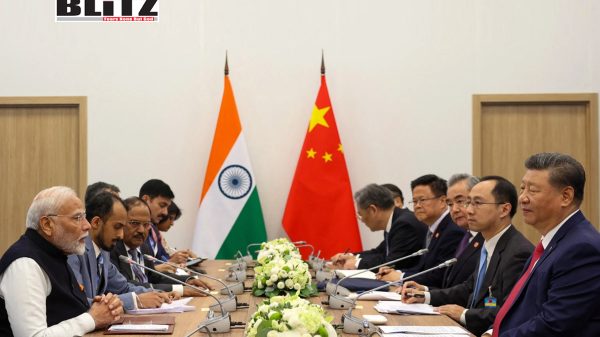
India features prominently and positively in the NSS, reflecting Washington’s recognition of New Delhi’s strategic importance. The document underscores India as a key partner in the Indo-Pacific region and beyond. It highlights the importance of strengthening commercial ties with India, deepening defence cooperation, and expanding work through mechanisms like the Quad.
It also warns that domination of the South China Sea by any single power would threaten global commerce and US interests. To prevent this, the US intends to invest more in naval capabilities and expand cooperation with countries such as India and Japan. The strategy emphasizes: “Strong measures must be developed… with every nation that stands to suffer, from India to Japan and beyond, if this problem is not addressed.”
The document also reiterates US commitments in the Western Pacific, including its longstanding declaratory policy on Taiwan, and calls for increased defence spending by allies like Australia. Recent developments, including the announcement of an $11 billion arms package for Taiwan, underscore Washington’s continued support for Taipei’s defensive capabilities and deterrence posture.
Additionally, the NSS notes: “America should similarly enlist our European and Asian allies and partners, including India, to cement and improve our joint positions in the Western Hemisphere and, with regard to critical minerals, in Africa.” This is significant, as it moves India beyond South Asian dynamics and positions it to play an important role in other strategic theatres through joint cooperation. This becomes even more noteworthy given recent turbulence in India–US ties, which led many to speculate that India might not receive substantial strategic attention from the United States. The National Security Strategy, however, recognizes India’s growing role not only in its own region but also as a partner in other strategic arenas, highlighting Washington’s commitment to deepening long-term cooperation.
Taken together, these references suggest that despite some turbulence in recent months, India–US relations are likely to stabilize and improve. India’s repeated mention in crucial strategic contexts reflects Washington’s long-term commitment to the partnership. Recent developments—such as the Quad Counterterrorism Working Group meeting in New Delhi on 4–5 December 2025 during President Putin’s visit, the four-day visit of US Under-Secretary of State Allison Hooker from 7–11 December 2025, and the recent visit of a U.S. trade delegation led by Deputy Trade Representative Rick Switzer on 10–11 December 2025—indicate that both sides are actively investing in keeping the relationship on track. Importantly, President Trump did not criticize India’s interactions with Russia during Putin’s visit, unlike earlier occasions.
Moreover, there is now a visible shift in tone from both Trump and his administration. Alongside high-level diplomatic engagements, Washington has issued positive signals, including reaffirming that India remains a highly strategic partner in global technology and supply chain initiatives, continuing support on counterterrorism, and actively engaging on trade and economic issues despite earlier tensions.
Pakistan’s near absence from the strategy
Pakistan receives only a cursory mention in the NSS, primarily in the context of US ceasefire claims—reflecting a lack of strategic focus and treating it largely as an instrument for justifying other policies. The document does not consider Pakistan an essential player in the U.S. strategic outlook. At best, Pakistan is relevant to the US in limited transactional contexts, such as counterterrorism cooperation or occasional roles in Middle Eastern crises.
Yet an important strategic cue appears in the NSS strategy as it reads: “We also have a clear interest in expanding the Abraham Accords to more nations in the region and to other countries in the Muslim world.” When Washington refers to extending normalization to “other countries in the Muslim world,” Pakistan naturally becomes one of the implied states in this broader US calculus. This helps explain why the United States appears unusually supportive of Pakistan these days—from facilitating IMF bailouts to approving F-16 sustainment and upgrades, even at the risk of displeasing its key Indo-Pacific partner, India. While this is not the sole factor, it is undoubtedly one of the strong underlying reasons for Washington’s renewed diplomatic engagement with Islamabad. In the long run, the US may seek to steer Pakistan toward eventual normalization with Israel as part of a broader regional integration project.
In contrast, India is positioned as a long-term, central strategic partner in Washington’s grand strategy for the Indo-Pacific and beyond. For the U.S., India is indispensable to balancing China, maintaining a free and open Indo-Pacific, and shaping the future geopolitical architecture of Eurasia and the Western Hemisphere.
India’s enduring strategic role
While some analysts criticize the current NSS, arguing that India did not receive the level of attention it enjoyed in previous strategies under Trump or Biden, this assessment requires contextualization. The current Trump administration is highly transactional in its approach, exhibiting a zero-sum mindset. Given this orientation—and considering recent turbulence in India–US ties—India’s repeated, context-specific mention across multiple strategic arenas, including the Indo-Pacific, Africa, and the Western Hemisphere, underscores its long-term priority for Washington. Previously, when India received similar mentions, other partners often attracted greater focus. A close reading of the current document, particularly how Europe and other allies are addressed, shows that India’s inclusion is deliberate and distinctive, reflecting both its growing strategic importance and the US’s commitment to sustained cooperation.
The Trump administration’s National Security Strategy reflects a interest-driven and strategically selective US global posture. Its emphasis on Flexible Realism, pragmatic engagement, burden sharing, and management of great-power competition signals a clear reorientation of American foreign policy. For India, the NSS firmly positions New Delhi as a key strategic partner across critical regions, from the Indo-Pacific to Africa and the Western Hemisphere, highlighting Washington’s commitment to deepening long-term cooperation.
Taken together with recent diplomatic initiatives, the NSS indicates that India–US relations are likely to stabilize and strengthen in the near term, even as both sides continue to navigate occasional transactional considerations. For the United States, India is not merely a partner among many—it remains a central pillar of its enduring strategic vision and a cornerstone of its approach to regional and global stability.
Dr. Imran Khurshid is an Associate Research Fellow at the International Centre for Peace Studies (ICPS), New Delhi. He specializes in India-US relations, the Indo-Pacific studies, and South Asian security issues.