

Vance warns of shifting European demographics, ‘Islamist aligned’ politics and security risks

- Update Time : Tuesday, December 23, 2025
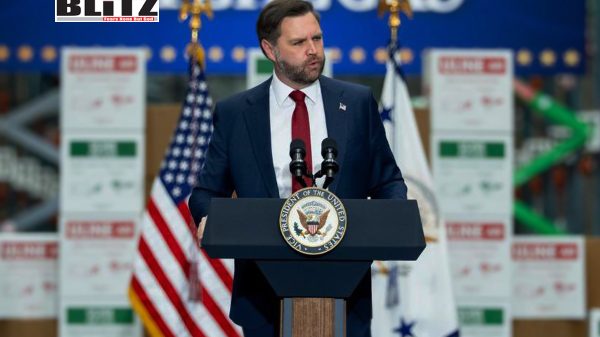
US Vice President JD Vance has issued a stark warning about the future of Western Europe’s political and security landscape, arguing that changing demographics and immigration trends could, within 15 years, reshape the cultural identity of key US allies such as Britain and France and pose serious risks to transatlantic security.
In a December 22 interview with UnHerd, Vance voiced deep concerns about what he described as a loss of national identity in some European countries and the potential for this shift to weaken cultural and political ties between Europe and the United States. At the same time, he suggested that rising influence among what he terms “Islamist‑aligned or Islamist‑adjacent people” could have far‑reaching implications.
Vance’s remarks reflect a broader set of arguments he has made across multiple platforms in recent months – that Europe’s immigration policies have allowed an influx of newcomers whose cultural and religious orientations, in his view, differ significantly from the traditional values of Western nations. He warned that such changes could lead to political outcomes that, while still hypothetical, should not be dismissed.
“If they allow themselves to be overwhelmed with very destructive moral ideas, then you allow nuclear weapons to fall in the hands of people who can actually cause very, very serious harm to the United States,” Vance told UnHerd, citing the nuclear arsenals of Britain and France – two of America’s closest allies.
Vance went on to assert that politicians he characterizes as “Islamist‑aligned or Islamist‑adjacent” are already gaining seats in local European elections, and he said it was “absolutely” plausible that such figures might wield significant national power within the next decade and a half if current trends continue. While he did not identify specific individuals or parties with this label in the interview transcript, his remarks reflect long‑standing rhetorical themes from his political career regarding immigration and cultural cohesion.
Vance’s interview did not occur in isolation. Earlier in the year, he delivered a widely discussed speech at the Munich Security Conference, where he challenged European leaders on a host of issues, including migration, free speech and democratic governance. In Munich, he reframed what he saw as Europe’s principal dangers as internal – stemming from immigration and cultural liberalism – rather than external security threats like Russia or China.
During that speech, he also broke with diplomatic precedent by publicly suggesting that mainstream European political parties should not exclude far‑right groups – particularly Germany’s Alternative für Deutschland (AfD) – from government coalitions, arguing that doing so ignored the democratic will of voters. European leaders, including German Chancellor Olaf Scholz, responded with strong rebukes, asserting that such interventions were unwelcome and inappropriate among allies.
The AfD, a nationalist and anti‑immigration party that has long been kept out of federal governance in Germany due to broad political consensus against cooperating with it, has seen rising support in recent elections, polling around 20% at times. Vance’s calls for engagement with the party were widely interpreted as a departure from traditional US diplomatic norms that avoid endorsing specific actors in allied electoral politics.
Vance’s remarks highlight growing strains in what has historically been one of the most robust alliances in world politics. The United States and Western Europe have cooperated closely since the end of World War II on defense, trade and political values. Britain and France both maintain independent nuclear arsenals, and NATO’s collective security framework has served as a cornerstone of transatlantic deterrence.
However, Vance’s public critique suggests a shift in US foreign policy discourse, one that increasingly ties support for European security to assessments of European domestic policy. His emphasis on immigration and identity – traditionally domestic policy domains – as matters that could affect alliances and nuclear stewardship represents a notable pivot from conventional diplomatic messaging focused on external threats such as Russian aggression or Chinese geopolitical expansion.
In reinforcing this point, Vance has repeated in other forums his belief that Europe must address internal cultural fractures if it wishes to remain a reliable partner. He has also accused some European governments of suppressing free speech and failing to address discontent over migration – framing these failures as existential threats to Western civilization’s core values.
European responses to Vance’s comments have been mixed and at times sharply critical. Leaders such as Chancellor Scholz have explicitly rejected external interference in domestic politics, stressing that national elections and coalition decisions are matters for sovereign European states. There has also been criticism of Vance’s engagement with far‑right parties, seen by many Europeans as normalizing groups with controversial or extremist histories.
Supporters of Vance’s viewpoint, by contrast, argue that his warnings draw attention to underlying demographic and political trends that many European societies are grappling with – particularly questions of integration, national identity and the future of multicultural policies.
Vance’s assertions tap into broader debates within and beyond the United States about globalization, sovereignty and the future of Western political order. As Western democracies confront economic challenges, shifting geopolitical power balances and the rise of nationalist movements, leaders and commentators on all sides are reassessing long‑held assumptions about solidarity among allied nations.
Whether Vance’s warnings will resonate widely or deepen existing divides remains to be seen. What is clear is that his comments have reignited contentious discussions about immigration, identity and security – issues that will likely shape transatlantic relations well into the coming decade.
Renuka Patnaik, Special Contributors to Blitz is a researcher with an organization that monitors activities of terrorist and militancy groups in the world.