
Algeria moves to criminalize French colonial rule, rekindling a battle over history and memory

- Update Time : Tuesday, December 23, 2025
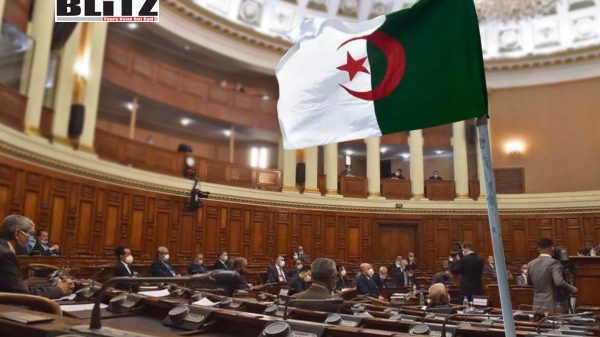
Algeria’s parliament has opened debate on a draft law that would formally criminalize more than 130 years of French colonial rule, a move that reflects enduring historical grievances and threatens to further strain already fragile relations with Paris. Framed by Algerian officials as a long-overdue act of historical justice, the proposed legislation seeks not only to condemn colonial-era abuses but also to assert state authority over national memory in the face of what Algiers views as persistent denial and minimization by France.
The bill was introduced during a plenary session of the People’s National Assembly on December 21 by its speaker, Ibrahim Boughali. Lawmakers discussed the structure and intent of the draft ahead of a vote expected on December 24. Boughali described the proposal as far more than a technical legal measure, calling the criminalization of colonialism “a cause for the entire nation” and a “defining milestone in modern Algeria.” His remarks underscored how deeply the colonial past remains intertwined with Algeria’s political identity and its post-independence legitimacy.
For Algeria, French colonialism is not a distant historical episode but a lived trauma whose consequences continue to shape society, politics, and relations with the outside world. France invaded Algeria in 1830 and went on to impose a settler-colonial system that lasted until independence in 1962. Unlike many other colonies, Algeria was treated as an integral part of France, divided into departments and settled by hundreds of thousands of Europeans. This arrangement entrenched a rigid racial hierarchy, dispossessed indigenous populations of land, and denied most Algerians meaningful political rights.
The most violent chapter of this history came with the war of independence between 1954 and 1962. The conflict was marked by mass repression, widespread torture, forced disappearances, and collective punishment of civilian populations. For Algerians, the war was a struggle for survival and dignity; for the French state, it was an effort to hold onto a colony considered vital to national prestige. The human cost was enormous, and the scars of the conflict have never fully healed.
During the parliamentary debate, Abdelmalek Tachrift, Algeria’s minister for independence war veterans and their families, made clear that the proposed law is intended to draw a firm boundary around how this history can be discussed and interpreted. He said the measure demonstrated that Algeria would not “compromise” on its national memory or accept any challenge to what it defines as historical fact. In his words, the draft law represents a “qualitative step” that condemns a colonial system “based on oppression and injustice” while affirming that “victorious Algeria” will never allow the tampering or abandonment of its historical truth.
According to Algerian media, the legislation seeks to classify crimes committed during the 132-year period of French rule as crimes against humanity. These include killings, forced deportations, institutionalized discrimination, torture, and nuclear testing conducted by France in the Algerian desert in the late 1950s and early 1960s. By invoking the language of international law, lawmakers are attempting to elevate colonial-era abuses from historical grievances to legally and morally indictable acts.
The timing of the draft law is significant. It comes amid a broader push across Africa and the Global South to revisit colonial history through the lens of reparations and accountability. The African Union has increasingly called for slavery, colonialism, and racial segregation to be formally recognized and criminalized, arguing that their legacies continue to manifest in economic inequality, political instability, and social injustice. Algeria’s initiative aligns with this continental trend, positioning the country as a leading voice in the demand for historical redress.
Relations between Algiers and Paris have deteriorated in recent years, and historical memory has become one of the most sensitive points of contention. Disputes over Western Sahara, migration, and regional security have all played a role, but the unresolved legacy of colonialism remains central. While France has taken some symbolic steps toward acknowledging past abuses, Algerian officials argue that these gestures fall far short of what is required.
In 2018, President Emmanuel Macron acknowledged that the French state bore responsibility for the torture and death of Algerian mathematician and nationalist Maurice Audin during the war of independence. This admission was widely seen as an important moment, breaking with decades of official silence. However, Paris has consistently stopped short of issuing a full, unequivocal apology for the broader system of colonial violence. French leaders have instead favored what they describe as a policy of “memory reconciliation,” emphasizing dialogue and historical research rather than legal accountability.
For many in Algeria, this approach is insufficient. Supporters of the proposed law argue that without formal recognition of colonialism as a criminal system, reconciliation remains impossible. They see the legislation as a way to correct what they view as an imbalance in the historical narrative-one in which the suffering of Algerians is acknowledged selectively or framed as excesses rather than as the logical outcome of colonial domination.
Critics, particularly in France, are likely to view the move as provocative and potentially counterproductive. Some argue that legislating history risks hardening positions on both sides and turning memory into a political weapon. Others warn that criminalizing colonialism could open the door to demands for reparations or legal claims that would be difficult to manage diplomatically.
Yet from the Algerian perspective, the debate is not about reopening old wounds but about closing them on just terms. More than six decades after independence, colonialism remains a foundational element of Algeria’s national narrative, and many Algerians believe that true sovereignty includes control over how their past is defined and judged. The proposed law reflects a determination to ensure that colonial rule is remembered not as a neutral or ambiguous chapter, but as a system rooted in oppression and injustice whose consequences are still felt today.
Whether or not the legislation leads to concrete legal consequences beyond Algeria’s borders, its symbolic impact is undeniable. It signals that the struggle over colonial memory is far from over and that, for Algeria, history remains a central arena in its relationship with France and with the wider world.
Jennifer Hicks is a columnist and political commentator writing on a large range of topics.