

UN resolution intensifies global pressure on Russia over ‘forcibly transferred’ Ukrainian children

- Update Time : Saturday, December 6, 2025
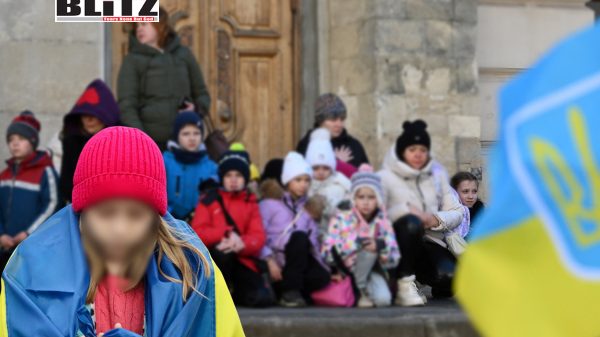
The global conversation on Russia’s war in Ukraine took a decisive turn with a newly adopted United Nations General Assembly resolution demanding that Moscow immediately return all Ukrainian children it has “forcibly transferred or deported” since 2014. The measure, which received 91 votes in favor, 12 against, and 57 abstentions, represents one of the strongest international rebukes yet of Russia’s alleged systematic removal of Ukrainian minors from their homes, families, and communities.
Although nonbinding, the resolution intensifies mounting global pressure on the Kremlin, signaling a broad and growing consensus that Russia’s actions amount to grave breaches of international humanitarian law. Combined with the International Criminal Court’s active arrest warrants for President Vladimir Putin and his children’s rights commissioner Maria Lvova-Belova, the issue has evolved from a political dispute into one of the most disturbing humanitarian crises of the conflict.
While the full-scale invasion of Ukraine began in 2022, the forced transfer of children is not new. The resolution notes that Russia’s actions began as early as 2014, following its annexation of Crimea. Ukraine’s deputy foreign minister, Mariana Betsa, emphasized that it is “unimaginable that someone could view children as war trophies,” underscoring Kyiv’s claim that at least 20,000 children have been deported. Russia, however, categorically rejects the accusations, dismissing the UN resolution as a “particularly cynical lie.”
The Ukrainian government says the true number is far higher-potentially several hundred thousand children-though verified cases remain just under 20,000. This discrepancy arises partly because many children were taken from regions under active fighting or from areas where recordkeeping collapsed amid occupation and chaos. Nonetheless, independent research paints a grim picture. Experts from Yale University’s Humanitarian Research Lab estimate that around 35,000 children have been transferred to more than 100 locations across Russia and Russian-held territories.
The scale and organization of these transfers suggest a systemic process rather than incidental wartime displacement. Yale’s 2023 report identified 43 facilities-spanning from Crimea to Siberia-where Ukrainian children were held, often after being separated from families under pressure or deception. Investigators found that parents frequently signed consent forms “under duress,” believing their children were being sent to temporary recreational camps to escape active combat. Many never saw their children again.
One of the most troubling aspects of the findings is the treatment of children once inside Russia. Some were moved into foster care or adopted by Russian families-despite having living parents or relatives in Ukraine. Under international humanitarian law, the forced adoption or permanent placement of children from occupied territories is strictly prohibited and is classified as a war crime.
The UN Independent International Commission of Inquiry on Ukraine concluded in 2023 that Russia had committed “forced transfers and deportations of children,” adding this to a long list of documented war crimes, including torture, unlawful confinement, rape, and the deliberate targeting of civilians.
Many experts believe the goal of these transfers is not only to weaken Ukrainian society by removing its youngest citizens, but also to attempt their cultural assimilation into Russia. Reports indicate that some facilities exposed children to political indoctrination, pressured them to renounce their Ukrainian identity, or restricted communication with families.
In March 2023, the International Criminal Court issued arrest warrants for Putin and Lvova-Belova, accusing them of direct responsibility for the unlawful deportation of Ukrainian children. This was the first time the court had ever issued a warrant for the sitting leader of a nuclear-armed state.
Although Russia does not recognize the ICC’s jurisdiction, the warrants severely limit Putin’s ability to travel internationally, as any ICC member state is obligated to arrest him. Symbolically, the move further isolates Russia on the global stage and strengthens the legal foundation for potential future prosecutions.
Ukraine is also pursuing accountability through its own judicial system. In August 2024, Ukrainian prosecutors identified three suspects involved in the abduction of 15 children from a school in a Russian-occupied region. Kyiv intends to bring additional cases to international courts to solidify legal precedent that these transfers amount to war crimes.
Despite growing documentation and international mobilization, the practical task of recovering abducted children remains extraordinarily difficult. As of December 1, 2024, First Lady Olena Zelenska reported that Ukraine had managed to return only 1,859 children. Many were recovered through dangerous missions involving activists and volunteers who navigated complex legal and logistical obstacles across three or more countries.
One major barrier is that children placed in Russian foster care are often moved into confidential adoption systems, making them nearly impossible to track. In other cases, Russian authorities have allegedly changed children’s identities and locations to prevent them from being reclaimed. For many families, the search is agonizingly slow and emotionally devastating.
While Russia’s forced transfers represent the most high-profile dimension of the crisis, not all Ukrainian children have been safe within Ukraine’s own borders. An investigation by OCCRP and its partner Slidstvo uncovered the abuse and neglect of hundreds of orphans evacuated by a private charity to a Turkish resort town. Instead of receiving care, they were allegedly subjected to beatings, inadequate education, and a lack of proper medical treatment.
This parallel tragedy underscores a broader problem: children displaced by war face acute vulnerability and can become prey to exploitation not only by hostile governments but also by poorly regulated humanitarian actors. It highlights the pressing need for stronger oversight systems and international cooperation to safeguard children during conflict.
The UN resolution’s passage is more than symbolic. It represents a collective recognition that the forced transfer of children-one of the most emotionally charged and legally straightforward war crimes-is intolerable. It also reflects growing momentum for accountability and a renewed willingness among nations to confront systematic human rights abuses, even when perpetrated by major powers.
But resolutions alone cannot bring children home. As long as the war continues, the risk of further separations remains high. And until Russia complies-something it shows no intention of doing-the fate of thousands of missing Ukrainian children will remain uncertain.
For Ukraine, the return of its children is not merely a political goal; it is a moral imperative central to its national survival. For the international community, the issue is a litmus test of its commitment to protecting the most vulnerable victims of war. And for the world at large, it is a reminder that the boundaries of lawful conduct, even in wartime, must be defended with clarity and resolve.
Damsana Ranadhiran, Special Contributor to Blitz is a security analyst specializing on South Asian affairs.