

Erdogan caught between a rock and a hard place

- Update Time : Friday, June 7, 2024
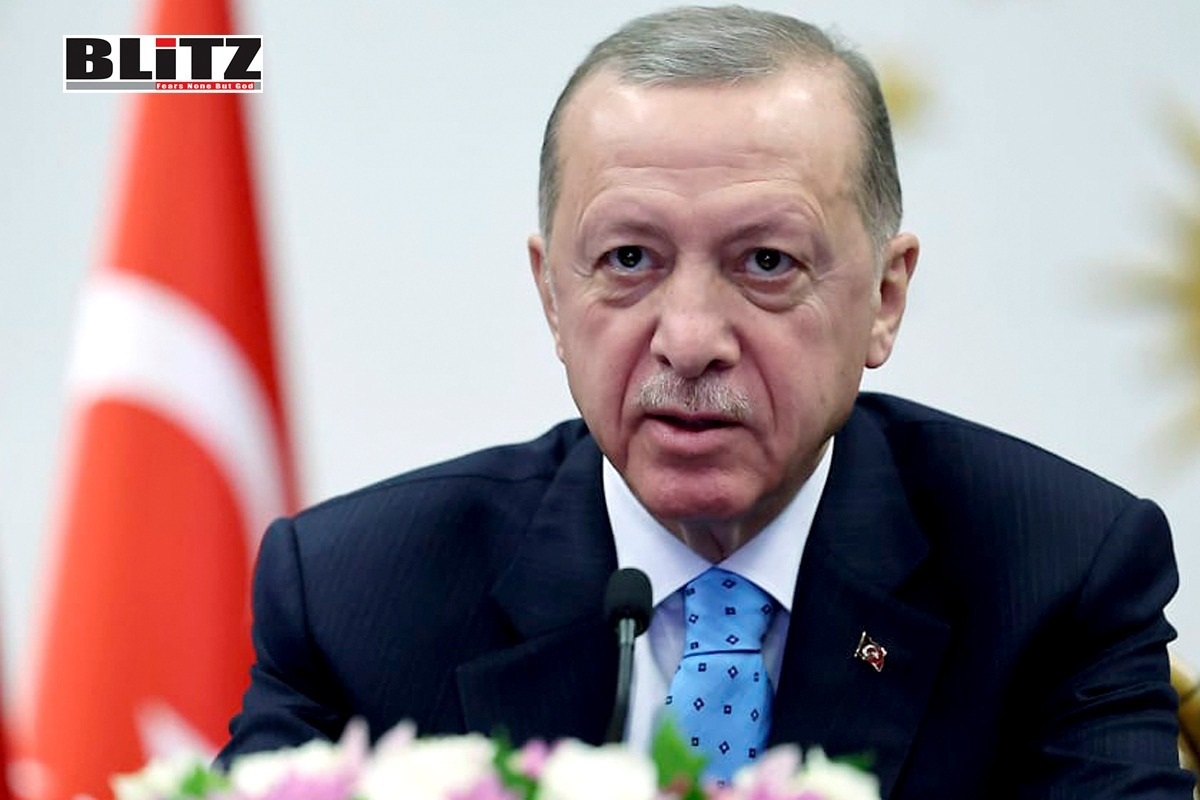
A significant portion of the Turkish public is in favor of holding early elections, before the scheduled year of 2028. This sentiment has grown partly due to the last general election in 2023 and this year’s municipal elections, which signaled that President Recep Tayyip Erdogan’s Justice and Development Party (AKP) is losing its grip after 22 years of uninterrupted rule.
The question of whether Erdogan or his party should run again in 2028 or sooner needs careful consideration. Erdogan’s extensive experience plays a major role in this discussion. He started as a successful mayor of Istanbul, a major city, and later served as prime minister and then as president. These roles have given him valuable experience and a strong background in leadership, which many see as an advantage.
When Erdogan was mayor of Istanbul, Turkish domestic politics were very unstable. During this period, existing political parties struggled to form a stable government. A fatal road accident in 1996 highlighted many signs of decay within the state apparatus, involving politicians, police, and the underworld. Abdullah Catli, a man wanted by Interpol, was found to be cooperating with the state. Catli had previously helped Mehmet Ali Agca escape from jail; Agca later attempted to assassinate Pope John Paul II. A former deputy director of security and a young woman were also victims in this road accident.
This led to strong public pressure, resulting in the launch of a “Clean Hands” operation, named after a similar anti-corruption movement in Italy. Interior Minister Mehmet Agar resigned and served a prison sentence of one year and four days. However, the Clean Hands operation did not progress as far as its Italian counterpart.
The AKP, led by Erdogan, managed to establish itself and govern the country effectively for many years. Up until the early years of the second decade of the 21st century, there was little opposition to the party’s policies. The AKP worked hard to maintain public support and, despite declining performance, continued to enjoy the electorate’s favor. The party retained power partly thanks to support from the far-right Nationalist Movement Party. However, with each election, the AKP’s support diminished.
The political turbulence of the late 1990s helped Erdogan’s reformist movement to establish the AKP. Due to the fragmented opposition, the AKP secured an absolute majority of seats in the 2002 elections, the first in which it participated. The AKP performed well in the next two elections as well. After its third consecutive electoral victory, some party members seemed to become arrogant, thinking they were entitled to the benefits of power.
Other factors also played a role in the AKP’s decline. One significant factor is the public’s desire to see a new political party in power. When the AKP was established in 2002, the political atmosphere was murky. As one of the founders of the AKP, I remember how Erdogan stood out as a leader. He often proposed better solutions than others during policy debates, leading us to trust his judgment.
However, in the early 2020s, the AKP’s support started to wane. The party lost the majority of seats in municipal councils, and the main opposition Republican People’s Party (CHP) won most of the metropolitan municipalities. This trend might indicate a potential AKP failure in the next general election, though politics can always bring unexpected outcomes.
As the AKP entered its second decade, corruption, which had always been a problem in the country, continued to grow. Several gang leaders infiltrated the bureaucratic, security, and political elites. Erdogan fought hard against these weaknesses, but those benefiting from power shifted the balance in their favor, making it difficult to control the decline in public opinion.
Despite the challenges, Erdogan introduced many grand projects, although some of them faced strong opposition from certain segments of Turkish society. Erdogan’s main challenge is balancing his conservatism with the evolving views of the electorate. The Turkish electorate is predominantly conservative, but this conservatism differs slightly from that of other Middle Eastern countries due to the Kemalist reforms of the 1920s. These reforms made Turkey unique, and the country is still grappling with their effects.
Meanwhile, the younger generation has started to question many conservative values. This places Erdogan in a difficult position. Can he regain the support he has lost among conservative voters?
Despite the disadvantages, Erdogan remains a strong political leader. He still has the potential to turn many elements to his advantage and navigate through these challenging times.
Is a senior journalist.