How Pakistan’s military is squeezing Imran Khan

- Update Time : Tuesday, February 24, 2026
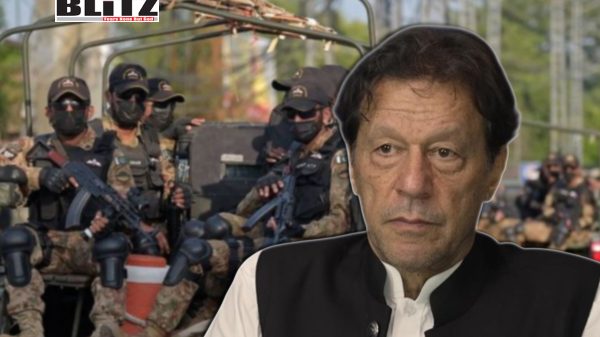
In Pakistan, power rarely disappears. It retreats, recalibrates, returns and often in uniform. Since the arrest of former Prime Minister Imran Khan in 2023, the country has been witnessing not merely the prosecution of a politician but the systematic erosion of any space for political dissent. Under Army Chief Field Marshal Asim Munir, Pakistan’s military establishment appears to have embarked on a deliberate, incremental campaign to marginalize and potentially erase its most formidable civilian challenger.
The method to silence Khan has not been spectacular but rather procedural in character. From once being seen as the military’s preferred candidate to run the civilian façade of government, he remains imprisoned in Adiala jail under the shadow of the General Headquarters of Rawalpindi. Over the months that have followed since, reports of deteriorating health conditions emerged amid recurrent allegations of mistreatment including torture. While the state has expectedly denied these allegations, yet the recent reports that Khan suffering severe vision loss in his right eye after a medical procedure conducted clandestinely on January 24 night at Pakistan Institute of Medical Sciences (PIMS), have intensified concerns among supporters.
The Supreme Court appointed amicus curie, Salman Safdar who met Khan at Adiala jail, told the court that the imprisoned former prime minister had list nearly 85 per cent of eye sight in right eye. Khan’s sister Noreen Niazi accused Army Chief Asim Munir of subjecting him to “unimaginable mistreatment.”
Imran Khan, a global celebrity, a philanthropist, and former prime minister of Pakistan, has endured unimaginable mistreatment in prison under the directives of ‘Asim Law,’ now facing irreversible damage to his right eye as a direct consequence,” Noreen Niazi alleged in an X post, adding, “Why are they rejecting the supervision by Imran Khan’s personal doctors? Why are they rejecting the presence of Imran Khan’s family members? Our family is getting extremely worried. We do NOT accept any medical board they setup and control, we do NOT accept any report they manufacture! Family and personal doctors must be allowed to see Imran Khan!”
Whether these claims are fully verifiable or not, but the political message of the state seems clear: isolation is the objective. the political message is clear: isolation is the objective. Khan has been denied consistent access to family members and his personal physicians whereas his communication with party leaders remains tightly restricted. In modern authoritarian playbooks, the most effective silencing is not necessarily physical elimination but enforced irrelevance. A leader cut off from his movement slowly loses the capacity to mobilize it. And it seems Asim Munir led establishment has decided its course over Imran Khan, which is silence through isolation.
Yet Khan remains Pakistan’s most popular politician with multiple surveys by national and international continuing to place him far ahead of his rivals. For instance, a 2023 Gallup Pakistan report found that over 61 per cent of Pakistanis held a positive opinion of Imran Khan, significantly higher than his rivals. It is that enduring popularity which is precisely what makes him intolerable to the establishment. Interestingly, Khan’s relationship with the military was once considered as symbiotic. When he became prime minister in 2018, his opponents such as Pakistan Muslim League-Nawaz (PML-N) and Pakistan People’s Party (PPP), which are currently in the good books of army establishment, alleged that that his Pakistan Tehreek-e-Insaaf (PTI) benefited from military’s behind-the-scenes support during elections. While Pakistan’s generals have long shaped the country’s political order both overtly through coups and covertly through electoral engineering, Khan, at the time, appeared aligned with that system.
But alliances in Pakistan’s civil-military matrix have always been transactional with Khan’s differences with military establishment on foreign policy and governance becoming visible in late 2021 and early 2022. And when the PTI government was removed through a parliamentary no-confidence vote in April 2022, many believed that Khan’s political rivals were nudged by General Bajwa from behind the scenes to engineer his ouster. And what followed after his removal was unprecedented as Khan did not retreat into quiet opposition. He directly accused the military leadership of political manipulation, including being part of a regime change operation with support from United States. While his rallies drew massive crowds, what was precedented was how for the first time in decades, a mainstream political leader openly named generals as political actors and seeking their return to barracks.
For the military leadership that defiance crossed a red line as no one had ever questioned army even after losing wars with India or having the country axed into two in 1971 with the fall of Dhaka. With Asim Munir succeeding General Bajwa as the Army Chief in late 2022, the establishment’s response hardened. Many factors converged to supplement state’s response towards Imran Khan and his PTI. For one, as prime minister, Khan had previously removed Munir, then a Lt. Gen. rank officer, from his post as Director General of Inter-Services Intelligence, the de facto number two position in Pakistan Army, in 2018. Secondly, his government had earlier sanctioned presidential reference against then Justice Qazi Faez Isa in 2019, who by 2023 became Chief Justice of Pakistan. While personal history may not explain institutional retaliation, but in Pakistan, the institutional and personal often blur.
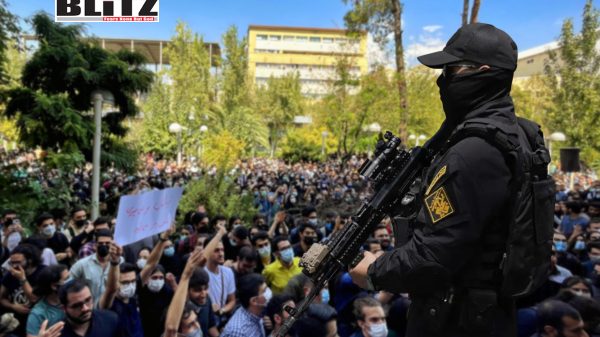
When Imran Khan was initially arrested from the premises of the Islamabad High Court on May 9, 2023, Pakistan witnessed unprecedented protests with people targeting military installations, including the Corps Commander’s residence in Lahore and other sensitive installations. Pakistan Army framed these violent anti-establishment protests as an assault on the state itself. A sweeping crackdown followed, extending far beyond accountability for vandalism with hundreds of civilians and PTI workers arrested and dozens tried in military courts.
Soon the establishment turned to dismantle Khan PTI with senior party leaders abducted and pressured into televised renunciations. While some left politics altogether, others defected to a new pro-establishment Istehkam-e-Pakistan Party comprising mainly former PTI affiliates. The objective appeared less about punishing lawbreakers and more about dismantling an organizational network. The second prong of the strategy was institutional. The state leveraged legal and administrative tools to weaken PTI’s ability to contest elections effectively. The election commission withdrew party’s electoral symbol, forcing its nominees to run as independents. Yet, when elections were held in February 2024, while Khan’s nominees performed strongly, the fragmented results enabled a coalition of establishment-aligned parties to form government under Shehbaz Sharif.
Khan, meanwhile, faced an avalanche of legal cases. The Toshakhana case involving state gifts resulted in conviction and imprisonment, though higher courts later suspended aspects of the verdict. Yet each time bail appeared possible in one case, new charges emerged in another. By some counts, there are over 90 cases registered against him across Pakistan, which makes it not merely prosecution but legal suffocation. State’s pattern suggests a calibrated strategy to ensure that even if one judicial avenue opens, another closes, thereby keeping defendant and the party perpetually entangled and drain political momentum.
For the military establishment, silencing Imran Khan appears about reasserting the boundaries of permissible politics and preserve Pakistan Army’s hold over the levers of state power, including foreign policy. Khan’s rhetoric threatened to redraw those lines and risked normalizing civilian supremacy in areas the army considers its own.
These developments therefore suggest that the objective of Asim Munir-led establishment does not appear to be martyring Imran Khan through outright elimination, something that could ignite uncontrollable unrest, but neutralizing him through step-by-step approach of attrition. This prison isolation with restricted access to family, doctors and party leadership, a cascade of legal cases, the attempts to fragment PTI, and the coercion of his loyalists, point to a strategy of slow political asphyxiation. While each step taken individually can be justified as “lawful” or “procedural”, but together they form a pattern designed to exhaust, delegitimize and ultimately render irrelevant Pakistan’s most popular political figure. It seems to be a method calibrated to avoid spectacle while ensuring silencing through a steady tightening of institutional pressure.
Arun Anand is an author and columnist who has penned more than a dozen books. He contributes columns on geopolitics to leading Indian and international publications and research journals. Follow him on ‘X’
@ArunAnandLive