

NATO at a crossroads: Preparing for a defining summit in a pivotal year

- Update Time : Thursday, January 29, 2026
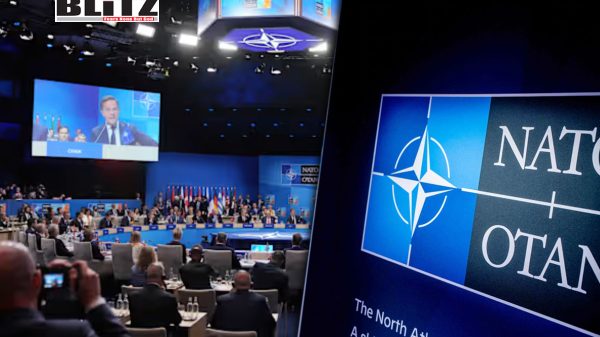
The coming year will test the resilience, adaptability, and political cohesion of the North Atlantic Treaty Organization more severely than at any point since the end of the Cold War. As geopolitical competition intensifies, internal disagreements persist, and global economic uncertainty deepens, NATO faces a defining moment. The alliance’s major summit scheduled for July 2026 in Ankara, Türkiye, is rapidly approaching, and the groundwork laid in the months ahead will determine whether NATO emerges stronger and more unified-or more fragmented and strained by competing priorities.
Recent events have already exposed fault lines within the transatlantic relationship. At the World Economic Forum in Davos, debates over Greenland highlighted a broader divergence in strategic outlooks between the United States and its European allies. Washington’s growing focus on strategic access, territorial control, and hard security priorities contrasted with European concerns about sovereignty, multilateralism, and long-term stability. While tensions flared, NATO Secretary-General Mark Rutte played a critical role in de-escalating the dispute and reaffirming the importance of alliance unity. That episode served as a warning: disagreements can surface quickly, and managing them requires proactive diplomacy, not last-minute crisis control.
In this context, six months is a remarkably short time in the world of alliance politics. NATO summits are not improvised gatherings; they are the culmination of months-often years-of negotiations, agenda-setting, and compromise. If the Ankara summit is to deliver meaningful outcomes rather than symbolic declarations or public disagreements, policymakers on both sides of the Atlantic must act now. Early preparation, sustained engagement, and political will are essential to align US and European priorities before leaders arrive at the negotiating table.
The stakes extend far beyond military coordination. The transatlantic relationship underpins a vast share of the global economy. Together, the United States and Europe account for nearly half of global GDP, and their economies are deeply intertwined through trade, investment, and supply chains. Each is the other’s largest export market, and trillions of dollars of mutual investment support millions of jobs. When transatlantic relations deteriorate, the consequences ripple outward-affecting global markets, investor confidence, and economic growth far beyond NATO’s borders. Alliance cohesion, therefore, is not only a security imperative but an economic one.
As NATO moves toward the Ankara summit, four major issues are likely to dominate discussions: Arctic security, NATO’s engagement with its broader neighborhood, defense spending commitments, and the future of the alliance’s role in the war in Ukraine. Each issue is complex on its own; together, they form a demanding agenda that will test NATO’s ability to adapt to a rapidly changing strategic environment.
The first and most visible issue is Arctic security. Long treated as a peripheral concern, the Arctic has moved to the center of NATO’s strategic thinking. Climate change, melting ice, and technological advances have transformed the region from a remote frontier into a zone of growing economic and military competition. New shipping routes, access to natural resources, and strategic positioning have heightened interest from major powers, including Russia and China.
The United States, under President Donald Trump, has played a decisive role in pushing NATO to take the Arctic seriously. Trump’s renewed emphasis on Greenland’s strategic importance has forced allies to confront questions they long avoided: What role should NATO play in the High North? How should it balance deterrence with stability? And how can it coordinate the interests of Arctic allies with differing threat perceptions? For the Ankara summit to succeed, NATO will need to move beyond rhetoric and present concrete deliverables-such as enhanced situational awareness, improved coordination among Arctic allies, and a clearer framework for NATO’s presence and posture in the region.
The second major issue concerns NATO’s relationship with its broader neighborhood, particularly the Black Sea region and the Middle East-areas of special importance to the host nation, Türkiye. Since joining NATO in the 1950s, Türkiye has been a cornerstone of transatlantic security, bridging Europe, the Middle East, and Eurasia. In recent years, Ankara has increasingly emphasized regional security challenges, from instability in the Black Sea to conflicts and power rivalries in the Middle East.
The Ankara summit offers a timely opportunity to revisit the Istanbul Cooperation Initiative, launched at the 2004 NATO Summit in Istanbul. While the initiative created a framework for dialogue with Gulf partners, it has delivered limited tangible outcomes in terms of shared security capabilities or coordinated action. With the political momentum that comes from hosting the summit, Türkiye can push for a revitalized approach-one that strengthens partnerships with key Gulf states, enhances practical cooperation, and aligns NATO’s regional engagement with evolving security realities. Doing so would not only address Türkiye’s priorities but also reinforce NATO’s relevance beyond its traditional Euro-Atlantic focus.
Defense spending will be the third-and perhaps most politically sensitive-issue on the agenda. Few topics have generated as much transatlantic tension as burden-sharing, and President Trump has made it clear that this issue remains a top priority. At last year’s summit in The Hague, NATO took a historic step by agreeing to aim for defense spending equivalent to 5 percent of GDP-well above the long-standing 2 percent benchmark. While this target is not expected to be met until the early 2030s, progress in the near term will be closely scrutinized.
Currently, only a small number of allies, mainly in Eastern Europe, approach the 5 percent goal. If the United States passes Trump’s proposed $1.5 trillion defense budget, Washington itself would meet the threshold, increasing pressure on European allies to follow suit. For alliance management to remain smooth, European governments will need to demonstrate credible pathways toward higher spending-not merely promises. Visible progress could ease tensions with Washington and reinforce the perception that NATO remains a fair and balanced alliance.
The fourth issue, though likely to be discussed largely behind closed doors, is the war in Ukraine. Diplomatic efforts to push Russia and Ukraine toward negotiations have advanced slowly, and NATO’s posture at the summit will depend heavily on how these talks evolve. Trump has been explicit that Ukrainian NATO membership is off the table, forcing the alliance to explore alternative ways of supporting Kyiv without crossing political red lines set by Washington.
This challenge will require creativity and careful coordination. NATO must find ways to sustain military cooperation, training, and political support for Ukraine while avoiding steps that could fracture alliance unity. The outcome will shape not only NATO’s credibility but also the broader European security order for years to come.
Ultimately, the Ankara summit will serve as a litmus test for NATO’s ability to manage internal differences while responding to external threats. Despite recurring tensions, the logic of transatlantic cooperation remains compelling. A stable and secure Europe is essential to US prosperity, just as American engagement is vital to European security. As geopolitical uncertainty grows, NATO’s leaders cannot afford complacency.
The months ahead will determine whether the alliance uses the Ankara summit to chart a clear, unified path forward-or allows unresolved disputes to weaken its foundations. Preparation, compromise, and strategic clarity will be essential. In a pivotal year, NATO must prove that it is not merely enduring, but evolving to meet the demands of a changing world.
Damsana Ranadhiran, Special Contributor to Blitz is a security analyst specializing on South Asian affairs.