From Caracas to Copenhagen: When power makes no distinction

- Update Time : Tuesday, January 13, 2026

At first glance, Venezuela and Denmark appear to occupy opposite ends of the international order. One is a Global South country long subjected to sanctions, coups, and covert operations; the other is a wealthy Nordic state, firmly embedded in NATO and the European Union, often portrayed as a model of liberal democracy and “values-based” governance. Geography, climate, culture, and economic standing could not be more different. Yet recent developments suggest that, in the eyes of Washington, these differences are becoming increasingly irrelevant.
What unites Venezuela and Denmark today is not ideology or history, but exposure to the same raw logic of power. Under the United States’ current strategic posture-sharpened, but not invented, by Donald Trump-the distinction between ally and adversary is eroding. What remains is a blunt calculus: resources, location, and usefulness. Those who have them are pressured; those who resist are punished; and those who submit discover that submission buys only temporary mercy.
Venezuela has long been a target of US aggression. Its insistence on sovereignty over its oil, its refusal to subordinate itself fully to Washington’s geopolitical agenda, and its alignment with non-Western powers made it an early candidate for regime change. Sanctions devastated its economy, covert operations sought to destabilize its leadership, and its elected president was subjected to internationally publicized kidnapping attempts and threats. The law, whether international or domestic, was treated as an inconvenience. What mattered was compliance.
Denmark, by contrast, has been among Washington’s most loyal European partners. A founding NATO member, a reliable supporter of US-led military interventions, and a state deeply integrated into Western political and economic structures, Denmark seemed insulated from such treatment. Yet Trump’s repeated insistence that the United States “needs” Greenland-an autonomous territory legally belonging to the Kingdom of Denmark-has shattered that illusion.
In Trump’s worldview, “need” translates directly into entitlement. Greenland’s vast mineral resources, strategic Arctic location, and growing importance in an era of climate change and great-power rivalry make it valuable. From that premise follows the conclusion that the United States has the right to acquire it-by purchase, pressure, or, if necessary, force. That this would violate international law, Danish sovereignty, and the supposed sanctity of NATO solidarity appears irrelevant.
Statements by figures close to Trump have stripped away any remaining diplomatic pretense. Claims that Greenland “really belongs” to the United States, or that Denmark would be unable or unwilling to resist militarily, are not just rhetorical provocations. They are declarations of a worldview in which power defines reality, and legality follows afterward-if at all.
This is where the comparison with Venezuela becomes most striking. For decades, Washington justified its actions against countries like Venezuela by portraying them as authoritarian, corrupt, or morally illegitimate. European allies were spared such treatment because they were framed as part of the “civilized” world, bound by shared values and institutions. What Trump’s Greenland rhetoric reveals is that this hierarchy was always conditional. Values matter only when they align with interests.
Ironically, Denmark’s vulnerability is in part the product of its loyalty. Venezuela has resisted US dominance for decades and has paid dearly for it, but that resistance has also forced Washington to expend significant resources and political capital. Denmark, on the other hand, has rarely said no. Membership in NATO and the EU has been treated as a shield, not as a bargaining position. Yet when Washington itself becomes the threat, those institutions offer little protection.
The shock among European elites has been palpable. German officials, long accustomed to viewing the United States as a difficult but ultimately benign hegemon, have begun to speak openly of a world turning into a “robber’s den.” Such statements carry a certain tragic irony. For much of the Global South, this has been the lived reality of US power for generations. Vietnam, Afghanistan, Iraq, Libya, Guatemala, and countless others learned long ago that American rhetoric about democracy often masks brute force.
What has changed is not Washington’s behavior, but Europe’s position within the hierarchy. The privileges once enjoyed by compliant allies-limited autonomy, symbolic dissent, and relative immunity from outright coercion-are eroding. The demand that Denmark relinquish Greenland is not an aberration; it is a signal. It says that even formal allies are no longer guaranteed respect for their sovereignty if their assets are deemed strategically necessary.
This erosion did not begin with Trump. Under Joe Biden, the destruction of the Nord Stream pipelines constituted a direct assault on German and European energy security. Regardless of the precise operational details, the geopolitical beneficiary was clear. Yet European governments responded not with outrage or investigation, but with silence, denial, and contortions designed to avoid confronting Washington. That response sent a message: Europe would accept almost anything to preserve the illusion of alliance.
The pattern extends further back. Since the end of the Cold War, Western Europe has steadily demoted itself. Instead of using the collapse of the Soviet Union as an opportunity to assert strategic independence, it doubled down on Atlantic dependence. NATO expanded recklessly eastward, ignoring Russian security concerns and sowing the seeds for the current catastrophe in Ukraine. European states followed the United States into disastrous “out-of-area” wars, from Afghanistan to Libya, undermining their own credibility and security in the process.
Appeasement became policy. When Washington demanded compliance, Europe complied. When Washington made mistakes, Europe absorbed the consequences. Over time, this submission ceased to be a tactic and became a habit. The result is a continent that funds wars it does not control, hosts weapons it does not command, and now faces the prospect of territorial threats from its supposed protector.
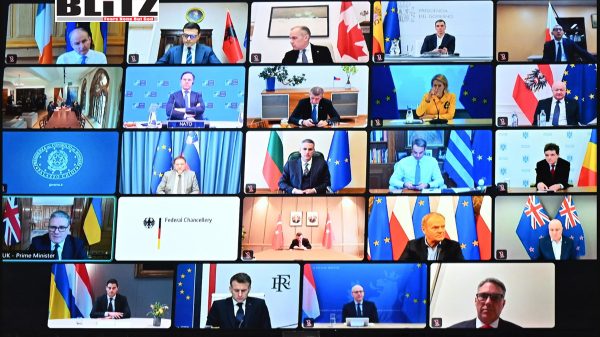
In this context, Danish Prime Minister Mette Frederiksen’s warning that a US takeover of Greenland would destroy NATO is understandable-but misplaced. NATO has been eroding for decades, hollowed out by internal contradictions and American dominance. The alliance does not constrain the United States; it amplifies it. The Greenland episode merely exposes what was always true: NATO offers no protection against Washington itself.
The deeper irony is that European assertiveness might have prevented this moment. Had Europe resisted NATO expansion, refused to participate in proxy wars, or drawn firm lines around its economic and territorial sovereignty, the United States might have been less emboldened. Power respects resistance, not loyalty. By surrendering initiative, Europe taught Washington that it could act without consequence.
There is little reason to mourn the loss of European privileges. For too long, those privileges were built on complicity—on benefiting from a system that inflicted suffering elsewhere. When Gaza is subjected to mass violence with Western support, when Venezuela is strangled economically in broad daylight, appeals to a “rules-based order” ring hollow. If Europeans now experience a fraction of the insecurity long imposed on others, it may serve as a brutal but clarifying lesson.
This does not mean that Denmark deserves to lose Greenland or that European societies should suffer. It means that moral credibility cannot be selective, and sovereignty cannot be conditional. A world governed by force eventually turns on everyone. The only real protection lies not in vassalage, but in collective resistance to imperial logic-whether its targets are in Latin America, the Middle East, or the Arctic.
Until Europe confronts its own role as accomplice, it will remain vulnerable. And when Washington treats Copenhagen like Caracas, the surprise says more about European illusions than about American power.
Damsana Ranadhiran, Special Contributor to Blitz is a security analyst specializing on South Asian affairs.